

126
form a natural boundary, and the natural habitat around the river has its own ecosystems, with its own
definite ecological boundaries, laws and habitats (Alexander, 2001–2005a, p. 255).
9.6.4 Altering Repetition
Formations of spiral galaxies, the repartition of sand waves driven by the wind, and the forming and
breaking of waves in the ocean all reflect principles of fractal geometry, reminding us that nature is
constantly linking scales in altering repetitions. The famous drawing of Hokusai, The Great Wave of
Kanagawa, illustrates the principles of altering repetition, with the formation of self-similar waves at
many levels of scale. The drawing is not based on imagination, but on a constant repetitive reality that
is evident in waves (Alexander, 2001–2005a, p. 258; Van der Ryn & Cowan, 1996, p. 43). When
examining and looking closely at waves, one finds that the on-going wave is extended, maintained,
developed and repeated with a continued altering repetition, but never violated (Fig. 9.11).
9.6.5 Positive Space
In the variety of natural systems, the nature of positive space is necessary to preserve the wholeness
of the system. In the majority of natural developed wholes, the wholes and the spaces between them
form an unbroken continuous arrangement of positive space. When crystals grow, they form coherent
polyhedral shapes as they butt into each other. An outward thrusting crystal, resulting in positive
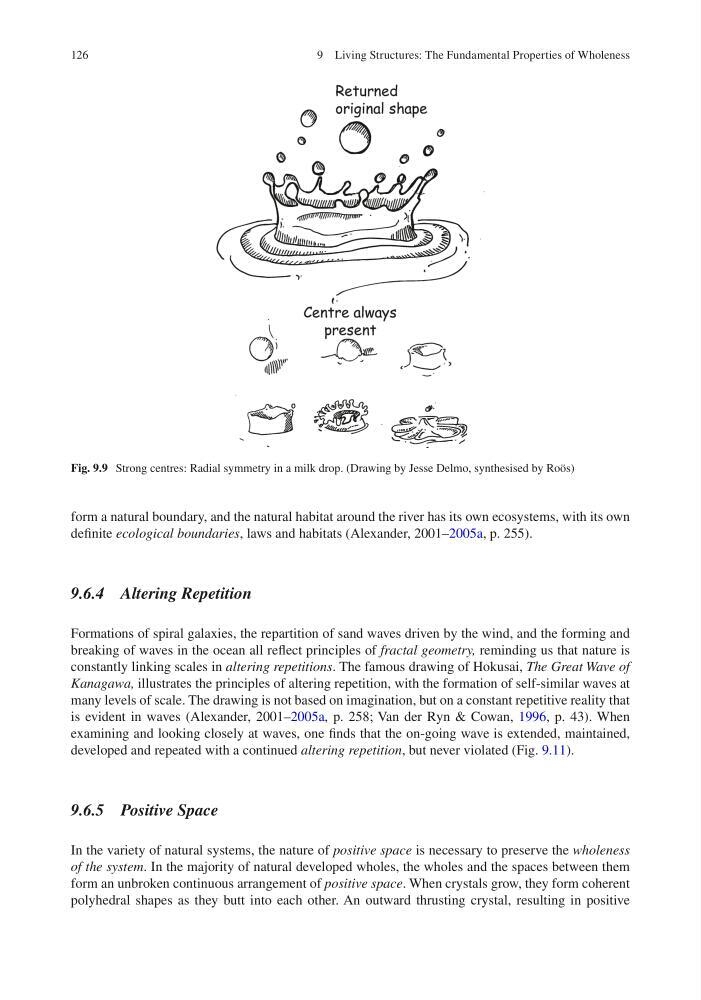
Fig. 9.9 Strong centres: Radial symmetry in a milk drop. (Drawing by Jesse Delmo, synthesised by Roös)
9 Living Structures: The Fundamental Properties of Wholeness
form a natural boundary, and the natural habitat around the river has its own ecosystems, with its own
definite ecological boundaries, laws and habitats (Alexander, 2001–2005a, p. 255).
9.6.4 Altering Repetition
Formations of spiral galaxies, the repartition of sand waves driven by the wind, and the forming and
breaking of waves in the ocean all reflect principles of fractal geometry, reminding us that nature is
constantly linking scales in altering repetitions. The famous drawing of Hokusai, The Great Wave of
Kanagawa, illustrates the principles of altering repetition, with the formation of self-similar waves at
many levels of scale. The drawing is not based on imagination, but on a constant repetitive reality that
is evident in waves (Alexander, 2001–2005a, p. 258; Van der Ryn & Cowan, 1996, p. 43). When
examining and looking closely at waves, one finds that the on-going wave is extended, maintained,
developed and repeated with a continued altering repetition, but never violated (Fig. 9.11).
9.6.5 Positive Space
In the variety of natural systems, the nature of positive space is necessary to preserve the wholeness
of the system. In the majority of natural developed wholes, the wholes and the spaces between them
form an unbroken continuous arrangement of positive space. When crystals grow, they form coherent
polyhedral shapes as they butt into each other. An outward thrusting crystal, resulting in positive
Fig. 9.9 Strong centres: Radial symmetry in a milk drop. (Drawing by Jesse Delmo, synthesised by Roös)
9 Living Structures: The Fundamental Properties of Wholeness