

127
space, occupies each bit of space in the group of crystals. The positiveness of the space results from
the compactness of the crystals in an outward manifestation of the internal coherence of the physical
system. In the crazing of porcelain, when the surface cools it forms a coherent shape of cracks
(Fig. 9.12). The cracks follow maximum stress lines and form in such a way to relieve the stress. This
results in good, compact shape with positive space in between the cracks (Alexander, 2001–2005a,
p. 262).
9.6.6 Good Shape
Systems in nature form patterns that result in good shapes. We can see this in the beautiful shapes of
plant structures, leaves, crystals, animals, birds, shells, the bone in a skull, and the curl of the breaking
wave. The beauty of these shapes in nature is a result of harmony, of geometric forms that are often
curved (Fig. 9.13). Meanders reflect topological mixing and are visible in the bends and curves in
rivers, the shapes on shells, and the vortex streets in lakes and flood plains, all reflective of good
shapes. Cracks in nature provide similarity in degrees and joints when a surface is relieved from
stress, as we can see on the surface of old pottery, the drying mud of dams and lakes, cooling lava
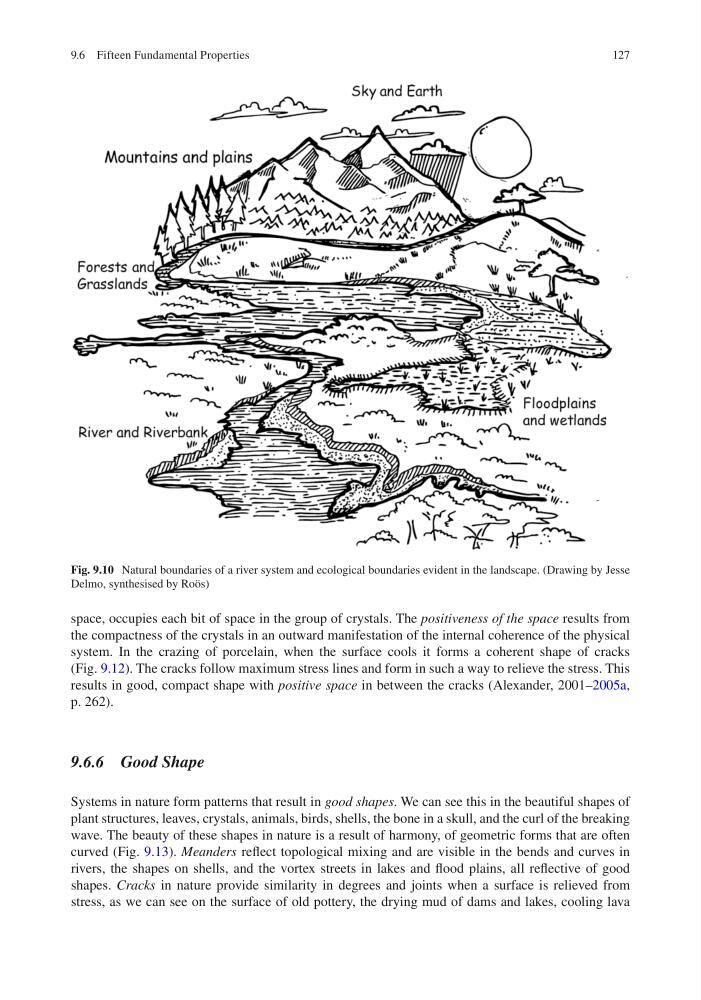
Fig. 9.10 Natural boundaries of a river system and ecological boundaries evident in the landscape. (Drawing by Jesse
Delmo, synthesised by Roös)
9.6 Fifteen Fundamental Properties
space, occupies each bit of space in the group of crystals. The positiveness of the space results from
the compactness of the crystals in an outward manifestation of the internal coherence of the physical
system. In the crazing of porcelain, when the surface cools it forms a coherent shape of cracks
(Fig. 9.12). The cracks follow maximum stress lines and form in such a way to relieve the stress. This
results in good, compact shape with positive space in between the cracks (Alexander, 2001–2005a,
p. 262).
9.6.6 Good Shape
Systems in nature form patterns that result in good shapes. We can see this in the beautiful shapes of
plant structures, leaves, crystals, animals, birds, shells, the bone in a skull, and the curl of the breaking
wave. The beauty of these shapes in nature is a result of harmony, of geometric forms that are often
curved (Fig. 9.13). Meanders reflect topological mixing and are visible in the bends and curves in
rivers, the shapes on shells, and the vortex streets in lakes and flood plains, all reflective of good
shapes. Cracks in nature provide similarity in degrees and joints when a surface is relieved from
stress, as we can see on the surface of old pottery, the drying mud of dams and lakes, cooling lava
Fig. 9.10 Natural boundaries of a river system and ecological boundaries evident in the landscape. (Drawing by Jesse
Delmo, synthesised by Roös)
9.6 Fifteen Fundamental Properties