

28
from each quarter of the boat; a job that requires a good captain, patience, and
strong-armed crew members (students mostly) to take in and lay out anchor line.
The vibracorer is prepared without the tripod and is lowered over the stern of the
vessel using a winch mounted to a U-frame that extends outward. Divers are used to
guide the corer down, take careful measurements, and cap the bottom of the core as
it is pulled out of the seabed. The core is brought to the surface (Fig. 2.14) and onto
the deck, cut, and returned to the lab and subjected to the same analyses described
before. From these, we can confirm times of greater tidal influence, and times when
this area was under shallow waters of the inner continental shelf. We can also confirm changes in the estuaries due to variations in the number of inlets through the
Outer Banks.
Change Is the Only Constant
What have we learned from all of this research effort? Quite a lot actually. We’ve
shown that our coast is much more dynamic, subject to a wider spectrum of change
on shorter timescales, than we ever imagined. We’ve been living in a period of relative stability over the last 400 years or so, with what are relatively minor changes
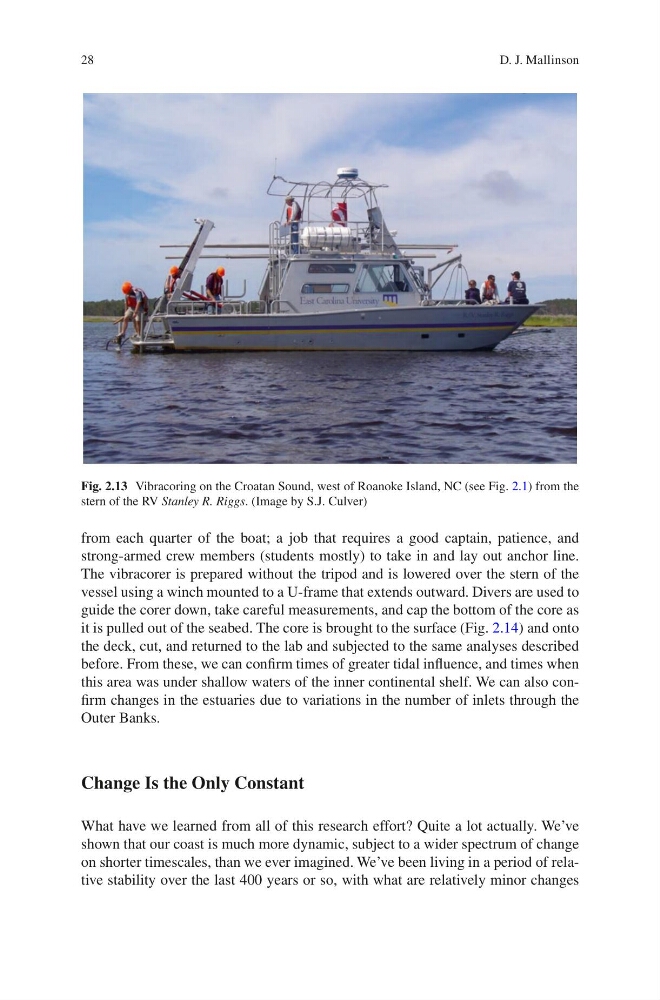
Fig. 2.13 Vibracoring on the Croatan Sound, west of Roanoke Island, NC (see Fig. 2.1) from the
stern of the RV Stanley R. Riggs. (Image by S.J. Culver)
D. J. Mallinson
from each quarter of the boat; a job that requires a good captain, patience, and
strong-armed crew members (students mostly) to take in and lay out anchor line.
The vibracorer is prepared without the tripod and is lowered over the stern of the
vessel using a winch mounted to a U-frame that extends outward. Divers are used to
guide the corer down, take careful measurements, and cap the bottom of the core as
it is pulled out of the seabed. The core is brought to the surface (Fig. 2.14) and onto
the deck, cut, and returned to the lab and subjected to the same analyses described
before. From these, we can confirm times of greater tidal influence, and times when
this area was under shallow waters of the inner continental shelf. We can also confirm changes in the estuaries due to variations in the number of inlets through the
Outer Banks.
Change Is the Only Constant
What have we learned from all of this research effort? Quite a lot actually. We’ve
shown that our coast is much more dynamic, subject to a wider spectrum of change
on shorter timescales, than we ever imagined. We’ve been living in a period of relative stability over the last 400 years or so, with what are relatively minor changes
Fig. 2.13 Vibracoring on the Croatan Sound, west of Roanoke Island, NC (see Fig. 2.1) from the
stern of the RV Stanley R. Riggs. (Image by S.J. Culver)
D. J. Mallinson