

266
obstruction that the vehicle represented had caused high energy eddies in the tidal
currents that were strong enough to scour out the over-consolidated clay. Once the
Land Rover roof had reached the level of the beach, the obstruction was removed,
and the eddies and related erosion ceased.
A professor who was in charge of departmental vehicles was with us and he
immediately returned to the department main office (no cell phones back then) and
called a marine salvage company. The hope was to extricate the vehicle before the
next high tide. The salvage guys quickly arrived with diving gear and a tractor. They
wrapped a rope around the vehicle and pulled. The tractor slid on the clay and eventually the rope broke as it chaffed against the metal of the Land Rover. After two
more failed attempts the professor said, “Ok, the vehicle is a loss.” At that point the
salvage guys wrapped a thick cable around the Land Rover, extended the hydraulic
legs of the tractor, and pulled the vehicle out of its hole with almost no effort. They
claimed ownership as any good marine salvage workers would do. Over the next
tidal cycle, the hole became filled completely with sand. KC was banned from Land
Rover use while I continued drilling, always parking above the high water mark.
My story above takes place in South Wales, but it has implications for any moderately high energy coast around the world. According to the Centre for Climate
Adaptation (September 29, 2019), coastal erosion is now a major problem in
England and Wales. Rising sea level and likely increased storminess, both related to
global warming and associated climate change, will continue to increase rates of
coastal erosion. The UK now has approximately 2300 km of artificially protected
coast, more than any other European country. The costs of damages caused by
coastal erosion are predicted to increase by 3–9 times over the next 60 years. In
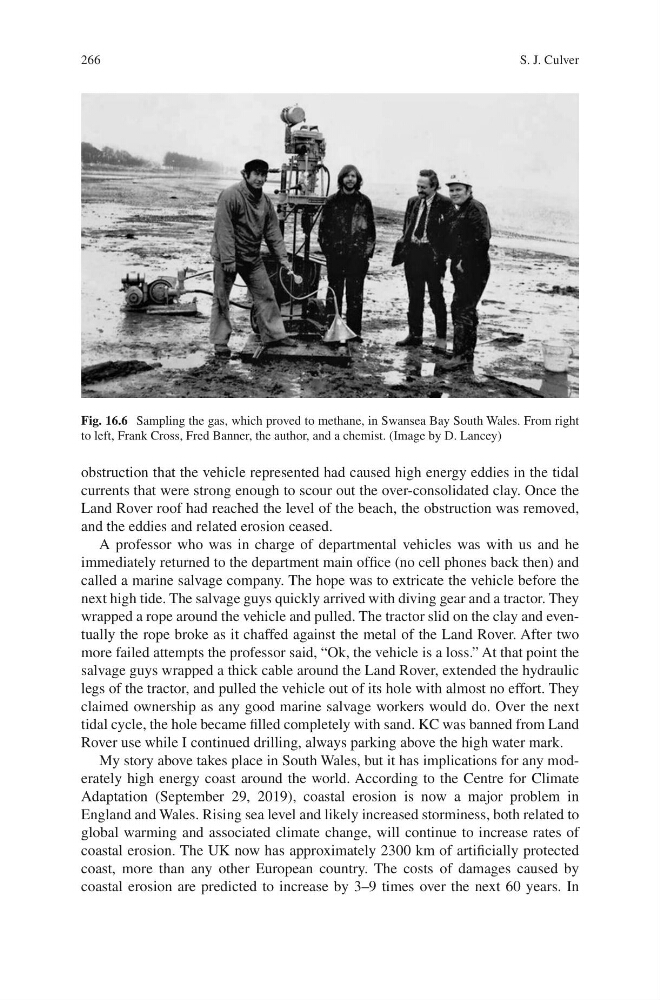
Fig. 16.6 Sampling the gas, which proved to methane, in Swansea Bay South Wales. From right
to left, Frank Cross, Fred Banner, the author, and a chemist. (Image by D. Lancey)
S. J. Culver
obstruction that the vehicle represented had caused high energy eddies in the tidal
currents that were strong enough to scour out the over-consolidated clay. Once the
Land Rover roof had reached the level of the beach, the obstruction was removed,
and the eddies and related erosion ceased.
A professor who was in charge of departmental vehicles was with us and he
immediately returned to the department main office (no cell phones back then) and
called a marine salvage company. The hope was to extricate the vehicle before the
next high tide. The salvage guys quickly arrived with diving gear and a tractor. They
wrapped a rope around the vehicle and pulled. The tractor slid on the clay and eventually the rope broke as it chaffed against the metal of the Land Rover. After two
more failed attempts the professor said, “Ok, the vehicle is a loss.” At that point the
salvage guys wrapped a thick cable around the Land Rover, extended the hydraulic
legs of the tractor, and pulled the vehicle out of its hole with almost no effort. They
claimed ownership as any good marine salvage workers would do. Over the next
tidal cycle, the hole became filled completely with sand. KC was banned from Land
Rover use while I continued drilling, always parking above the high water mark.
My story above takes place in South Wales, but it has implications for any moderately high energy coast around the world. According to the Centre for Climate
Adaptation (September 29, 2019), coastal erosion is now a major problem in
England and Wales. Rising sea level and likely increased storminess, both related to
global warming and associated climate change, will continue to increase rates of
coastal erosion. The UK now has approximately 2300 km of artificially protected
coast, more than any other European country. The costs of damages caused by
coastal erosion are predicted to increase by 3–9 times over the next 60 years. In
Fig. 16.6 Sampling the gas, which proved to methane, in Swansea Bay South Wales. From right
to left, Frank Cross, Fred Banner, the author, and a chemist. (Image by D. Lancey)
S. J. Culver