

The introduction to this book (Chap. 1) likened soils to
snowflakes in the sense that no two are alike. The contrasting range of soils described in Chaps. 2–17 suggests this
is true. However, the New Zealand Soil Classification provides a meaningful pattern and coherent summary which
thus enables understanding of the whole population of New
Zealand soils. Soil classification enables all soils to be
named and the names can be used to communicate the
character, and assess the status, of the soil resource. Both the
soil classification name, and an evaluation of soil suitability
for various purposes, help develop concepts of each soil so
we can comprehend the properties of the soil and the associated landscape. Accumulating, and communicating,
knowledge about soil resource can help to utilise and manage the land wisely. Thus, it is important that New Zealanders are familiar with our main soils and so an understanding
of the soil orders of the New Zealand Soil Classification is a
useful way for people to become familiar with the range,
variety, and key characteristics of our soil resource.
Soil science has provided New Zealand with an excellent
understanding of the limitations of our soils, and a range of
tools to overcome those limitations, making New Zealand an
important producer of food and fibre. For example, Allophanic Soils have excellent soil physical properties but need
regular inputs of phosphorus fertiliser to overcome the high
P retention that renders phosphorus unavailable to plants. As
we accumulate knowledge of the potential of, and risks to,
our soils, and if we utilise our science-based knowledge,
skills, and resources (including people, technology, infrastructure, education, and governance) appropriately in our
production systems, then we can become better at wise,
sustainable, stewardship (kaitiakitanga) of our soils and
environment.
Our soils, like most New Zealanders, are fairly resilient
and if well cared for will continue to support our food,
biofuel, and fibre production, and waste disposal, as well as
providing for biodiversity, natural ecosystems, and clean
water. However, the time is fast approaching when the most
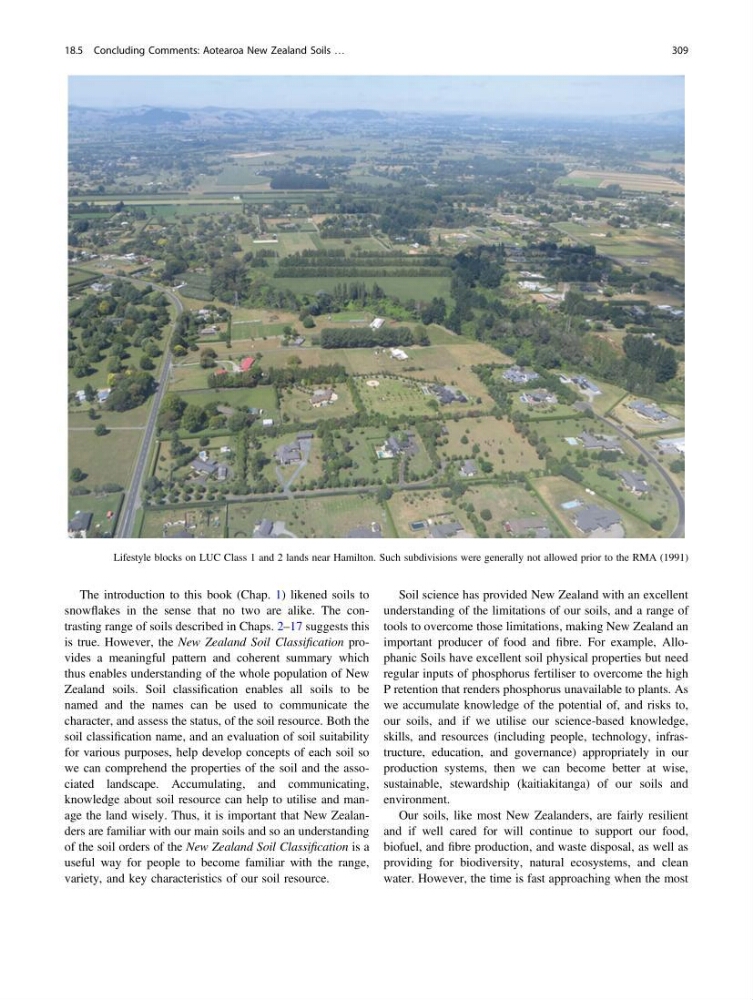
Fig. 18.9 Lifestyle blocks on LUC Class 1 and 2 lands near Hamilton. Such subdivisions were generally not allowed prior to the RMA (1991)
18.5 Concluding Comments: Aotearoa New Zealand Soils …
309
snowflakes in the sense that no two are alike. The contrasting range of soils described in Chaps. 2–17 suggests this
is true. However, the New Zealand Soil Classification provides a meaningful pattern and coherent summary which
thus enables understanding of the whole population of New
Zealand soils. Soil classification enables all soils to be
named and the names can be used to communicate the
character, and assess the status, of the soil resource. Both the
soil classification name, and an evaluation of soil suitability
for various purposes, help develop concepts of each soil so
we can comprehend the properties of the soil and the associated landscape. Accumulating, and communicating,
knowledge about soil resource can help to utilise and manage the land wisely. Thus, it is important that New Zealanders are familiar with our main soils and so an understanding
of the soil orders of the New Zealand Soil Classification is a
useful way for people to become familiar with the range,
variety, and key characteristics of our soil resource.
Soil science has provided New Zealand with an excellent
understanding of the limitations of our soils, and a range of
tools to overcome those limitations, making New Zealand an
important producer of food and fibre. For example, Allophanic Soils have excellent soil physical properties but need
regular inputs of phosphorus fertiliser to overcome the high
P retention that renders phosphorus unavailable to plants. As
we accumulate knowledge of the potential of, and risks to,
our soils, and if we utilise our science-based knowledge,
skills, and resources (including people, technology, infrastructure, education, and governance) appropriately in our
production systems, then we can become better at wise,
sustainable, stewardship (kaitiakitanga) of our soils and
environment.
Our soils, like most New Zealanders, are fairly resilient
and if well cared for will continue to support our food,
biofuel, and fibre production, and waste disposal, as well as
providing for biodiversity, natural ecosystems, and clean
water. However, the time is fast approaching when the most
Fig. 18.9 Lifestyle blocks on LUC Class 1 and 2 lands near Hamilton. Such subdivisions were generally not allowed prior to the RMA (1991)
18.5 Concluding Comments: Aotearoa New Zealand Soils …
309