

minimise the impacts of human activity on the environment.
Precautions are in place to prevent fuel spills, waste is
handled carefully, and new earthworks are planned to keep
any ‘foot print’ as small as possible. Most past impacts have,
where possible, been remediated. Notably, the former rubbish dump, and a short-lived nuclear power station and
adjacent contaminated soil materials, have been removed
from the vicinity of McMurdo Station and the affected areas
remediated as much as practicable.
In areas adjacent to bases on Ross Island, and at Marble
Point where the surface active layer has been removed, the
soil then thaws into what was previously the underlying
permafrost. Such thawing results in ice melting and evaporating at the surface. The ground ice near the coast is often
moderately salty and when the water evaporates, a layer of
salt is left behind at the soil surface (Fig. 17.18). Such
accumulations of salt impact survival of soil organisms.
Over time, the salt is redistributed through the actions of
wind and snow meltwater flow and the soil surface gradually
recovers.
At points further removed from the bases, there has been
concern about the impacts of the camping and trampling
activities of scientific expeditions. In the past, there has been
some spillage of fuels and wastewater at some sites. Now,
under the current environmental management protocols, all
human wastes are carried out and accidental spills are rare with
immediate actions taken to remedy any soil contamination.
The number of tourists, based on cruise ships, visiting the
region increased greatly between about 1990 and 2020. Site
guidelines have been developed to manage visitors at the
most heavily visited sites, and onshore visits by large
numbers of tourists are generally limited to a few key sites.
While there is concern that footprints will last forever, it
is evident, given the large number of people who have
walked over most of the McMurdo Dry Valley region, and
the rarity with which previous footsteps are observed, that on
most surfaces there is enough soil surface movement to
naturally recover the visible impacts. Trampling experiments
have shown that the desert pavement readily recovers within
a few seasons, however larger indents in the surface, such as
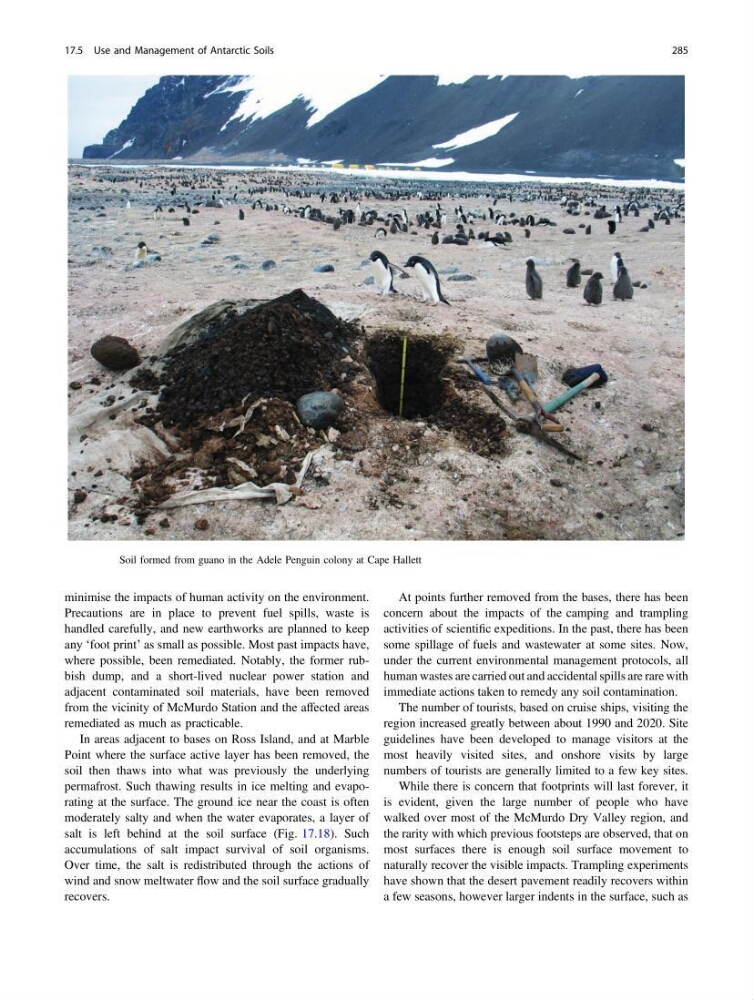
Fig. 17.17 Soil formed from guano in the Adele Penguin colony at Cape Hallett
17.5 Use and Management of Antarctic Soils
285
Precautions are in place to prevent fuel spills, waste is
handled carefully, and new earthworks are planned to keep
any ‘foot print’ as small as possible. Most past impacts have,
where possible, been remediated. Notably, the former rubbish dump, and a short-lived nuclear power station and
adjacent contaminated soil materials, have been removed
from the vicinity of McMurdo Station and the affected areas
remediated as much as practicable.
In areas adjacent to bases on Ross Island, and at Marble
Point where the surface active layer has been removed, the
soil then thaws into what was previously the underlying
permafrost. Such thawing results in ice melting and evaporating at the surface. The ground ice near the coast is often
moderately salty and when the water evaporates, a layer of
salt is left behind at the soil surface (Fig. 17.18). Such
accumulations of salt impact survival of soil organisms.
Over time, the salt is redistributed through the actions of
wind and snow meltwater flow and the soil surface gradually
recovers.
At points further removed from the bases, there has been
concern about the impacts of the camping and trampling
activities of scientific expeditions. In the past, there has been
some spillage of fuels and wastewater at some sites. Now,
under the current environmental management protocols, all
human wastes are carried out and accidental spills are rare with
immediate actions taken to remedy any soil contamination.
The number of tourists, based on cruise ships, visiting the
region increased greatly between about 1990 and 2020. Site
guidelines have been developed to manage visitors at the
most heavily visited sites, and onshore visits by large
numbers of tourists are generally limited to a few key sites.
While there is concern that footprints will last forever, it
is evident, given the large number of people who have
walked over most of the McMurdo Dry Valley region, and
the rarity with which previous footsteps are observed, that on
most surfaces there is enough soil surface movement to
naturally recover the visible impacts. Trampling experiments
have shown that the desert pavement readily recovers within
a few seasons, however larger indents in the surface, such as
Fig. 17.17 Soil formed from guano in the Adele Penguin colony at Cape Hallett
17.5 Use and Management of Antarctic Soils
285