

1000 years, and in that time about 1 m of ‘soil’ has accumulated. Erica Hofstee and others reported that the
guano-derived soil at Cape Hallett (after removing stones)
was about 12% phosphorus. It also had high levels of elements such as arsenic and cadmium which are likely to be
responsible for the relatively low numbers and diversity of
microbes found in these soils.
In the McMurdo Dry Valleys, there is little visible evidence of soil organisms, no vascular plants, and soil organic
matter content is negligible. However, despite the hostile
environment, soil biological communities exist that include
Collembola (springtails), mites, and nematodes. Bacterial
numbers of up to 10
9 cells g
−1 dry soil have been reported by
Jackie Aislabie, among others. Recent molecular genetic
studies show high levels of microbial diversity. Soil pH,
salinity, and available water content, can impact soil biological systems and high spatial variability can result in high
variability in species diversity and community structure over
microtopographic scales.
There are no higher plants in the Ross Sea region.
However, where liquid water occurs at the ground surface,
even if it is just for a few hours each day over the short
summer (6 weeks or so), mosses, cyanobacteria, and lichens
are evident. In some areas, there is sufficient melt-water
adjacent to melting snow patches to support life. In other
places, there is a regular flow of water from melting of
adjacent glaciers to feed streams or surface water flow that
supports moss or growth of cyanobacterial mats.
17.5 Use and Management of Antarctic Soils
Antarctic soils fall under the protection of the Protocol on
Environmental Protection to the Antarctic Treaty (sometimes
referred to as the Madrid Protocol). The Environmental
Protocol demands (among other things) that protection of the
Antarctic environment as a wilderness with aesthetic and
scientific value shall be a ‘fundamental consideration’ of
activities in the area. Antarctic soils are not productive in the
agricultural sense and the emphasis on soil management in
Antarctica relates to preventing damage as a result of human
activities.
The first known landfall in the Ross Sea region of
Antarctica was by a whaling ship owned by Carsten
Borchgrevik at Cape Adare in 1895. Since Robert Falcon
Scott and his crew arrived in the Ross Sea region in 1901,
and established a hut (at Hut Point on Ross Island) to store
some of his supplies to make more room on board the ship,
humans have impacted on the Antarctic terrestrial environment. Scott chose his site well and both New Zealand and
the USA have established bases nearby.
The bases represent the greatest impacts on the soil
environment. Areas have been recontoured to facilitate
building platforms and provide storage space. Nearby areas
have been trampled, bulldozed for aggregate and road construction, and rubbish and fuel have been spilled. However,
in the twenty-first century, there is a strong mandate to try to
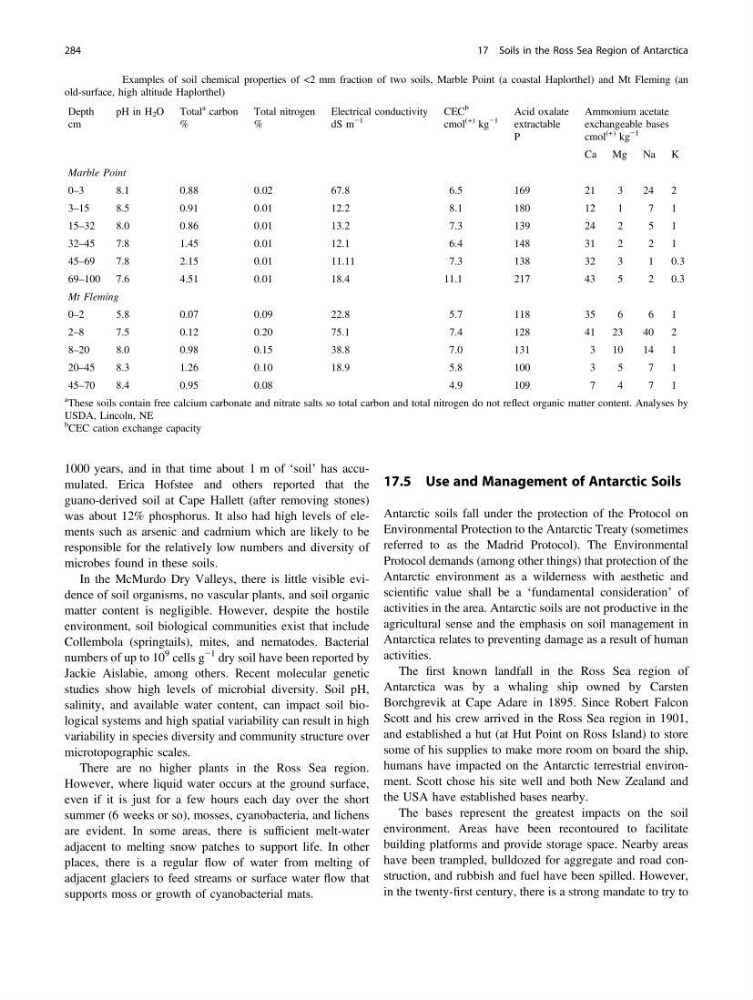
Table 17.1 Examples of soil chemical properties of <2 mm fraction of two soils, Marble Point (a coastal Haplorthel) and Mt Fleming (an
old-surface, high altitude Haplorthel)
Depth
cm
pH in H 2 O Total
a carbon
%
Total nitrogen
%
Electrical conductivity
dS m
−1
CEC
b
cmol
(+) kg
−1
Acid oxalate
extractable
P
Ammonium acetate
exchangeable bases
cmol
(+) kg
−1
Ca Mg Na K
Marble Point
0–3
8.1
0.88
0.02
67.8
6.5
169
21
3
24
2
3–15
8.5
0.91
0.01
12.2
8.1
180
12
1
7
1
15–32
8.0
0.86
0.01
13.2
7.3
139
24
2
5
1
32–45
7.8
1.45
0.01
12.1
6.4
148
31
2
2
1
45–69
7.8
2.15
0.01
11.11
7.3
138
32
3
1
0.3
69–100 7.6
4.51
0.01
18.4
11.1
217
43
5
2
0.3
Mt Fleming
0–2
5.8
0.07
0.09
22.8
5.7
118
35
6
6
1
2–8
7.5
0.12
0.20
75.1
7.4
128
41
23
40
2
8–20
8.0
0.98
0.15
38.8
7.0
131
3
10
14
1
20–45
8.3
1.26
0.10
18.9
5.8
100
3
5
7
1
45–70
8.4
0.95
0.08
4.9
109
7
4
7
1
a These soils contain free calcium carbonate and nitrate salts so total carbon and total nitrogen do not reflect organic matter content. Analyses by
USDA, Lincoln, NE
b
CEC cation exchange capacity
284
17 Soils in the Ross Sea Region of Antarctica
guano-derived soil at Cape Hallett (after removing stones)
was about 12% phosphorus. It also had high levels of elements such as arsenic and cadmium which are likely to be
responsible for the relatively low numbers and diversity of
microbes found in these soils.
In the McMurdo Dry Valleys, there is little visible evidence of soil organisms, no vascular plants, and soil organic
matter content is negligible. However, despite the hostile
environment, soil biological communities exist that include
Collembola (springtails), mites, and nematodes. Bacterial
numbers of up to 10
9 cells g
−1 dry soil have been reported by
Jackie Aislabie, among others. Recent molecular genetic
studies show high levels of microbial diversity. Soil pH,
salinity, and available water content, can impact soil biological systems and high spatial variability can result in high
variability in species diversity and community structure over
microtopographic scales.
There are no higher plants in the Ross Sea region.
However, where liquid water occurs at the ground surface,
even if it is just for a few hours each day over the short
summer (6 weeks or so), mosses, cyanobacteria, and lichens
are evident. In some areas, there is sufficient melt-water
adjacent to melting snow patches to support life. In other
places, there is a regular flow of water from melting of
adjacent glaciers to feed streams or surface water flow that
supports moss or growth of cyanobacterial mats.
17.5 Use and Management of Antarctic Soils
Antarctic soils fall under the protection of the Protocol on
Environmental Protection to the Antarctic Treaty (sometimes
referred to as the Madrid Protocol). The Environmental
Protocol demands (among other things) that protection of the
Antarctic environment as a wilderness with aesthetic and
scientific value shall be a ‘fundamental consideration’ of
activities in the area. Antarctic soils are not productive in the
agricultural sense and the emphasis on soil management in
Antarctica relates to preventing damage as a result of human
activities.
The first known landfall in the Ross Sea region of
Antarctica was by a whaling ship owned by Carsten
Borchgrevik at Cape Adare in 1895. Since Robert Falcon
Scott and his crew arrived in the Ross Sea region in 1901,
and established a hut (at Hut Point on Ross Island) to store
some of his supplies to make more room on board the ship,
humans have impacted on the Antarctic terrestrial environment. Scott chose his site well and both New Zealand and
the USA have established bases nearby.
The bases represent the greatest impacts on the soil
environment. Areas have been recontoured to facilitate
building platforms and provide storage space. Nearby areas
have been trampled, bulldozed for aggregate and road construction, and rubbish and fuel have been spilled. However,
in the twenty-first century, there is a strong mandate to try to
Table 17.1 Examples of soil chemical properties of <2 mm fraction of two soils, Marble Point (a coastal Haplorthel) and Mt Fleming (an
old-surface, high altitude Haplorthel)
Depth
cm
pH in H 2 O Total
a carbon
%
Total nitrogen
%
Electrical conductivity
dS m
−1
CEC
b
cmol
(+) kg
−1
Acid oxalate
extractable
P
Ammonium acetate
exchangeable bases
cmol
(+) kg
−1
Ca Mg Na K
Marble Point
0–3
8.1
0.88
0.02
67.8
6.5
169
21
3
24
2
3–15
8.5
0.91
0.01
12.2
8.1
180
12
1
7
1
15–32
8.0
0.86
0.01
13.2
7.3
139
24
2
5
1
32–45
7.8
1.45
0.01
12.1
6.4
148
31
2
2
1
45–69
7.8
2.15
0.01
11.11
7.3
138
32
3
1
0.3
69–100 7.6
4.51
0.01
18.4
11.1
217
43
5
2
0.3
Mt Fleming
0–2
5.8
0.07
0.09
22.8
5.7
118
35
6
6
1
2–8
7.5
0.12
0.20
75.1
7.4
128
41
23
40
2
8–20
8.0
0.98
0.15
38.8
7.0
131
3
10
14
1
20–45
8.3
1.26
0.10
18.9
5.8
100
3
5
7
1
45–70
8.4
0.95
0.08
4.9
109
7
4
7
1
a These soils contain free calcium carbonate and nitrate salts so total carbon and total nitrogen do not reflect organic matter content. Analyses by
USDA, Lincoln, NE
b
CEC cation exchange capacity
284
17 Soils in the Ross Sea Region of Antarctica