

Earth). They suggested that the wide bench on Derrick Peak,
on which many, but not all, of the specimens, were found,
was a glacially carved feature dating back to c. 3–3.5 Ma on
the basis of old tillite found on the glacially carved Pontes
Ridge, up valley from Derrick Peak (Fig. 17.15). However,
the additional occurrence of meteorites on the Danum drifts
300 m below the bench provided a minimum age for the fall,
assuming the specimens are all in situ (an interpretation
supported by subsequent fieldwork by Margaret Bradshaw
and others), meaning that the meteorite fall event probably
took place after 0.45–0.64 Ma (the age of the Danum
drift/soil). The Bradshaw-led party found a further nine
meteorites on Derrick Peak in 1988 including one on Danum
drifts in nearby Onnum Valley. The Derrick Peak meteorites
were dated, by Kunihiko Nishiizumi and others, at
1 ± 0.1 Ma using cosmogenic dating, an age somewhat in
conflict with the younger moraine-based age (0.43–0.64 Ma)
reported by Kurt Joy and others in 2014. However, if the
cosmogenic age on the meteorites is accurate, then
stratigraphic principles dictate that the Danum drift soils
must be at least 1 Ma old, much closer in age to the Isca than
the Britannia drifts.
The 1 ± 0.1 Ma terrestrial age for the meteorites is
consistent with novel morphological features on them that
attest to a prolonged period of exposure to strong winds
(‘sand blasting’) and corrosion. The meteorites all show
well-developed ‘thumb-print’ depressions formed during
entry to the atmosphere, a dark, slightly iridescent patina,
and
the
surfaces
include
a
bronze-coloured,
chewed-toffee-like mineral called schreibersite ((Fe, Ni) 3 P),
that protrudes from the dominant iron matrix. Normally,
schreibersite (which is not found in crustal rocks near the
surface of the Earth) is preferentially ablated during the
meteor’s descent through the atmosphere. The protruding
form in the Derrick Peak specimens means the encasing
metal has been significantly corroded and eroded to enlarge
the surface depressions, and expose the schreibersite crystals, since the meteorite landed. The meteorites, all of the
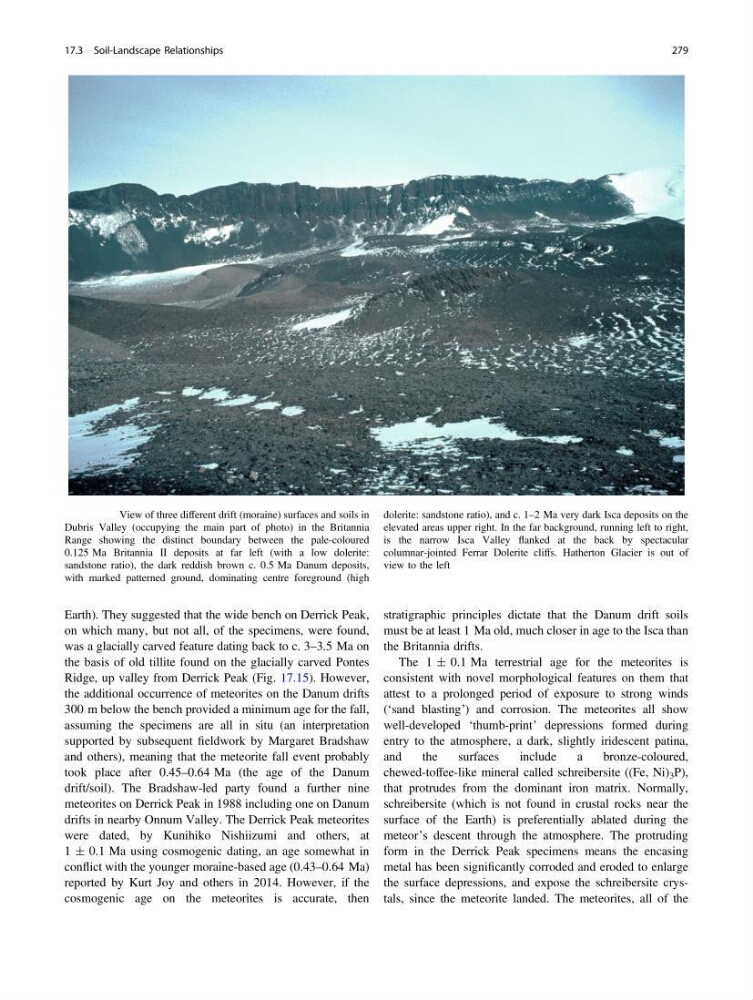
Fig. 17.14 View of three different drift (moraine) surfaces and soils in
Dubris Valley (occupying the main part of photo) in the Britannia
Range showing the distinct boundary between the pale-coloured
0.125 Ma Britannia II deposits at far left (with a low dolerite:
sandstone ratio), the dark reddish brown c. 0.5 Ma Danum deposits,
with marked patterned ground, dominating centre foreground (high
dolerite: sandstone ratio), and c. 1–2 Ma very dark Isca deposits on the
elevated areas upper right. In the far background, running left to right,
is the narrow Isca Valley flanked at the back by spectacular
columnar-jointed Ferrar Dolerite cliffs. Hatherton Glacier is out of
view to the left
17.3 Soil-Landscape Relationships
279
on which many, but not all, of the specimens, were found,
was a glacially carved feature dating back to c. 3–3.5 Ma on
the basis of old tillite found on the glacially carved Pontes
Ridge, up valley from Derrick Peak (Fig. 17.15). However,
the additional occurrence of meteorites on the Danum drifts
300 m below the bench provided a minimum age for the fall,
assuming the specimens are all in situ (an interpretation
supported by subsequent fieldwork by Margaret Bradshaw
and others), meaning that the meteorite fall event probably
took place after 0.45–0.64 Ma (the age of the Danum
drift/soil). The Bradshaw-led party found a further nine
meteorites on Derrick Peak in 1988 including one on Danum
drifts in nearby Onnum Valley. The Derrick Peak meteorites
were dated, by Kunihiko Nishiizumi and others, at
1 ± 0.1 Ma using cosmogenic dating, an age somewhat in
conflict with the younger moraine-based age (0.43–0.64 Ma)
reported by Kurt Joy and others in 2014. However, if the
cosmogenic age on the meteorites is accurate, then
stratigraphic principles dictate that the Danum drift soils
must be at least 1 Ma old, much closer in age to the Isca than
the Britannia drifts.
The 1 ± 0.1 Ma terrestrial age for the meteorites is
consistent with novel morphological features on them that
attest to a prolonged period of exposure to strong winds
(‘sand blasting’) and corrosion. The meteorites all show
well-developed ‘thumb-print’ depressions formed during
entry to the atmosphere, a dark, slightly iridescent patina,
and
the
surfaces
include
a
bronze-coloured,
chewed-toffee-like mineral called schreibersite ((Fe, Ni) 3 P),
that protrudes from the dominant iron matrix. Normally,
schreibersite (which is not found in crustal rocks near the
surface of the Earth) is preferentially ablated during the
meteor’s descent through the atmosphere. The protruding
form in the Derrick Peak specimens means the encasing
metal has been significantly corroded and eroded to enlarge
the surface depressions, and expose the schreibersite crystals, since the meteorite landed. The meteorites, all of the
Fig. 17.14 View of three different drift (moraine) surfaces and soils in
Dubris Valley (occupying the main part of photo) in the Britannia
Range showing the distinct boundary between the pale-coloured
0.125 Ma Britannia II deposits at far left (with a low dolerite:
sandstone ratio), the dark reddish brown c. 0.5 Ma Danum deposits,
with marked patterned ground, dominating centre foreground (high
dolerite: sandstone ratio), and c. 1–2 Ma very dark Isca deposits on the
elevated areas upper right. In the far background, running left to right,
is the narrow Isca Valley flanked at the back by spectacular
columnar-jointed Ferrar Dolerite cliffs. Hatherton Glacier is out of
view to the left
17.3 Soil-Landscape Relationships
279