

initially estimated by limited radiocarbon dating and correlation with ages on moraines in the Dry Valleys. More recent
work, however, has used surface exposure dating (cosmogenic dating) to develop a more robust age framework for
the drifts and associated soils (conflicting in part with data
from the nearby Darwin Mountains) as follows (in order of
increasing age): (i) the Hatherton soil (on Hatherton drift) is
between c. 700 and 2000 years old; (ii) the Britannia I soil
(on Britannia I drift) is between 5000 and 8000 years old;
(iii) the Britannia II soil (on Britannia II drift) is 125 ka in
age; (iv) the Danum soil (on Danum drift) is between 0.45
and 0.64 Ma; and (v) the Isca soils (on Isca drift), are aged
between 1 and 2 Ma.
The drifts and soils were recognised and mapped using
multiple criteria including differences in lithology that
showed up as (i) marked differences in colour (Fig. 17.14),
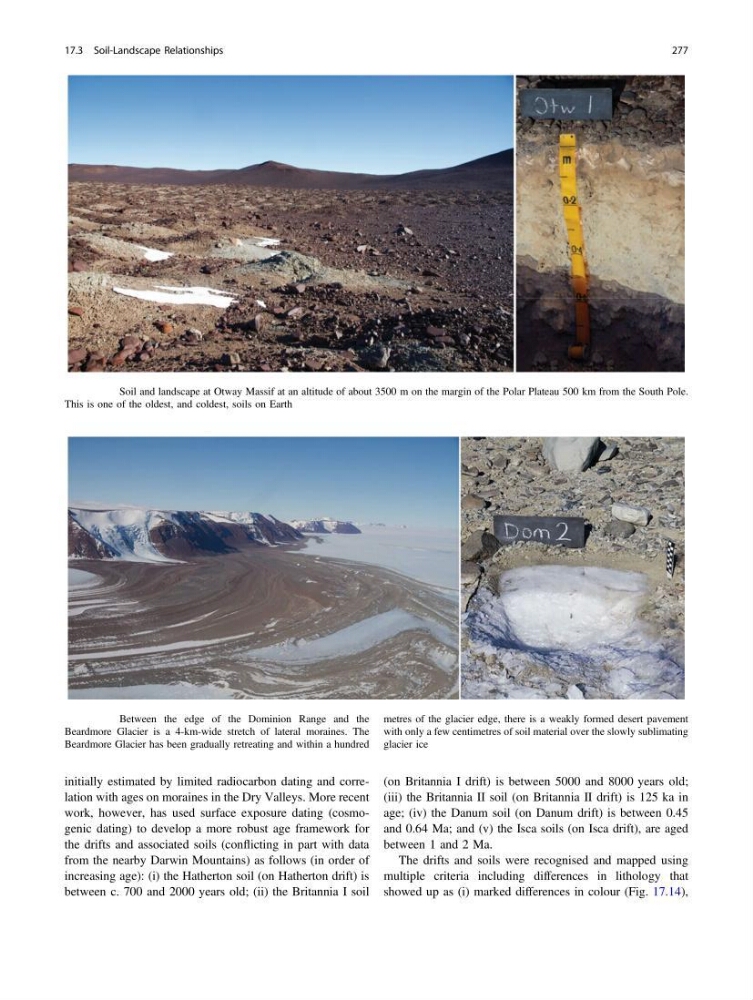
Fig. 17.10 Soil and landscape at Otway Massif at an altitude of about 3500 m on the margin of the Polar Plateau 500 km from the South Pole.
This is one of the oldest, and coldest, soils on Earth
Fig. 17.11 Between the edge of the Dominion Range and the
Beardmore Glacier is a 4-km-wide stretch of lateral moraines. The
Beardmore Glacier has been gradually retreating and within a hundred
metres of the glacier edge, there is a weakly formed desert pavement
with only a few centimetres of soil material over the slowly sublimating
glacier ice
17.3 Soil-Landscape Relationships
277
work, however, has used surface exposure dating (cosmogenic dating) to develop a more robust age framework for
the drifts and associated soils (conflicting in part with data
from the nearby Darwin Mountains) as follows (in order of
increasing age): (i) the Hatherton soil (on Hatherton drift) is
between c. 700 and 2000 years old; (ii) the Britannia I soil
(on Britannia I drift) is between 5000 and 8000 years old;
(iii) the Britannia II soil (on Britannia II drift) is 125 ka in
age; (iv) the Danum soil (on Danum drift) is between 0.45
and 0.64 Ma; and (v) the Isca soils (on Isca drift), are aged
between 1 and 2 Ma.
The drifts and soils were recognised and mapped using
multiple criteria including differences in lithology that
showed up as (i) marked differences in colour (Fig. 17.14),
Fig. 17.10 Soil and landscape at Otway Massif at an altitude of about 3500 m on the margin of the Polar Plateau 500 km from the South Pole.
This is one of the oldest, and coldest, soils on Earth
Fig. 17.11 Between the edge of the Dominion Range and the
Beardmore Glacier is a 4-km-wide stretch of lateral moraines. The
Beardmore Glacier has been gradually retreating and within a hundred
metres of the glacier edge, there is a weakly formed desert pavement
with only a few centimetres of soil material over the slowly sublimating
glacier ice
17.3 Soil-Landscape Relationships
277