

the end of the last glaciation (during the Holocene, last
11,700 years or so), under forest vegetation, mainly mixed
conifer (podocarps, kauri, cedar) and broadleaf hardwoods
together with southern beeches. Under conifer forests the
organic matter tends to build up as a litter horizon (sometimes
called mor-humus) on the soil surface as the acid conditions
and lack of nitrogen inhibit biodegradation of organic
materials. Under broadleaf forest, and grasslands, the pH of
litter materials is higher and more nutrients are available, thus
the organic matter tends to be more rapidly broken down and
incorporated into the soil (forming mull-humus).
Changing vegetation from native forests to pasture has
occurred over about two-thirds of New Zealand. Soil carbon
in topsoils tends to be higher under pasture than under forests as the grass roots grow and die quickly and contribute to
a buildup in soil organic matter. Removal of vegetation can
lead to increases in soil erosion and loss of soil materials.
Addition of fertiliser stimulates plant growth, and also
microbial activity.
Recent advances in DNA sequencing are giving a much
greater appreciation of the biodiversity of the soil microbial
population. There is still a lot of work to do to apply the new
tools to understanding the myriad microbes in the soil, and
their role in nutrient recycling and other soil processes.
1.2.4 Time
The longer a land surface has been stable the more time
weathering, leaching, and other soil-forming processes have
had to operate. Very young soils show minimal alteration of
the parent materials from which they are formed. By contrast
soils that have had long periods (at least tens of thousands of
years) of time in which to weather and develop are likely to
be dominated by clays and have low fertility as nutrients
have been leached from them. By global standards many
(but not all) New Zealand soils are relatively young with
landforms and associated soils less than about 15,000 years
old. The youngest soils in New Zealand are scattered
throughout the country on newly deposited materials
including alluvium on river flood plains, landslide debris,
colluvium, and recent volcanic deposits. Young soils also
occur on sites where erosion has removed material, such as
the steep lands and mountains of the North Island axial
ranges and the Southern Alps. Thus even though a parent
material, such as greywacke, can be millions of years old,
frequent erosion in steep terrains means that any soil formed
on it is lost and fresh underlying rock is exhumed as a new
parent material.
Where soils are formed on tephra deposits that have been
dated, the age of the soils (defined here for the purpose of
age estimation as approximately the uppermost 1 m of the
soil profile) can sometimes be estimated. For example,
Allophanic Soils developed on thinly bedded composite
tephras in the eastern Waikato date back about 25,000 years;
those in western and southwestern Waikato date back
about 50,000 years. Soils on older strongly weathered
tephra (Hamilton Ash beds) are between 50,000 and
340,000 years old depending on the depth of constituent
beds.
Some of New Zealand’s most stable land surfaces are in
the Marlborough, northern Waikato, and Northland regions
where a long time, combined with a warm, moist, climate,
and relatively low tectonic activity, have produced New
Zealand’s most strongly weathered soils, some of which are
likely to be of the order of several hundred thousand years
old. Some surprisingly old soils, of a similar age, have also
been identified in Central Otago.
1.3 The Soil Profile and Key Soil Properties
1.3.1 The Definition of Soil
Most people think they know what ‘soil’ is. However, it is
not necessarily a simple matter to accurately define what is,
or is not, soil. One widely accepted definition is that of the
United States Department of Agriculture, who in the soil
classification system, Soil Taxonomy, have (since 1999)
defined soil as ‘a natural body comprised of solids (minerals
and organic matter), liquid, and gases that occurs on the land
surface, occupies space, and is characterised by one or both
of the following: horizons, or layers, that are distinguishable
from the initial material as a result of additions, losses,
transfers and transformations of energy and matter or the
ability to support rooted plants in a natural environment’.
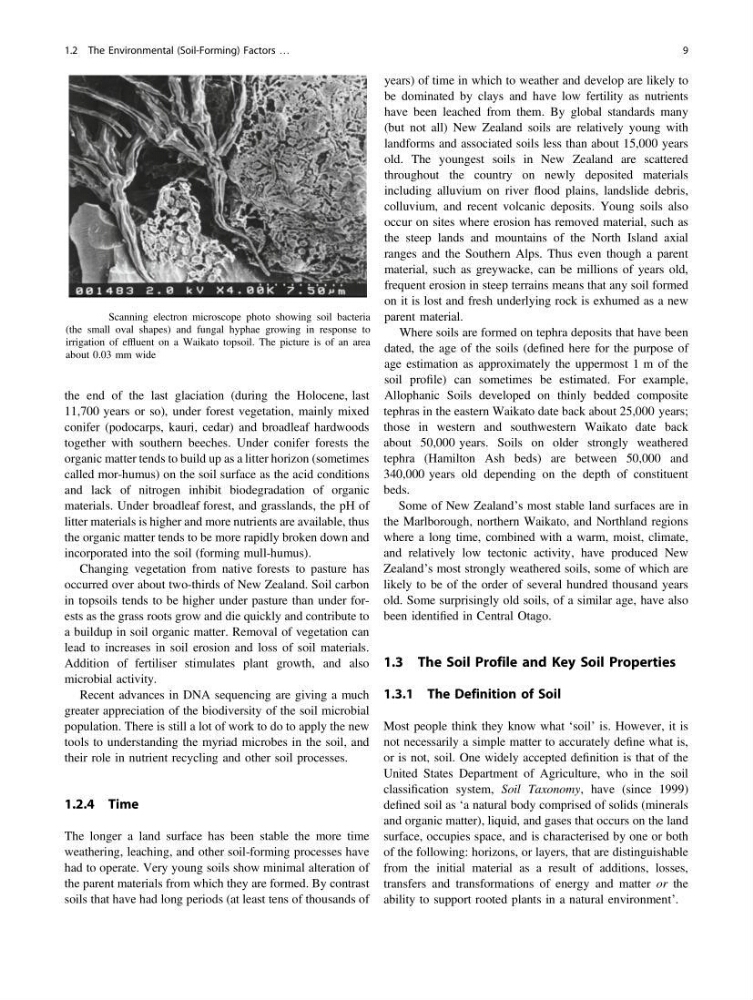
Fig. 1.5 Scanning electron microscope photo showing soil bacteria
(the small oval shapes) and fungal hyphae growing in response to
irrigation of effluent on a Waikato topsoil. The picture is of an area
about 0.03 mm wide
1.2 The Environmental (Soil-Forming) Factors …
9
11,700 years or so), under forest vegetation, mainly mixed
conifer (podocarps, kauri, cedar) and broadleaf hardwoods
together with southern beeches. Under conifer forests the
organic matter tends to build up as a litter horizon (sometimes
called mor-humus) on the soil surface as the acid conditions
and lack of nitrogen inhibit biodegradation of organic
materials. Under broadleaf forest, and grasslands, the pH of
litter materials is higher and more nutrients are available, thus
the organic matter tends to be more rapidly broken down and
incorporated into the soil (forming mull-humus).
Changing vegetation from native forests to pasture has
occurred over about two-thirds of New Zealand. Soil carbon
in topsoils tends to be higher under pasture than under forests as the grass roots grow and die quickly and contribute to
a buildup in soil organic matter. Removal of vegetation can
lead to increases in soil erosion and loss of soil materials.
Addition of fertiliser stimulates plant growth, and also
microbial activity.
Recent advances in DNA sequencing are giving a much
greater appreciation of the biodiversity of the soil microbial
population. There is still a lot of work to do to apply the new
tools to understanding the myriad microbes in the soil, and
their role in nutrient recycling and other soil processes.
1.2.4 Time
The longer a land surface has been stable the more time
weathering, leaching, and other soil-forming processes have
had to operate. Very young soils show minimal alteration of
the parent materials from which they are formed. By contrast
soils that have had long periods (at least tens of thousands of
years) of time in which to weather and develop are likely to
be dominated by clays and have low fertility as nutrients
have been leached from them. By global standards many
(but not all) New Zealand soils are relatively young with
landforms and associated soils less than about 15,000 years
old. The youngest soils in New Zealand are scattered
throughout the country on newly deposited materials
including alluvium on river flood plains, landslide debris,
colluvium, and recent volcanic deposits. Young soils also
occur on sites where erosion has removed material, such as
the steep lands and mountains of the North Island axial
ranges and the Southern Alps. Thus even though a parent
material, such as greywacke, can be millions of years old,
frequent erosion in steep terrains means that any soil formed
on it is lost and fresh underlying rock is exhumed as a new
parent material.
Where soils are formed on tephra deposits that have been
dated, the age of the soils (defined here for the purpose of
age estimation as approximately the uppermost 1 m of the
soil profile) can sometimes be estimated. For example,
Allophanic Soils developed on thinly bedded composite
tephras in the eastern Waikato date back about 25,000 years;
those in western and southwestern Waikato date back
about 50,000 years. Soils on older strongly weathered
tephra (Hamilton Ash beds) are between 50,000 and
340,000 years old depending on the depth of constituent
beds.
Some of New Zealand’s most stable land surfaces are in
the Marlborough, northern Waikato, and Northland regions
where a long time, combined with a warm, moist, climate,
and relatively low tectonic activity, have produced New
Zealand’s most strongly weathered soils, some of which are
likely to be of the order of several hundred thousand years
old. Some surprisingly old soils, of a similar age, have also
been identified in Central Otago.
1.3 The Soil Profile and Key Soil Properties
1.3.1 The Definition of Soil
Most people think they know what ‘soil’ is. However, it is
not necessarily a simple matter to accurately define what is,
or is not, soil. One widely accepted definition is that of the
United States Department of Agriculture, who in the soil
classification system, Soil Taxonomy, have (since 1999)
defined soil as ‘a natural body comprised of solids (minerals
and organic matter), liquid, and gases that occurs on the land
surface, occupies space, and is characterised by one or both
of the following: horizons, or layers, that are distinguishable
from the initial material as a result of additions, losses,
transfers and transformations of energy and matter or the
ability to support rooted plants in a natural environment’.
Fig. 1.5 Scanning electron microscope photo showing soil bacteria
(the small oval shapes) and fungal hyphae growing in response to
irrigation of effluent on a Waikato topsoil. The picture is of an area
about 0.03 mm wide
1.2 The Environmental (Soil-Forming) Factors …
9