

liquefaction in earthquakes. While liquefaction events are
relatively infrequent, the damage to infrastructure may be
significant as experienced in the Christchurch area after the
2011 and 2012 earthquakes. In areas of risk, buildings can
be designed for resilience to liquefaction. Farmland generally recovers fairly readily from liquefaction damage.
A few New Zealand towns, including Te Aroha (in the
Waikato region), Matatā (in the Bay of Plenty), and Mosgiel
(in Otago), are built on gently sloping alluvial fans. Such
fans have formed from material, often including large
boulders, carried in debris flows from adjacent hill and
mountain streams. Occasional major storm events have
brought great damage to both Te Aroha and Matatā. At the
time of writing, it was proposed that all houses be removed
from the parts of Matatā that are at risk, with the Whakatāne
District Council (supported financially by Bay of Plenty
Regional Council and central Government) offering to buy
homes at risk from further debris flows at market value as
part of a managed retreat. Several homes have already been
demolished under this scheme, which was seen to be more
cost-effective than attempting to remediate and mitigate
against further debris flow events.
There are a number of areas of Sandy Recent Soils,
particularly on the west coasts of both the North and South
Islands, formed on sand dunes that have been stable for a
few hundred years (Chap. 13). Sandy Recent Soils have been
developed for pastoral farming or forestry. Such soils should
not be ploughed, and grazing animals, or forest harvesting,
need to be managed carefully, as any loss of vegetation
cover may lead to wind erosion and reactivation of the
dunes. Large moving dunes are difficult to stabilise and
wind-blown sand moving across the landscape has potential
to bury anything in its path. Some areas, such as those in
South Westland, are under protection for conservation as
unique ecosystems.
Orthic Raw Soils are common in the soft-rock hill
country. After erosion has stripped the upper soil profile
leaving a Raw Soil, how quickly can a Recent Soil develop
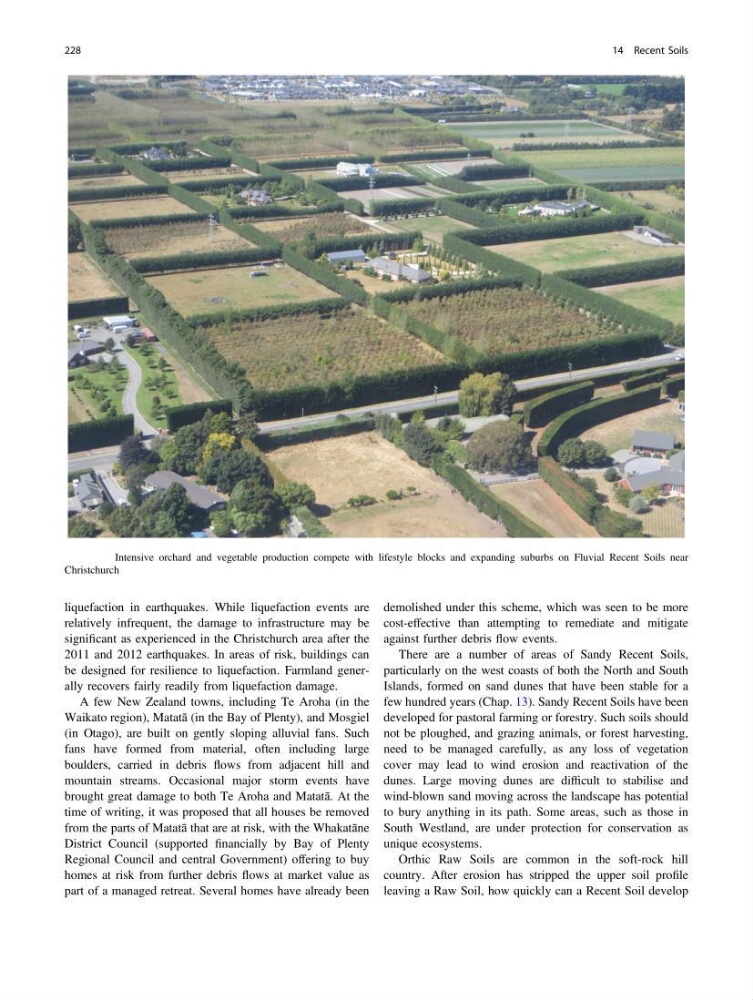
Fig. 14.9 Intensive orchard and vegetable production compete with lifestyle blocks and expanding suburbs on Fluvial Recent Soils near
Christchurch
228
14 Recent Soils
relatively infrequent, the damage to infrastructure may be
significant as experienced in the Christchurch area after the
2011 and 2012 earthquakes. In areas of risk, buildings can
be designed for resilience to liquefaction. Farmland generally recovers fairly readily from liquefaction damage.
A few New Zealand towns, including Te Aroha (in the
Waikato region), Matatā (in the Bay of Plenty), and Mosgiel
(in Otago), are built on gently sloping alluvial fans. Such
fans have formed from material, often including large
boulders, carried in debris flows from adjacent hill and
mountain streams. Occasional major storm events have
brought great damage to both Te Aroha and Matatā. At the
time of writing, it was proposed that all houses be removed
from the parts of Matatā that are at risk, with the Whakatāne
District Council (supported financially by Bay of Plenty
Regional Council and central Government) offering to buy
homes at risk from further debris flows at market value as
part of a managed retreat. Several homes have already been
demolished under this scheme, which was seen to be more
cost-effective than attempting to remediate and mitigate
against further debris flow events.
There are a number of areas of Sandy Recent Soils,
particularly on the west coasts of both the North and South
Islands, formed on sand dunes that have been stable for a
few hundred years (Chap. 13). Sandy Recent Soils have been
developed for pastoral farming or forestry. Such soils should
not be ploughed, and grazing animals, or forest harvesting,
need to be managed carefully, as any loss of vegetation
cover may lead to wind erosion and reactivation of the
dunes. Large moving dunes are difficult to stabilise and
wind-blown sand moving across the landscape has potential
to bury anything in its path. Some areas, such as those in
South Westland, are under protection for conservation as
unique ecosystems.
Orthic Raw Soils are common in the soft-rock hill
country. After erosion has stripped the upper soil profile
leaving a Raw Soil, how quickly can a Recent Soil develop
Fig. 14.9 Intensive orchard and vegetable production compete with lifestyle blocks and expanding suburbs on Fluvial Recent Soils near
Christchurch
228
14 Recent Soils