

In topsoils, where soil carbon contents tend to be moderate, the organic matter provides some exchange sites and
the CEC is often in the medium range. As for many soils,
base saturation levels of topsoils vary widely, being higher
where fertiliser has been applied.
9.4.4 Biological Properties
Much of the area of Oxidic Soils was likely to have originally been under kauri/podocarp forest since the end of the
last glaciation. Unlike the rest of New Zealand, forest cover
was maintained in Northland during the preceding glacial
period and comprised tall podocarp-broadleaf and beech
forest. Fire and precipitation change (especially dry phases)
have played key roles in vegetation development in the
region during the last glacial-interglacial cycle. However,
human-fire-induced, relatively impoverished, scrub vegetation dominated by manuka (Leptospernum scoparium), kumarahou (Pomaderris kumaraho), and wiwi (Juncus
krussii), plants that are tolerant of low pH and low nutrients,
predominated following Polynesian arrival. Most of the area
of Oxidic Soils was reported as still being in ‘scrub’ in the
1960s and early 1970s.
In its natural soil state the soil biological habitat, characterised by low nutrient availability, and low to very low
pH, the potential for aluminium toxicity in plants, and often
with droughty conditions in summer, is a challenging environment for plants, and also for many soil organisms. Such
conditions favour organisms that are adapted to the environment with reduced competition from less tolerant species.
Use of fertiliser and lime, along with irrigation in dry periods, will greatly improve conditions for many plants and soil
organisms in the Oxidic Soils.
9.5 Distinguishing Between Oxidic Soils
and Related Soil Orders
Oxidic Soils differ from Granular Soils by having an oxidic
horizon (>30 cm in thickness with its upper boundary
between 20 and 60 cm from the soil surface) and very low
cation exchange capacities which limit the soil’s capacity to
store nutrients. The soil aggregates in an oxidic horizon
slake rapidly in water to become stable microaggregates but
these essentially do not disperse, in contrast to the behaviour
of aggregates in Granular and Ultic Soils. Granular Soils are
also more porous and less likely to restrict root extension.
Field identification of Oxidic Soil is based on the stable
behaviour of the soil material from moist to dry states. Primary ped strength and soil strength are either weak or very
weak. Most Oxidic Soils occur on the oldest, most stable
basalt or mafic-ultramafic rock surfaces (or associated fragmental or reworked deposits) that usually lack surface stone
outcrops because of their deep weathering. Granular Soils
occur largely on the thick, weathered tephra deposits of the
Hamilton Ash beds or younger volcanic surfaces, including
basalt lavas, or on sloping areas where erosion has reinvigorated soil processes. On lavas, boulders often outcrop at the
soil surface, and many have been collected up and assembled
into stone walls. Oxidic Granular Soils provide a useful intergrade where oxidic horizons, although insufficiently thick
or outside the control section, nevertheless confer oxidic
properties to the Granular Soils. A similar intergrade, Oxidic
Brown Soils, is common in the Pukekohe-Bombay area
where limited Oxidic Soils can occur alongside Granular
Soils.
Oxidic Soils differ from Ultic Soils by darker colours
arising from the presence of the iron oxides, which have
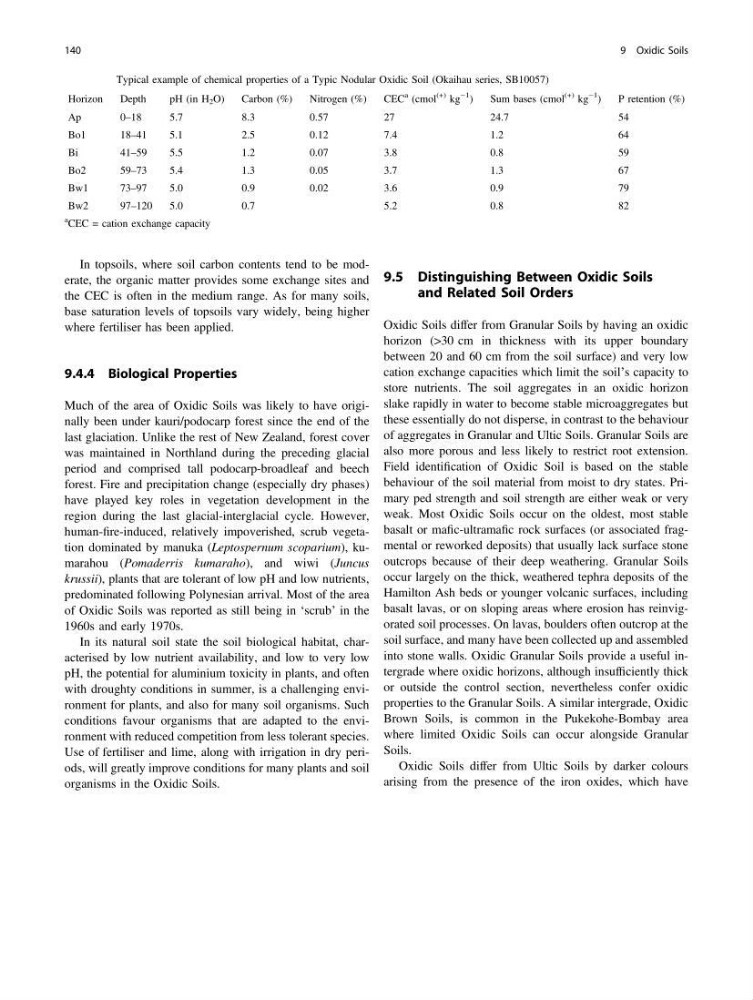
Table 9.2 Typical example of chemical properties of a Typic Nodular Oxidic Soil (Okaihau series, SB10057)
Horizon
Depth
pH (in H 2 O)
Carbon (%)
Nitrogen (%)
CEC
a (cmol
(+) kg
−1
)
Sum bases (cmol
(+) kg
−1
)
P retention (%)
Ap
0–18
5.7
8.3
0.57
27
24.7
54
Bo1
18–41
5.1
2.5
0.12
7.4
1.2
64
Bi
41–59
5.5
1.2
0.07
3.8
0.8
59
Bo2
59–73
5.4
1.3
0.05
3.7
1.3
67
Bw1
73–97
5.0
0.9
0.02
3.6
0.9
79
Bw2
97–120
5.0
0.7
5.2
0.8
82
a CEC = cation exchange capacity
140
9 Oxidic Soils
the CEC is often in the medium range. As for many soils,
base saturation levels of topsoils vary widely, being higher
where fertiliser has been applied.
9.4.4 Biological Properties
Much of the area of Oxidic Soils was likely to have originally been under kauri/podocarp forest since the end of the
last glaciation. Unlike the rest of New Zealand, forest cover
was maintained in Northland during the preceding glacial
period and comprised tall podocarp-broadleaf and beech
forest. Fire and precipitation change (especially dry phases)
have played key roles in vegetation development in the
region during the last glacial-interglacial cycle. However,
human-fire-induced, relatively impoverished, scrub vegetation dominated by manuka (Leptospernum scoparium), kumarahou (Pomaderris kumaraho), and wiwi (Juncus
krussii), plants that are tolerant of low pH and low nutrients,
predominated following Polynesian arrival. Most of the area
of Oxidic Soils was reported as still being in ‘scrub’ in the
1960s and early 1970s.
In its natural soil state the soil biological habitat, characterised by low nutrient availability, and low to very low
pH, the potential for aluminium toxicity in plants, and often
with droughty conditions in summer, is a challenging environment for plants, and also for many soil organisms. Such
conditions favour organisms that are adapted to the environment with reduced competition from less tolerant species.
Use of fertiliser and lime, along with irrigation in dry periods, will greatly improve conditions for many plants and soil
organisms in the Oxidic Soils.
9.5 Distinguishing Between Oxidic Soils
and Related Soil Orders
Oxidic Soils differ from Granular Soils by having an oxidic
horizon (>30 cm in thickness with its upper boundary
between 20 and 60 cm from the soil surface) and very low
cation exchange capacities which limit the soil’s capacity to
store nutrients. The soil aggregates in an oxidic horizon
slake rapidly in water to become stable microaggregates but
these essentially do not disperse, in contrast to the behaviour
of aggregates in Granular and Ultic Soils. Granular Soils are
also more porous and less likely to restrict root extension.
Field identification of Oxidic Soil is based on the stable
behaviour of the soil material from moist to dry states. Primary ped strength and soil strength are either weak or very
weak. Most Oxidic Soils occur on the oldest, most stable
basalt or mafic-ultramafic rock surfaces (or associated fragmental or reworked deposits) that usually lack surface stone
outcrops because of their deep weathering. Granular Soils
occur largely on the thick, weathered tephra deposits of the
Hamilton Ash beds or younger volcanic surfaces, including
basalt lavas, or on sloping areas where erosion has reinvigorated soil processes. On lavas, boulders often outcrop at the
soil surface, and many have been collected up and assembled
into stone walls. Oxidic Granular Soils provide a useful intergrade where oxidic horizons, although insufficiently thick
or outside the control section, nevertheless confer oxidic
properties to the Granular Soils. A similar intergrade, Oxidic
Brown Soils, is common in the Pukekohe-Bombay area
where limited Oxidic Soils can occur alongside Granular
Soils.
Oxidic Soils differ from Ultic Soils by darker colours
arising from the presence of the iron oxides, which have
Table 9.2 Typical example of chemical properties of a Typic Nodular Oxidic Soil (Okaihau series, SB10057)
Horizon
Depth
pH (in H 2 O)
Carbon (%)
Nitrogen (%)
CEC
a (cmol
(+) kg
−1
)
Sum bases (cmol
(+) kg
−1
)
P retention (%)
Ap
0–18
5.7
8.3
0.57
27
24.7
54
Bo1
18–41
5.1
2.5
0.12
7.4
1.2
64
Bi
41–59
5.5
1.2
0.07
3.8
0.8
59
Bo2
59–73
5.4
1.3
0.05
3.7
1.3
67
Bw1
73–97
5.0
0.9
0.02
3.6
0.9
79
Bw2
97–120
5.0
0.7
5.2
0.8
82
a CEC = cation exchange capacity
140
9 Oxidic Soils