

(Cerezo-Guisado et al. 2015). Anti-cancer activity on hormonal regulation is also
shown by epigallocatechin as it suppresses estrogen (estradiol, E 2 ) induced breast
cancer cell proliferation (Tu et al. 2011) or it antagonizes androgen, leading to suppression of prostate cancer growth both in vitro and in vivo (Siddiqui et al. 2011).
Different anti-tumor and anti-cancer activity of annis is as follow listed in Table 21.6.
21.9.4 Anti-diabetic Property
Tannins possess potential anti-diabetic action by several mechanisms (Karan et al.
2013). Firstly, tannins do possess the ability to lower blood glucose levels by
delaying intestinal glucose absorption or through the inhibition of a-amylase and as
well as by exerting a-glucosidase activity. It has been suggested that the interaction
of tannins with human a-amylase depends on the possessed free hydroxyl group
that are able to participate in hydrogen bonding (Kandra et al. 2004) and the
inhibition of intestinal a-glucosidase activity is given by proanthocyanidin content
(McDougall et al. 2005). Tannins can also work on insulin and insulin receptor cells
by inducing insulin-like effect on insulin sensitive tissues or by delaying the onset
of insulin-dependent diabetes mellitus by regulating the antioxidant environment of
pancreatic b-cells (Serrano et al. 2009). Procyanidin found in grape seed can show
insulinomimetic action resulting hypoglycaemia (Pinent et al. 2004). 1,2,3,4,6penta-o-galloyl-b-D-glucopyranose binds to insulin receptor, stimulates glucose
transport in adipocytes and maintains blood glucose levels in body (Li et al. 2005).
In-vivo activities have been reported in defining diabetes prevention by bark extract
of Syzygium cumini. Tannins from Syzygium cumini have been reported to increase
plasma insulin and C-peptide levels with reduction of blood glucose levels of both
normal and diabetic rats after 45 days oral administration (Saravanan and
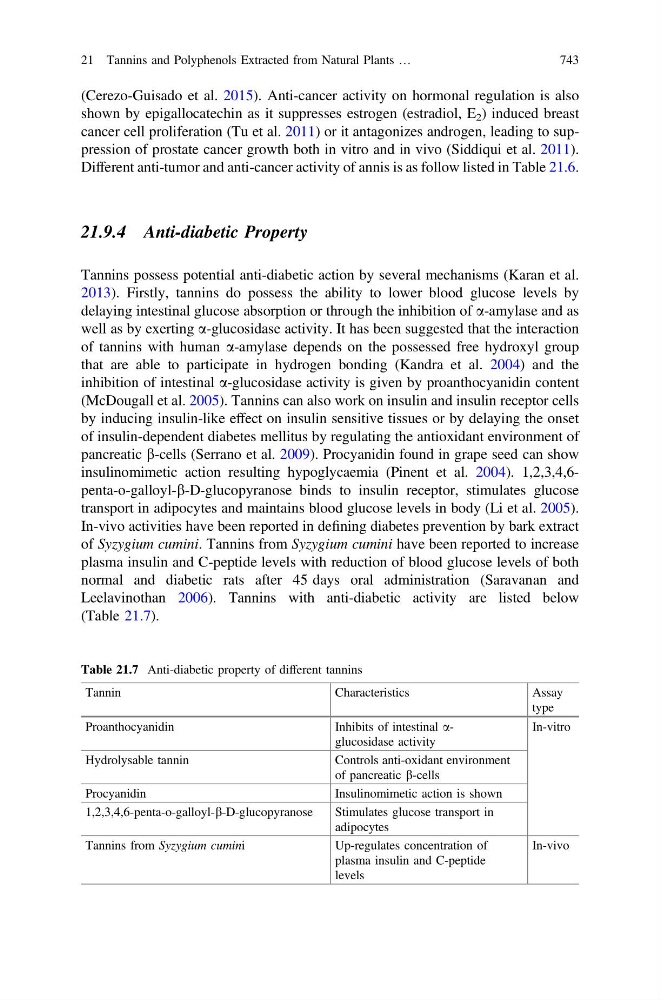
Leelavinothan 2006). Tannins with anti-diabetic activity are listed below
(Table 21.7).
Table 21.7 Anti-diabetic property of different tannins
Tannin
Characteristics
Assay
type
Proanthocyanidin
Inhibits of intestinal aglucosidase activity
In-vitro
Hydrolysable tannin
Controls anti-oxidant environment
of pancreatic b-cells
Procyanidin
Insulinomimetic action is shown
1,2,3,4,6-penta-o-galloyl-b-D-glucopyranose
Stimulates glucose transport in
adipocytes
Tannins from Syzygium cumini
Up-regulates concentration of
plasma insulin and C-peptide
levels
In-vivo
21 Tannins and Polyphenols Extracted from Natural Plants …
743