

present in Cupressus lusitanica cell culture. The process was stared with the formation of fresh suspension culture of the plant from fresh cells (4 g) followed by
addition yeast (1 mg/ml) on to the five days old culture. Then in a single treatment
all plant growth regulators such as calcium ionophore, cholera toxin, mastopaoran
and actinomycin were added alone or along with twenty minutes prior to elicitation.
The outcomes revealed that b-thujaplicin was greater in production with yeast
elicitor within 2–4 days of incubation. The enzymatic activities against isopentenyl
pyrophosphate isomerase, geranyl pyrophosphate synthase and monoterpene synthase showed that maximum activity within 1–2 days incubation with yeast elicitor.
In all the cases MJ was just one step down than yeast elicitation but greater than
dimethylsulfoxide control. These data confirmed the importance of yeast on the
natural antimicrobial b-thujaplicin production from C. lusitanica callus culture
(Zhao et al. 2006).
1.4.3.3 Effects of Yeast, Chitosan, MJ and Heat on Secondary
Metabolite Accumulation in Khus Root Extracts
Moon et al. scientifically proved the importance of yeast, chitosan, MJ and heat as
dual abiotic-biotic elicitor on the production of para hydroxyl benzoic acid, vanillin,
para coumaric acid, ferulic acid, total phenolic content followed by antioxidative
effects using DPPH (Diphenyl picrylhydrazyl), ABTS (Azino bisethyl benzothiazoline sulfonic acid) and FRAP (Ferric reducing ability of plasma) methods as well
as acetycholinesterase activity. The experiment was started with reaction between
(5–6) long root of khus plant and chitosan biotic elicitor with 100, 200 and 300 mg/
l or MJ with 25, 50 and 75 micromolar concentration or yeast elicitor with 5, 10 and
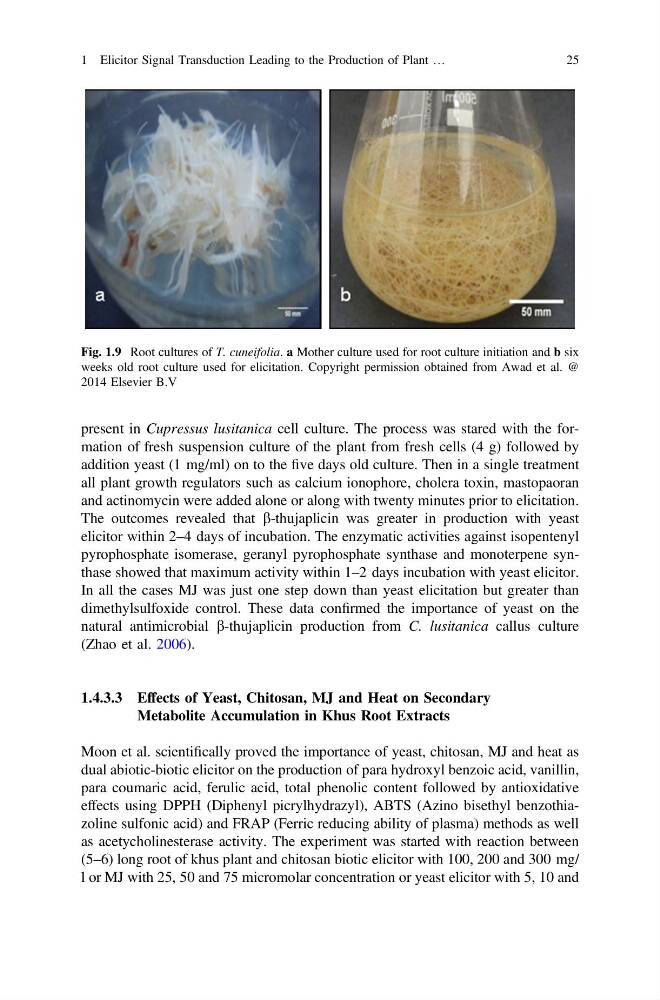
Fig. 1.9 Root cultures of T. cuneifolia. a Mother culture used for root culture initiation and b six
weeks old root culture used for elicitation. Copyright permission obtained from Awad et al. @
2014 Elsevier B.V
1 Elicitor Signal Transduction Leading to the Production of Plant …
25
addition yeast (1 mg/ml) on to the five days old culture. Then in a single treatment
all plant growth regulators such as calcium ionophore, cholera toxin, mastopaoran
and actinomycin were added alone or along with twenty minutes prior to elicitation.
The outcomes revealed that b-thujaplicin was greater in production with yeast
elicitor within 2–4 days of incubation. The enzymatic activities against isopentenyl
pyrophosphate isomerase, geranyl pyrophosphate synthase and monoterpene synthase showed that maximum activity within 1–2 days incubation with yeast elicitor.
In all the cases MJ was just one step down than yeast elicitation but greater than
dimethylsulfoxide control. These data confirmed the importance of yeast on the
natural antimicrobial b-thujaplicin production from C. lusitanica callus culture
(Zhao et al. 2006).
1.4.3.3 Effects of Yeast, Chitosan, MJ and Heat on Secondary
Metabolite Accumulation in Khus Root Extracts
Moon et al. scientifically proved the importance of yeast, chitosan, MJ and heat as
dual abiotic-biotic elicitor on the production of para hydroxyl benzoic acid, vanillin,
para coumaric acid, ferulic acid, total phenolic content followed by antioxidative
effects using DPPH (Diphenyl picrylhydrazyl), ABTS (Azino bisethyl benzothiazoline sulfonic acid) and FRAP (Ferric reducing ability of plasma) methods as well
as acetycholinesterase activity. The experiment was started with reaction between
(5–6) long root of khus plant and chitosan biotic elicitor with 100, 200 and 300 mg/
l or MJ with 25, 50 and 75 micromolar concentration or yeast elicitor with 5, 10 and
Fig. 1.9 Root cultures of T. cuneifolia. a Mother culture used for root culture initiation and b six
weeks old root culture used for elicitation. Copyright permission obtained from Awad et al. @
2014 Elsevier B.V
1 Elicitor Signal Transduction Leading to the Production of Plant …
25