

leaves and twigs of A. scholaris (Fig. 14.10) and evaluated their cytotoxicity effects
against MCF-7 cell lines (Kuok et al. 2017). 61 exhibited moderate cytotoxicity
(IC 50 > 39.8 µM), while the remaining compounds, 62 and 63 did not exhibit any
cytotoxic activity (IC 50 > 50 µM).
Wang et al. identified the glioma stem cells (GSCs) inhibiting scholarisine Q
(64) and scholarisine R (65) (nor-monoterpenoid alkaloids, Fig. 14.11) from the
methanolic extract of A. scholaris fruits (Wang et al. 2018). As represented in
Table 14.7, 64 exhibited a significant effect to that of taxol. Further cell proliferation assay of the tested compounds indicated the inhibition of GSCs proliferation.
Oleanolic acid (50)
O
OH
HO
Betulin (51); R = CH 2 OH
Betulinic acid (52); R = COOH
HO
R
2 ,3 ,28-Lup-20(29)-ene-triol (53)
HO
OH
HO
Lupeol (54)
HO
-Amyrin (55)
HO
H
Poriferasterol (56)
HO
Epicampesterol (57)
HO
HO
-Sitosterol (58)
6 -Hydroxy-4-stigmasten-3-one (59)
O
OH
Ergosta-7,22-diene-3 ,5 ,6 -triol (60)
HO
OH
OH
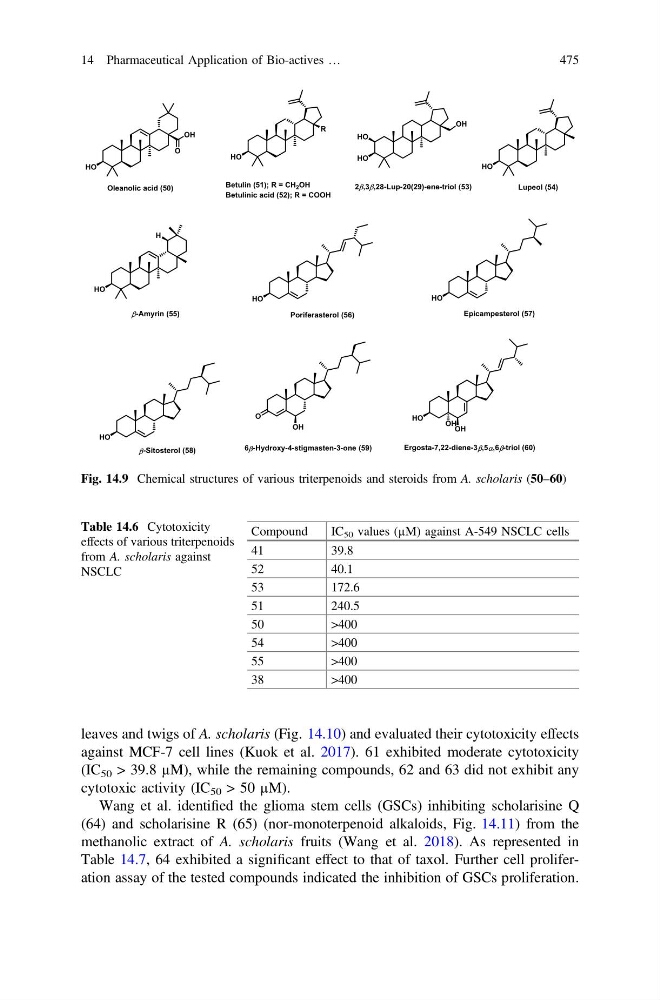
Fig. 14.9 Chemical structures of various triterpenoids and steroids from A. scholaris (50–60)
Table 14.6 Cytotoxicity
effects of various triterpenoids
from A. scholaris against
NSCLC
Compound
IC 50 values (µM) against A-549 NSCLC cells
41
39.8
52
40.1
53
172.6
51
240.5
50
>400
54
>400
55
>400
38
>400
14 Pharmaceutical Application of Bio-actives …
475
against MCF-7 cell lines (Kuok et al. 2017). 61 exhibited moderate cytotoxicity
(IC 50 > 39.8 µM), while the remaining compounds, 62 and 63 did not exhibit any
cytotoxic activity (IC 50 > 50 µM).
Wang et al. identified the glioma stem cells (GSCs) inhibiting scholarisine Q
(64) and scholarisine R (65) (nor-monoterpenoid alkaloids, Fig. 14.11) from the
methanolic extract of A. scholaris fruits (Wang et al. 2018). As represented in
Table 14.7, 64 exhibited a significant effect to that of taxol. Further cell proliferation assay of the tested compounds indicated the inhibition of GSCs proliferation.
Oleanolic acid (50)
O
OH
HO
Betulin (51); R = CH 2 OH
Betulinic acid (52); R = COOH
HO
R
2 ,3 ,28-Lup-20(29)-ene-triol (53)
HO
OH
HO
Lupeol (54)
HO
-Amyrin (55)
HO
H
Poriferasterol (56)
HO
Epicampesterol (57)
HO
HO
-Sitosterol (58)
6 -Hydroxy-4-stigmasten-3-one (59)
O
OH
Ergosta-7,22-diene-3 ,5 ,6 -triol (60)
HO
OH
OH
Fig. 14.9 Chemical structures of various triterpenoids and steroids from A. scholaris (50–60)
Table 14.6 Cytotoxicity
effects of various triterpenoids
from A. scholaris against
NSCLC
Compound
IC 50 values (µM) against A-549 NSCLC cells
41
39.8
52
40.1
53
172.6
51
240.5
50
>400
54
>400
55
>400
38
>400
14 Pharmaceutical Application of Bio-actives …
475