

The simple phenolic compounds vary on the basis of the presence of their
functional groups, such as hydroxyl (–OH), aldehyde (–CHO), or carboxylic
(–COOH) group; these are a phenolic aldehyde, e.g., vanillin, phenolic acids, e.g.,
salicylic acid, ferulic acid, and caffeic acid and a phenolic phenylpropane, e.g.,
eugenol. Hydroquinone (4-hydroxy phenol) is abundantly found as simple phenols,
Table 10.2 The uses and active constituents of saponin obtained from plants
Sl.
No
Drug and
synonym
Active constituents
Uses
1
Dioscorea
(Yam)
Diosgenin, precursor of
prostaglandin
Tonic, anti- rheumatoid arthritis, for
synthesis of oral contraceptives, cortisone,
prednisone, progesterone
2
Shatavari
(satamuli)
Shataverin I and
Shataverin II
Galatogogue (increase production of milk),
diuretic, tonic, anti-oxytocic, antirheumatoid
3
Brahmi
Bacoside A and
Bacoside B
Nerve tonic (increase memory)
4
Liquorice
Glycyrrhizin,
Carbenoxolone,
Liquiritin, isoliquiritin
Treatment of peptic ulcer, expectorant and
demulcent, antispasmodic, addison’s
disease
5
Safed
musali
Hicogenin
General tonic, sex stimulant
6
Ginseng
Panaxadiol, panaxatriol
ginsenoside, oleanolic
acid
Tonic, sex stimulant, and adaptogen,
cosmetics, immunomodulatory
7
Gokhru
Gitogenin, ruscogenin,
chlorogenin
Aphrodisiac, treatment of gout, calculous
formation and painful micturation, diuretic
8
Momordica
Charantin, momordicin
Hypoglycaemic agent
Squalene (C 30 )
Cholesterol (C 27 )
Pentacyclic triterpenoid
Diosgenin
Tigogenin
Yamogenin
Sarsasapogenin
Acetic acid
Mevalonic acid (C 6 )
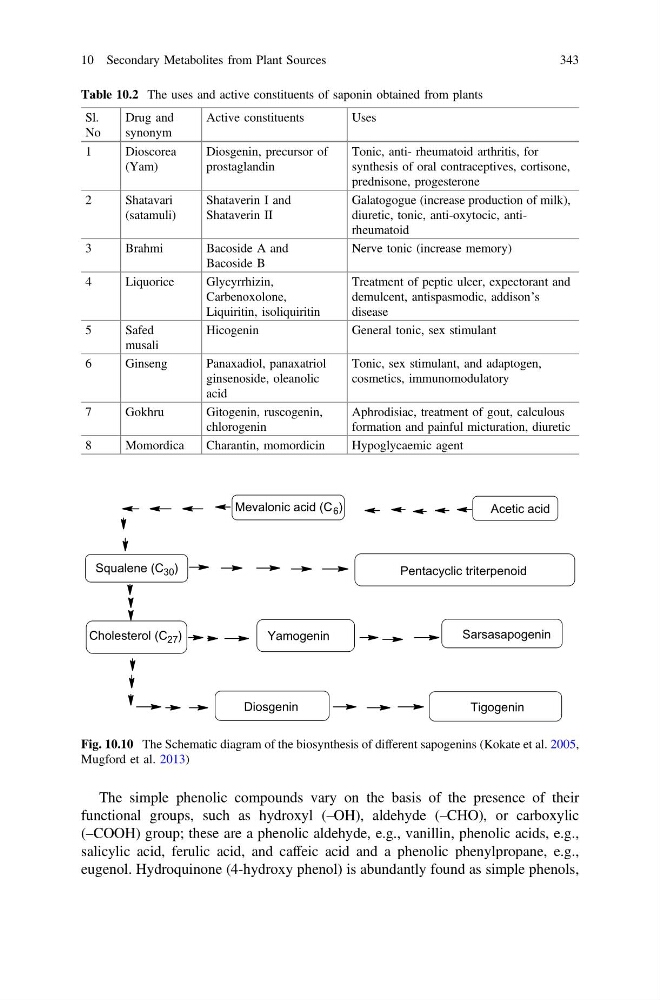
Fig. 10.10 The Schematic diagram of the biosynthesis of different sapogenins (Kokate et al. 2005,
Mugford et al. 2013)
10 Secondary Metabolites from Plant Sources
343
functional groups, such as hydroxyl (–OH), aldehyde (–CHO), or carboxylic
(–COOH) group; these are a phenolic aldehyde, e.g., vanillin, phenolic acids, e.g.,
salicylic acid, ferulic acid, and caffeic acid and a phenolic phenylpropane, e.g.,
eugenol. Hydroquinone (4-hydroxy phenol) is abundantly found as simple phenols,
Table 10.2 The uses and active constituents of saponin obtained from plants
Sl.
No
Drug and
synonym
Active constituents
Uses
1
Dioscorea
(Yam)
Diosgenin, precursor of
prostaglandin
Tonic, anti- rheumatoid arthritis, for
synthesis of oral contraceptives, cortisone,
prednisone, progesterone
2
Shatavari
(satamuli)
Shataverin I and
Shataverin II
Galatogogue (increase production of milk),
diuretic, tonic, anti-oxytocic, antirheumatoid
3
Brahmi
Bacoside A and
Bacoside B
Nerve tonic (increase memory)
4
Liquorice
Glycyrrhizin,
Carbenoxolone,
Liquiritin, isoliquiritin
Treatment of peptic ulcer, expectorant and
demulcent, antispasmodic, addison’s
disease
5
Safed
musali
Hicogenin
General tonic, sex stimulant
6
Ginseng
Panaxadiol, panaxatriol
ginsenoside, oleanolic
acid
Tonic, sex stimulant, and adaptogen,
cosmetics, immunomodulatory
7
Gokhru
Gitogenin, ruscogenin,
chlorogenin
Aphrodisiac, treatment of gout, calculous
formation and painful micturation, diuretic
8
Momordica
Charantin, momordicin
Hypoglycaemic agent
Squalene (C 30 )
Cholesterol (C 27 )
Pentacyclic triterpenoid
Diosgenin
Tigogenin
Yamogenin
Sarsasapogenin
Acetic acid
Mevalonic acid (C 6 )
Fig. 10.10 The Schematic diagram of the biosynthesis of different sapogenins (Kokate et al. 2005,
Mugford et al. 2013)
10 Secondary Metabolites from Plant Sources
343