

10.4.1 Simple Phenolics
Phenolic substances are universal in plants but the availability of free phenol (also
known as carbolic acid) in plants is very rare. Gallic acid (3,4,5-trihydroxy benzoic
acid), a phenolic acid is found in the plants as gallotannins. This compound shows
astringent property due to its ability to precipitate proteins in cases of internal
hemorrhage and also exhibits several pharmacological activities, for examples,
anti-inflammatory activity to inhibit inflammation, antiviral, widely used in fungal
infection and viral infection, shows cytotoxicity against cancer, some time to treat
anaphylactic shock, antibacterial, antimutagenic, choleretic, and bronchodilatory
actions. Gallic acid is also used to treat diabetes by inhibiting insulin degradation
and enhances the relaxation of smooth muscles (Harborne et al. 1993).
CH 3
CH 3
O
CH 3
O
H
O
CH 3
Diosgenin
CH 3
HO
CH 3
CH 3
C
H 3
CH 3
C
H 3
CH 3
O
COOH
H
Glycyrrhetinic acid
CH 3
CH 3
CH 3
CH 3
O
COOH
H
C
H 3
CH 3
C
H 3
HOOC-H 2 C-H 2 C-COO
Carbenoxolone
CH 3
HO
CH 3
COOH
CH 3
CH 3
HOH 2 C
CH 3
O
H
H
C
H 3
R
Asiatic acid R=H
Brahmic acid R= OH
CH 3
CH 3
CH 3
C
H 3
CH 3
HO
CH 3
OH
Panaxadiol
O
C
H 3
CH 3
CH 3
CH 3
O
Glu-Glu-(Rhamn)-Glu-O
C
H 3
O
CH 3
Satavarin I
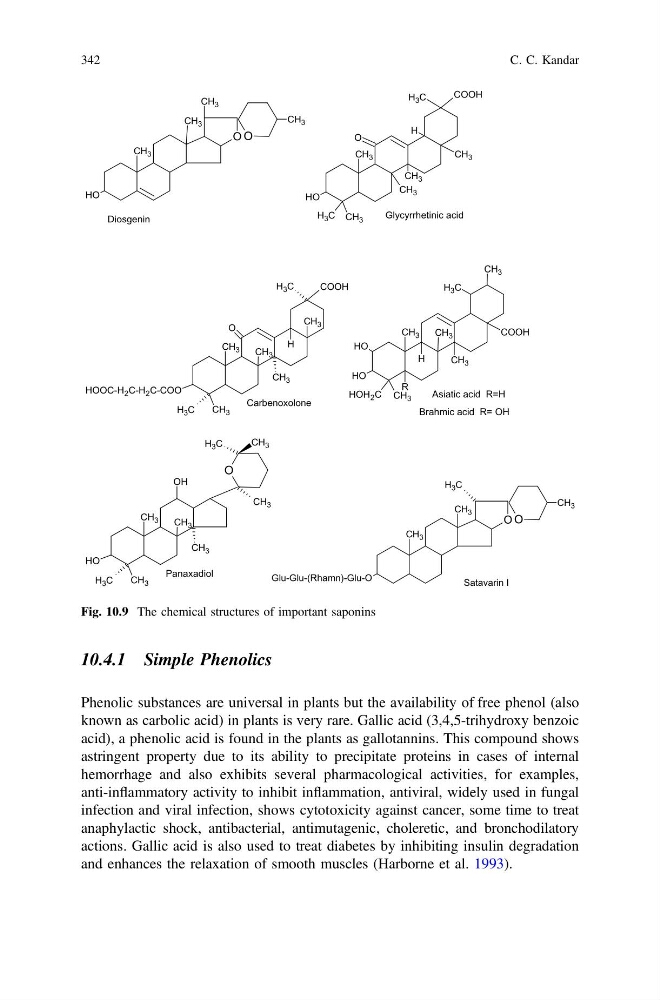
Fig. 10.9 The chemical structures of important saponins
342
C. C. Kandar
Phenolic substances are universal in plants but the availability of free phenol (also
known as carbolic acid) in plants is very rare. Gallic acid (3,4,5-trihydroxy benzoic
acid), a phenolic acid is found in the plants as gallotannins. This compound shows
astringent property due to its ability to precipitate proteins in cases of internal
hemorrhage and also exhibits several pharmacological activities, for examples,
anti-inflammatory activity to inhibit inflammation, antiviral, widely used in fungal
infection and viral infection, shows cytotoxicity against cancer, some time to treat
anaphylactic shock, antibacterial, antimutagenic, choleretic, and bronchodilatory
actions. Gallic acid is also used to treat diabetes by inhibiting insulin degradation
and enhances the relaxation of smooth muscles (Harborne et al. 1993).
CH 3
CH 3
O
CH 3
O
H
O
CH 3
Diosgenin
CH 3
HO
CH 3
CH 3
C
H 3
CH 3
C
H 3
CH 3
O
COOH
H
Glycyrrhetinic acid
CH 3
CH 3
CH 3
CH 3
O
COOH
H
C
H 3
CH 3
C
H 3
HOOC-H 2 C-H 2 C-COO
Carbenoxolone
CH 3
HO
CH 3
COOH
CH 3
CH 3
HOH 2 C
CH 3
O
H
H
C
H 3
R
Asiatic acid R=H
Brahmic acid R= OH
CH 3
CH 3
CH 3
C
H 3
CH 3
HO
CH 3
OH
Panaxadiol
O
C
H 3
CH 3
CH 3
CH 3
O
Glu-Glu-(Rhamn)-Glu-O
C
H 3
O
CH 3
Satavarin I
Fig. 10.9 The chemical structures of important saponins
342
C. C. Kandar