

largest group of secondary plant products. The common characteristic of such a
group is the presence of one or more phenol groups. The compounds are available
either as a very simple aromatic structure or high molecular complex structure due
to polymerization. Phenolic compounds manufactured by vegetables, leaves, fruits
cocoa, tea, and various plants exhibit definite health well-being. Some phenolic
compounds exhibit a variety of pharmacological properties like anti-inflammatory
properties, e.g., quercetin and hepatoprotective potential, e.g., silybin. Some other
compounds show estrogen-like action, e.g., genistein and daidzein are also active
against insects, for example, naringenin. Phenolic molecules also act as potent
antioxidants and free radical scavengers, especially flavonoid compounds
(Golawska et al. 2014).
Other literature revealed that they exhibit anti-carcinogenic and other biological
properties along with antioxidant and anti-inflammatory activities (Park et al. 2001).
Simple phenolic compounds are antiseptic at low concentration, whereas disinfectant at higher concentration and act against different helminths. Phenol itself
shows as an antimicrobial agent (Pengelly 2004). Phenolic compounds are widespread in almost all the plants and involved in various studies in different fields such
as biological, chemical, agricultural, and pharmaceutical fields (Dai et al. 2010;
Herrmann et al. 1989).
Phenolic compounds may be classified according to their chemical structure or
biosynthetic precursor (Fig. 10.11). Based on their structures, phenolic compounds
can be classified into (a) Simple phenolics (b) Coumarins (c) Flavonoids
(d) Chromones xanthones (e) Tannins (f) Lignans, and (g) Stilbenes.
CH 3
HO
CH 3
CH 3
CH 3
CH 3
C
H 3
C
H 3
CH 3
H
H
CH 3
HO
CH 3
C
H 3
C
H 3
CH 3
CH 3
H
CH 3
H
CH 3
Beta- amyrin
CH 3
HO
CH 3
CH 3
C
H 3
CH 3
CH 3
C
H 2
CH 3
H
H
Lupeol
Alpha- amyrin
CH 3
CH 3
C
H 3
CH 3
CH 3
Sugar-O
Steroid pattern of saponins
CH 3
Sugar-O
CH 3
CH 3
C
H 3
CH 3
Pentacyclic triterpenoids
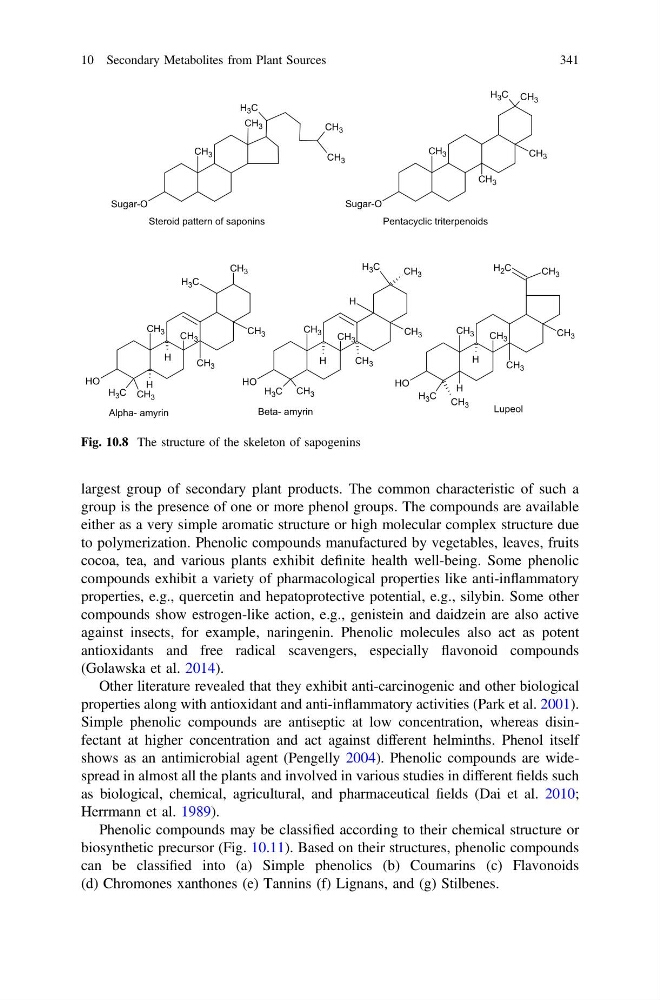
Fig. 10.8 The structure of the skeleton of sapogenins
10 Secondary Metabolites from Plant Sources
341
group is the presence of one or more phenol groups. The compounds are available
either as a very simple aromatic structure or high molecular complex structure due
to polymerization. Phenolic compounds manufactured by vegetables, leaves, fruits
cocoa, tea, and various plants exhibit definite health well-being. Some phenolic
compounds exhibit a variety of pharmacological properties like anti-inflammatory
properties, e.g., quercetin and hepatoprotective potential, e.g., silybin. Some other
compounds show estrogen-like action, e.g., genistein and daidzein are also active
against insects, for example, naringenin. Phenolic molecules also act as potent
antioxidants and free radical scavengers, especially flavonoid compounds
(Golawska et al. 2014).
Other literature revealed that they exhibit anti-carcinogenic and other biological
properties along with antioxidant and anti-inflammatory activities (Park et al. 2001).
Simple phenolic compounds are antiseptic at low concentration, whereas disinfectant at higher concentration and act against different helminths. Phenol itself
shows as an antimicrobial agent (Pengelly 2004). Phenolic compounds are widespread in almost all the plants and involved in various studies in different fields such
as biological, chemical, agricultural, and pharmaceutical fields (Dai et al. 2010;
Herrmann et al. 1989).
Phenolic compounds may be classified according to their chemical structure or
biosynthetic precursor (Fig. 10.11). Based on their structures, phenolic compounds
can be classified into (a) Simple phenolics (b) Coumarins (c) Flavonoids
(d) Chromones xanthones (e) Tannins (f) Lignans, and (g) Stilbenes.
CH 3
HO
CH 3
CH 3
CH 3
CH 3
C
H 3
C
H 3
CH 3
H
H
CH 3
HO
CH 3
C
H 3
C
H 3
CH 3
CH 3
H
CH 3
H
CH 3
Beta- amyrin
CH 3
HO
CH 3
CH 3
C
H 3
CH 3
CH 3
C
H 2
CH 3
H
H
Lupeol
Alpha- amyrin
CH 3
CH 3
C
H 3
CH 3
CH 3
Sugar-O
Steroid pattern of saponins
CH 3
Sugar-O
CH 3
CH 3
C
H 3
CH 3
Pentacyclic triterpenoids
Fig. 10.8 The structure of the skeleton of sapogenins
10 Secondary Metabolites from Plant Sources
341