

Saponins have shown a lot of pharmacological activity. Some saponins have
hypoglycaemic, antitumor, piscicidal, diuretic, molluscicidal, nervine tonic, adaptogen, spermicidal, galactagogue sedative, stimulant expectorant, and analgesic
activities. Glycyrrhizin from G. glabra belonging to the family Fabaceae is useful
as an expectorant, antitussive agent, and for the treatment of peptic ulcer. Saponin is
also useful for the treatment of chronic hepatitis, as well as cirrhosis. The saponins
obtained from Bupleurum falcatum belonging to the family Apiaceae exhibit
potential anti-inflammatory action in the rat paw edema model. In Korean medicine,
the saponin derived from the roots of Phytolacca americana also shows
anti-inflammatory activity. Another saponin, aescin, showing anti-inflammatory
activity is obtained from the plant, Aesculus hippocastanum popular as horse
chestnut. Aescin has been reported 600 times more potent anti-inflammatory action
in comparison to another standard molecule, rutin, in rat paw edema model
(Guclu-Ustundag et al. 2007).
A list of saponin drugs with their active constituents and uses (Table 10.2), are
given below (Kokate et al. 2005, Sparg et al. 2004).
Some chemical structures of important saponins are given below in Fig. 10.9
(Kaur 2010; El Aziz et al. 2019).
The sapogenins are biosynthesized by a mevalonic acid pathway from acetyl
CoA to squalene, a 30 carbon-containing compound, with the help of several steps.
Hygrine
Pyrroline
Nicotine
Cocaine
Tropine
Atropine
Scopolamine
Tropic acid
(C 9 H 10 O 3 )
Ornithine
(C 5 H 12 N 2 O 2 )
(C 8 H 15 NO)
(C 4 H 7 N)
(C 17 H 23 NO 3 )
NH 2
COOH
Phenyl alanine
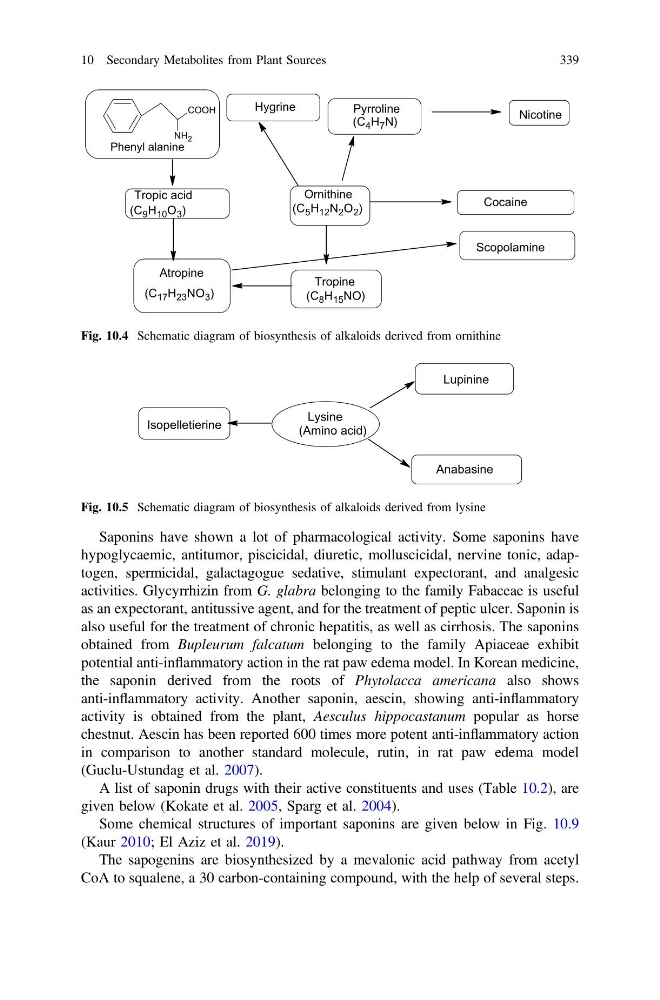
Fig. 10.4 Schematic diagram of biosynthesis of alkaloids derived from ornithine
Lysine
Lupinine
Anabasine
Isopelletierine
(Amino acid)
Fig. 10.5 Schematic diagram of biosynthesis of alkaloids derived from lysine
10 Secondary Metabolites from Plant Sources
339
hypoglycaemic, antitumor, piscicidal, diuretic, molluscicidal, nervine tonic, adaptogen, spermicidal, galactagogue sedative, stimulant expectorant, and analgesic
activities. Glycyrrhizin from G. glabra belonging to the family Fabaceae is useful
as an expectorant, antitussive agent, and for the treatment of peptic ulcer. Saponin is
also useful for the treatment of chronic hepatitis, as well as cirrhosis. The saponins
obtained from Bupleurum falcatum belonging to the family Apiaceae exhibit
potential anti-inflammatory action in the rat paw edema model. In Korean medicine,
the saponin derived from the roots of Phytolacca americana also shows
anti-inflammatory activity. Another saponin, aescin, showing anti-inflammatory
activity is obtained from the plant, Aesculus hippocastanum popular as horse
chestnut. Aescin has been reported 600 times more potent anti-inflammatory action
in comparison to another standard molecule, rutin, in rat paw edema model
(Guclu-Ustundag et al. 2007).
A list of saponin drugs with their active constituents and uses (Table 10.2), are
given below (Kokate et al. 2005, Sparg et al. 2004).
Some chemical structures of important saponins are given below in Fig. 10.9
(Kaur 2010; El Aziz et al. 2019).
The sapogenins are biosynthesized by a mevalonic acid pathway from acetyl
CoA to squalene, a 30 carbon-containing compound, with the help of several steps.
Hygrine
Pyrroline
Nicotine
Cocaine
Tropine
Atropine
Scopolamine
Tropic acid
(C 9 H 10 O 3 )
Ornithine
(C 5 H 12 N 2 O 2 )
(C 8 H 15 NO)
(C 4 H 7 N)
(C 17 H 23 NO 3 )
NH 2
COOH
Phenyl alanine
Fig. 10.4 Schematic diagram of biosynthesis of alkaloids derived from ornithine
Lysine
Lupinine
Anabasine
Isopelletierine
(Amino acid)
Fig. 10.5 Schematic diagram of biosynthesis of alkaloids derived from lysine
10 Secondary Metabolites from Plant Sources
339