

formulation containing 10% w/w potato starch and 15% w/w sodium salicylate
exhibited rofecoxib releasing of 16.39% within 6 h.
3.3.10 Buccal Formulations
Due to film forming properties and excellent bioadhesivity, various plant
polysaccharides have already been investigated to formulate different buccal drug
delivery systems including. Buccal tablets, buccal films and patches (Adhikari and
Panda 2017; Hasnain et al. 2020b). Gowthamarajan et al. (2012) prepared buccal
tablets of curcumin using cashew gum considering its mucoadhesive potential. The
buccal tablets of curcumin formulated using 20% cashew gum, 0.1% methol, 40 mg
ethylcellulose (as backing layer forming agent) with a compression force of 2 tons/
cm
2 for 10 s was identified as an optimized buccoadhesive tablet formulations on
the basis of residence time and mucoadhesive strength. The buccal acceptance
evaluation of optimized buccoadhesive tablet formulations of curcumin is presented
in Fig. 3.14. The in vitro release of curcumin of these buccoadhesive tablets was
found to be dependent on the cashew gum concentration used in the formulations.
The in vitro release of curcumin from buccoadhesive tablets prepared using 20%
cashew gum and 20% hydroxypropyl methylcellulose was compared and the
in vitro curcumin release results demonstrated the faster release of curcumin from
the buccoadhesive tablets prepared using cashew gum after 8 h (Fig. 3.15).
Curcumin release results indicated that cashew gum could be used as a mucoadhesive polymeric excipient to formulate buccoadhesive tablets of curcumin.
Avachat et al. (2013) prepared tamarind seed glucan-based buccoadhesive buccal
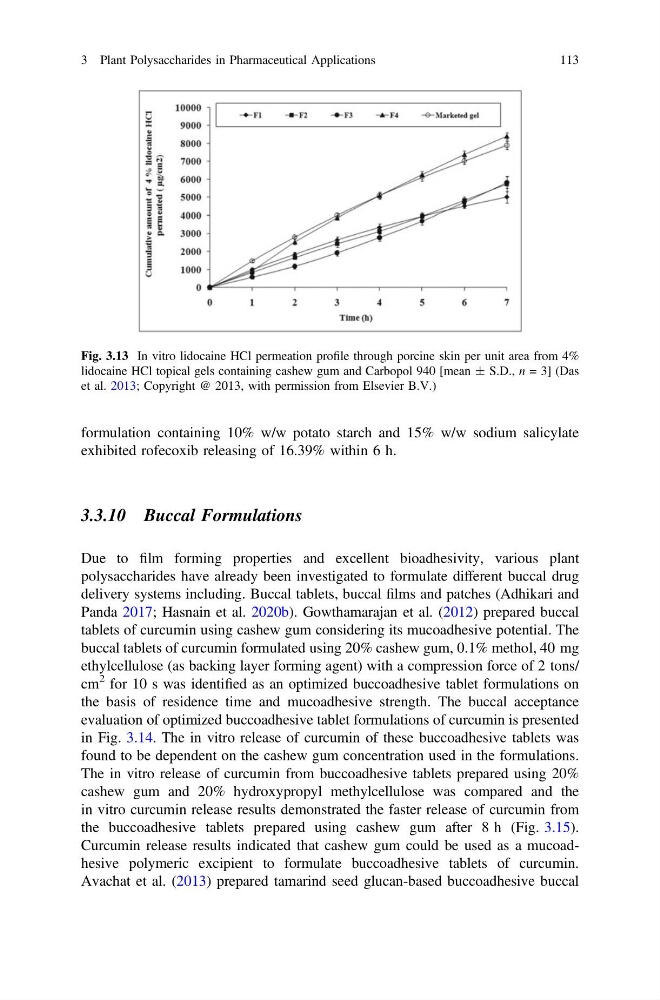
Fig. 3.13 In vitro lidocaine HCl permeation profile through porcine skin per unit area from 4%
lidocaine HCl topical gels containing cashew gum and Carbopol 940 [mean ± S.D., n = 3] (Das
et al. 2013; Copyright @ 2013, with permission from Elsevier B.V.)
3 Plant Polysaccharides in Pharmaceutical Applications
113
exhibited rofecoxib releasing of 16.39% within 6 h.
3.3.10 Buccal Formulations
Due to film forming properties and excellent bioadhesivity, various plant
polysaccharides have already been investigated to formulate different buccal drug
delivery systems including. Buccal tablets, buccal films and patches (Adhikari and
Panda 2017; Hasnain et al. 2020b). Gowthamarajan et al. (2012) prepared buccal
tablets of curcumin using cashew gum considering its mucoadhesive potential. The
buccal tablets of curcumin formulated using 20% cashew gum, 0.1% methol, 40 mg
ethylcellulose (as backing layer forming agent) with a compression force of 2 tons/
cm
2 for 10 s was identified as an optimized buccoadhesive tablet formulations on
the basis of residence time and mucoadhesive strength. The buccal acceptance
evaluation of optimized buccoadhesive tablet formulations of curcumin is presented
in Fig. 3.14. The in vitro release of curcumin of these buccoadhesive tablets was
found to be dependent on the cashew gum concentration used in the formulations.
The in vitro release of curcumin from buccoadhesive tablets prepared using 20%
cashew gum and 20% hydroxypropyl methylcellulose was compared and the
in vitro curcumin release results demonstrated the faster release of curcumin from
the buccoadhesive tablets prepared using cashew gum after 8 h (Fig. 3.15).
Curcumin release results indicated that cashew gum could be used as a mucoadhesive polymeric excipient to formulate buccoadhesive tablets of curcumin.
Avachat et al. (2013) prepared tamarind seed glucan-based buccoadhesive buccal
Fig. 3.13 In vitro lidocaine HCl permeation profile through porcine skin per unit area from 4%
lidocaine HCl topical gels containing cashew gum and Carbopol 940 [mean ± S.D., n = 3] (Das
et al. 2013; Copyright @ 2013, with permission from Elsevier B.V.)
3 Plant Polysaccharides in Pharmaceutical Applications
113