

Review of Waste Water Treatment Technologies …
703
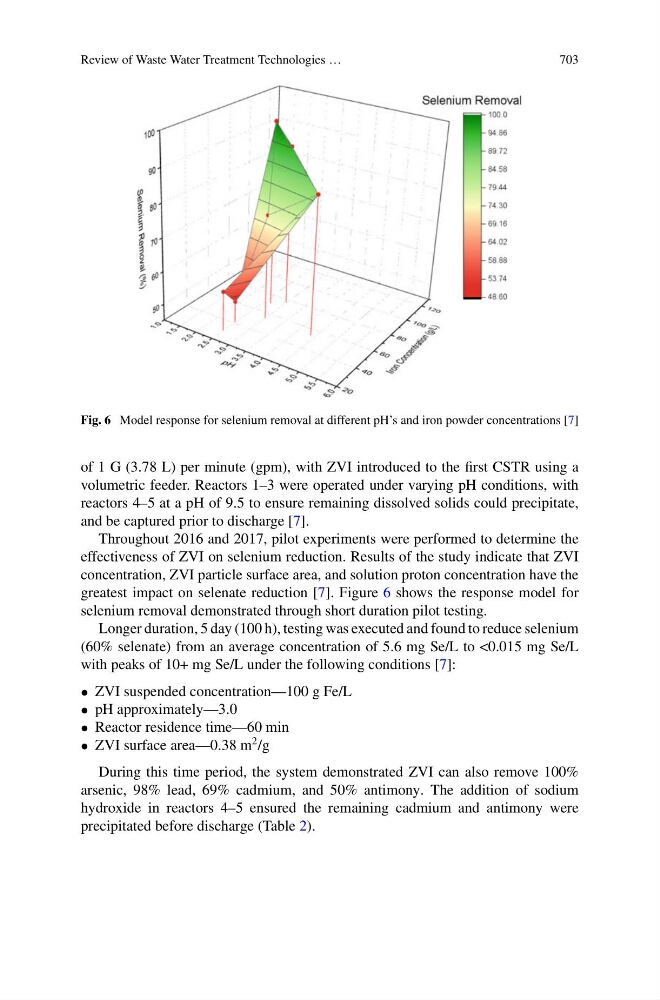
Fig. 6 Model response for selenium removal at different pH’s and iron powder concentrations [7]
of 1 G (3.78 L) per minute (gpm), with ZVI introduced to the first CSTR using a
volumetric feeder. Reactors 1–3 were operated under varying pH conditions, with
reactors 4–5 at a pH of 9.5 to ensure remaining dissolved solids could precipitate,
and be captured prior to discharge [7].
Throughout 2016 and 2017, pilot experiments were performed to determine the
effectiveness of ZVI on selenium reduction. Results of the study indicate that ZVI
concentration, ZVI particle surface area, and solution proton concentration have the
greatest impact on selenate reduction [7]. Figure 6 shows the response model for
selenium removal demonstrated through short duration pilot testing.
Longer duration, 5 day (100 h), testing was executed and found to reduce selenium
(60% selenate) from an average concentration of 5.6 mg Se/L to <0.015 mg Se/L
with peaks of 10+ mg Se/L under the following conditions [7]:
• ZVI suspended concentration—100 g Fe/L
• pH approximately—3.0
• Reactor residence time—60 min
• ZVI surface area—0.38 m
2 /g
During this time period, the system demonstrated ZVI can also remove 100%
arsenic, 98% lead, 69% cadmium, and 50% antimony. The addition of sodium
hydroxide in reactors 4–5 ensured the remaining cadmium and antimony were
precipitated before discharge (Table 2).