

Effect of Oxidation of Zinc Powder on Purification …
679
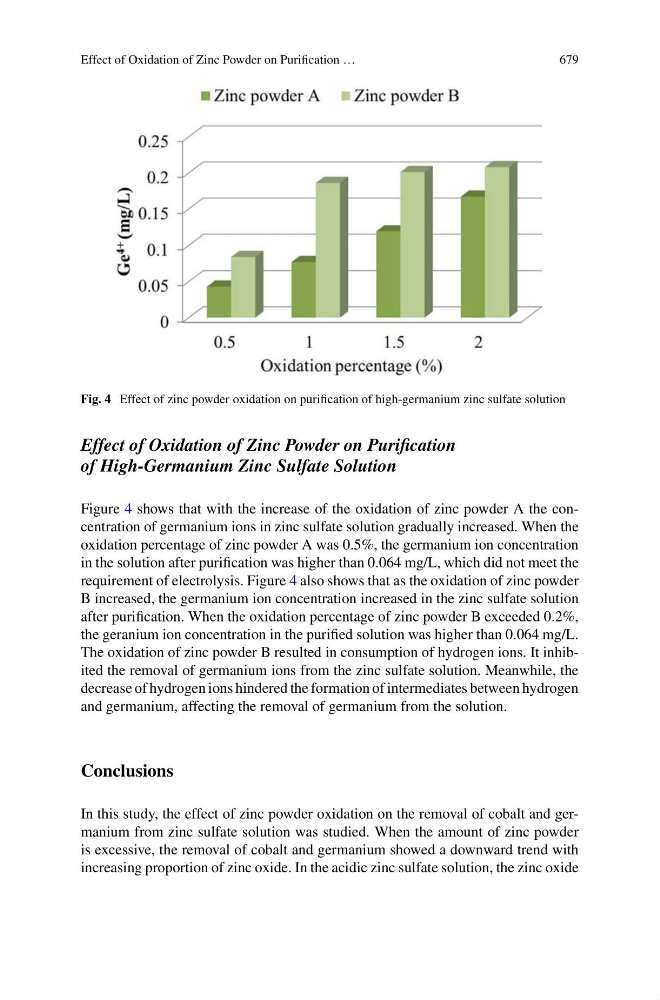
Fig. 4 Effect of zinc powder oxidation on purification of high-germanium zinc sulfate solution
Effect of Oxidation of Zinc Powder on Purification
of High-Germanium Zinc Sulfate Solution
Figure 4 shows that with the increase of the oxidation of zinc powder A the concentration of germanium ions in zinc sulfate solution gradually increased. When the
oxidation percentage of zinc powder A was 0.5%, the germanium ion concentration
in the solution after purification was higher than 0.064 mg/L, which did not meet the
requirement of electrolysis. Figure 4 also shows that as the oxidation of zinc powder
B increased, the germanium ion concentration increased in the zinc sulfate solution
after purification. When the oxidation percentage of zinc powder B exceeded 0.2%,
the geranium ion concentration in the purified solution was higher than 0.064 mg/L.
The oxidation of zinc powder B resulted in consumption of hydrogen ions. It inhibited the removal of germanium ions from the zinc sulfate solution. Meanwhile, the
decrease of hydrogen ions hindered the formation of intermediates between hydrogen
and germanium, affecting the removal of germanium from the solution.
Conclusions
In this study, the effect of zinc powder oxidation on the removal of cobalt and germanium from zinc sulfate solution was studied. When the amount of zinc powder
is excessive, the removal of cobalt and germanium showed a downward trend with
increasing proportion of zinc oxide. In the acidic zinc sulfate solution, the zinc oxide