

A Novel Collector 5–(Butylthio)–1,3,4–Thiadiazole–2–Thiol …
635
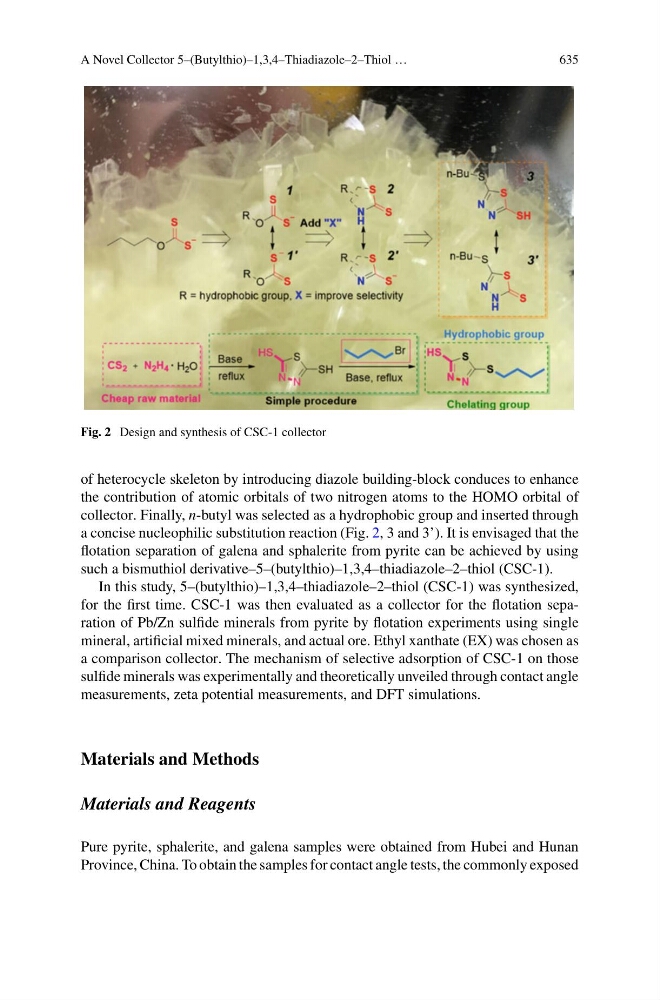
Fig. 2 Design and synthesis of CSC-1 collector
of heterocycle skeleton by introducing diazole building-block conduces to enhance
the contribution of atomic orbitals of two nitrogen atoms to the HOMO orbital of
collector. Finally, n-butyl was selected as a hydrophobic group and inserted through
a concise nucleophilic substitution reaction (Fig. 2, 3 and 3’). It is envisaged that the
flotation separation of galena and sphalerite from pyrite can be achieved by using
such a bismuthiol derivative–5–(butylthio)–1,3,4–thiadiazole–2–thiol (CSC-1).
In this study, 5–(butylthio)–1,3,4–thiadiazole–2–thiol (CSC-1) was synthesized,
for the first time. CSC-1 was then evaluated as a collector for the flotation separation of Pb/Zn sulfide minerals from pyrite by flotation experiments using single
mineral, artificial mixed minerals, and actual ore. Ethyl xanthate (EX) was chosen as
a comparison collector. The mechanism of selective adsorption of CSC-1 on those
sulfide minerals was experimentally and theoretically unveiled through contact angle
measurements, zeta potential measurements, and DFT simulations.
Materials and Methods
Materials and Reagents
Pure pyrite, sphalerite, and galena samples were obtained from Hubei and Hunan
Province, China. To obtain the samples for contact angle tests, the commonly exposed
635
Fig. 2 Design and synthesis of CSC-1 collector
of heterocycle skeleton by introducing diazole building-block conduces to enhance
the contribution of atomic orbitals of two nitrogen atoms to the HOMO orbital of
collector. Finally, n-butyl was selected as a hydrophobic group and inserted through
a concise nucleophilic substitution reaction (Fig. 2, 3 and 3’). It is envisaged that the
flotation separation of galena and sphalerite from pyrite can be achieved by using
such a bismuthiol derivative–5–(butylthio)–1,3,4–thiadiazole–2–thiol (CSC-1).
In this study, 5–(butylthio)–1,3,4–thiadiazole–2–thiol (CSC-1) was synthesized,
for the first time. CSC-1 was then evaluated as a collector for the flotation separation of Pb/Zn sulfide minerals from pyrite by flotation experiments using single
mineral, artificial mixed minerals, and actual ore. Ethyl xanthate (EX) was chosen as
a comparison collector. The mechanism of selective adsorption of CSC-1 on those
sulfide minerals was experimentally and theoretically unveiled through contact angle
measurements, zeta potential measurements, and DFT simulations.
Materials and Methods
Materials and Reagents
Pure pyrite, sphalerite, and galena samples were obtained from Hubei and Hunan
Province, China. To obtain the samples for contact angle tests, the commonly exposed