

Hydrometallurgical Recovery …
521
Harris dross
Leaching
Residue
to blast furnace
Burtite synthesis
Burtite
to tin smelter
As removal
Precipitate
to blast furnace
Se removal
Precipitate
to blast furnace
Waste-water
to waste-water treat plant
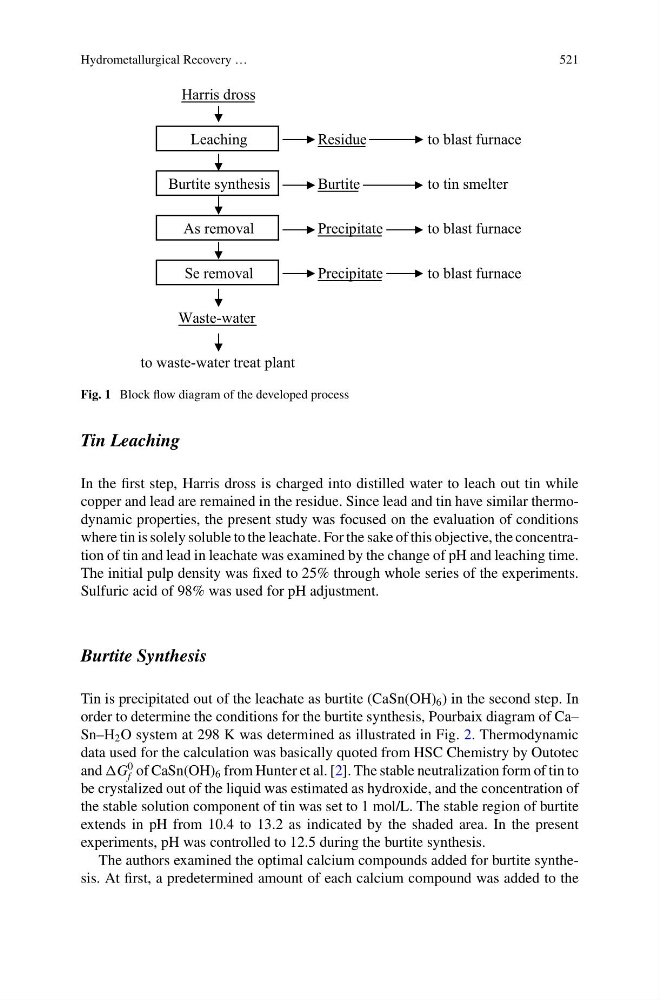
Fig. 1 Block flow diagram of the developed process
Tin Leaching
In the first step, Harris dross is charged into distilled water to leach out tin while
copper and lead are remained in the residue. Since lead and tin have similar thermodynamic properties, the present study was focused on the evaluation of conditions
where tin is solely soluble to the leachate. For the sake of this objective, the concentration of tin and lead in leachate was examined by the change of pH and leaching time.
The initial pulp density was fixed to 25% through whole series of the experiments.
Sulfuric acid of 98% was used for pH adjustment.
Burtite Synthesis
Tin is precipitated out of the leachate as burtite (CaSn(OH) 6 ) in the second step. In
order to determine the conditions for the burtite synthesis, Pourbaix diagram of Ca–
Sn–H 2 O system at 298 K was determined as illustrated in Fig. 2. Thermodynamic
data used for the calculation was basically quoted from HSC Chemistry by Outotec
and
0
f of CaSn(OH) 6 from Hunter et al. [2]. The stable neutralization form of tin to
be crystalized out of the liquid was estimated as hydroxide, and the concentration of
the stable solution component of tin was set to 1 mol/L. The stable region of burtite
extends in pH from 10.4 to 13.2 as indicated by the shaded area. In the present
experiments, pH was controlled to 12.5 during the burtite synthesis.
The authors examined the optimal calcium compounds added for burtite synthesis. At first, a predetermined amount of each calcium compound was added to the
521
Harris dross
Leaching
Residue
to blast furnace
Burtite synthesis
Burtite
to tin smelter
As removal
Precipitate
to blast furnace
Se removal
Precipitate
to blast furnace
Waste-water
to waste-water treat plant
Fig. 1 Block flow diagram of the developed process
Tin Leaching
In the first step, Harris dross is charged into distilled water to leach out tin while
copper and lead are remained in the residue. Since lead and tin have similar thermodynamic properties, the present study was focused on the evaluation of conditions
where tin is solely soluble to the leachate. For the sake of this objective, the concentration of tin and lead in leachate was examined by the change of pH and leaching time.
The initial pulp density was fixed to 25% through whole series of the experiments.
Sulfuric acid of 98% was used for pH adjustment.
Burtite Synthesis
Tin is precipitated out of the leachate as burtite (CaSn(OH) 6 ) in the second step. In
order to determine the conditions for the burtite synthesis, Pourbaix diagram of Ca–
Sn–H 2 O system at 298 K was determined as illustrated in Fig. 2. Thermodynamic
data used for the calculation was basically quoted from HSC Chemistry by Outotec
and
0
f of CaSn(OH) 6 from Hunter et al. [2]. The stable neutralization form of tin to
be crystalized out of the liquid was estimated as hydroxide, and the concentration of
the stable solution component of tin was set to 1 mol/L. The stable region of burtite
extends in pH from 10.4 to 13.2 as indicated by the shaded area. In the present
experiments, pH was controlled to 12.5 during the burtite synthesis.
The authors examined the optimal calcium compounds added for burtite synthesis. At first, a predetermined amount of each calcium compound was added to the