

Material Stewardship for Zinc
497
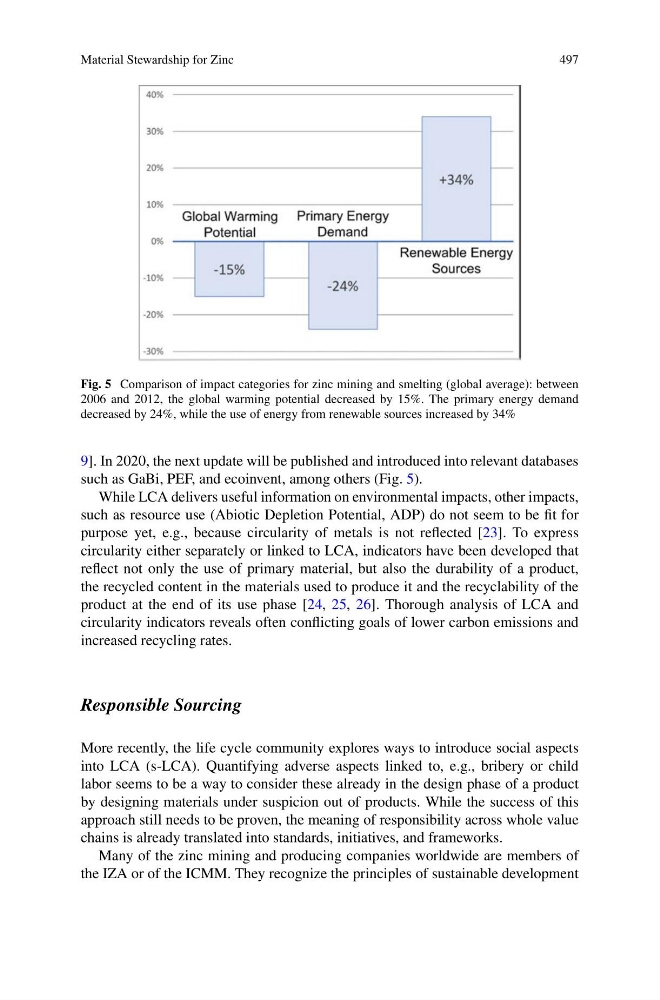
Fig. 5 Comparison of impact categories for zinc mining and smelting (global average): between
2006 and 2012, the global warming potential decreased by 15%. The primary energy demand
decreased by 24%, while the use of energy from renewable sources increased by 34%
9]. In 2020, the next update will be published and introduced into relevant databases
such as GaBi, PEF, and ecoinvent, among others (Fig. 5).
While LCA delivers useful information on environmental impacts, other impacts,
such as resource use (Abiotic Depletion Potential, ADP) do not seem to be fit for
purpose yet, e.g., because circularity of metals is not reflected [23]. To express
circularity either separately or linked to LCA, indicators have been developed that
reflect not only the use of primary material, but also the durability of a product,
the recycled content in the materials used to produce it and the recyclability of the
product at the end of its use phase [24, 25, 26]. Thorough analysis of LCA and
circularity indicators reveals often conflicting goals of lower carbon emissions and
increased recycling rates.
Responsible Sourcing
More recently, the life cycle community explores ways to introduce social aspects
into LCA (s-LCA). Quantifying adverse aspects linked to, e.g., bribery or child
labor seems to be a way to consider these already in the design phase of a product
by designing materials under suspicion out of products. While the success of this
approach still needs to be proven, the meaning of responsibility across whole value
chains is already translated into standards, initiatives, and frameworks.
Many of the zinc mining and producing companies worldwide are members of
the IZA or of the ICMM. They recognize the principles of sustainable development
497
Fig. 5 Comparison of impact categories for zinc mining and smelting (global average): between
2006 and 2012, the global warming potential decreased by 15%. The primary energy demand
decreased by 24%, while the use of energy from renewable sources increased by 34%
9]. In 2020, the next update will be published and introduced into relevant databases
such as GaBi, PEF, and ecoinvent, among others (Fig. 5).
While LCA delivers useful information on environmental impacts, other impacts,
such as resource use (Abiotic Depletion Potential, ADP) do not seem to be fit for
purpose yet, e.g., because circularity of metals is not reflected [23]. To express
circularity either separately or linked to LCA, indicators have been developed that
reflect not only the use of primary material, but also the durability of a product,
the recycled content in the materials used to produce it and the recyclability of the
product at the end of its use phase [24, 25, 26]. Thorough analysis of LCA and
circularity indicators reveals often conflicting goals of lower carbon emissions and
increased recycling rates.
Responsible Sourcing
More recently, the life cycle community explores ways to introduce social aspects
into LCA (s-LCA). Quantifying adverse aspects linked to, e.g., bribery or child
labor seems to be a way to consider these already in the design phase of a product
by designing materials under suspicion out of products. While the success of this
approach still needs to be proven, the meaning of responsibility across whole value
chains is already translated into standards, initiatives, and frameworks.
Many of the zinc mining and producing companies worldwide are members of
the IZA or of the ICMM. They recognize the principles of sustainable development