

496
S. Grund and E. van Genderen
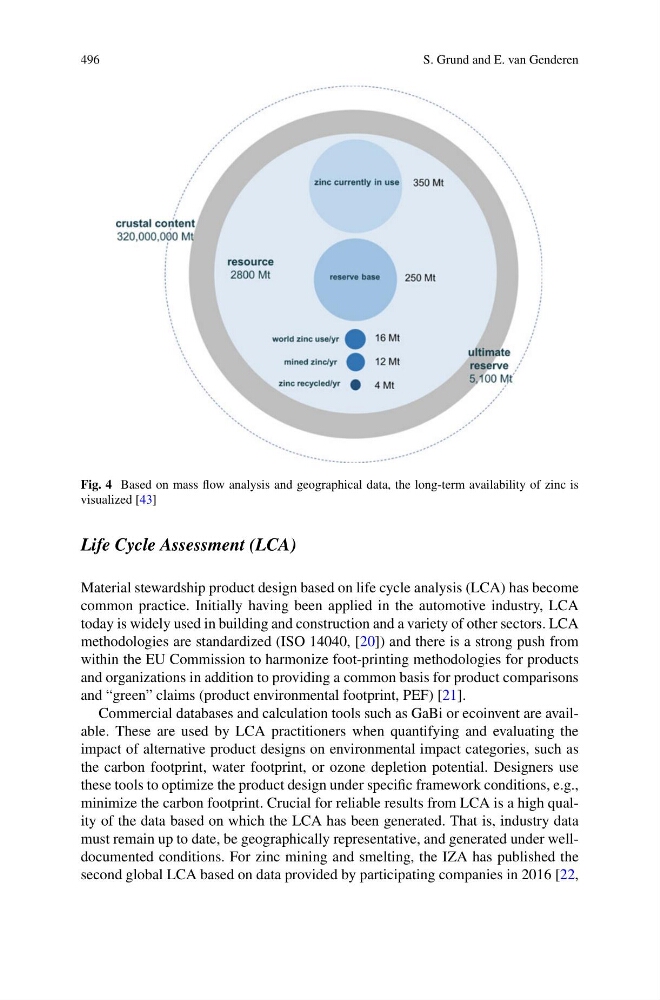
Fig. 4 Based on mass flow analysis and geographical data, the long-term availability of zinc is
visualized [43]
Life Cycle Assessment (LCA)
Material stewardship product design based on life cycle analysis (LCA) has become
common practice. Initially having been applied in the automotive industry, LCA
today is widely used in building and construction and a variety of other sectors. LCA
methodologies are standardized (ISO 14040, [20]) and there is a strong push from
within the EU Commission to harmonize foot-printing methodologies for products
and organizations in addition to providing a common basis for product comparisons
and “green” claims (product environmental footprint, PEF) [21].
Commercial databases and calculation tools such as GaBi or ecoinvent are available. These are used by LCA practitioners when quantifying and evaluating the
impact of alternative product designs on environmental impact categories, such as
the carbon footprint, water footprint, or ozone depletion potential. Designers use
these tools to optimize the product design under specific framework conditions, e.g.,
minimize the carbon footprint. Crucial for reliable results from LCA is a high quality of the data based on which the LCA has been generated. That is, industry data
must remain up to date, be geographically representative, and generated under welldocumented conditions. For zinc mining and smelting, the IZA has published the
second global LCA based on data provided by participating companies in 2016 [22,
S. Grund and E. van Genderen
Fig. 4 Based on mass flow analysis and geographical data, the long-term availability of zinc is
visualized [43]
Life Cycle Assessment (LCA)
Material stewardship product design based on life cycle analysis (LCA) has become
common practice. Initially having been applied in the automotive industry, LCA
today is widely used in building and construction and a variety of other sectors. LCA
methodologies are standardized (ISO 14040, [20]) and there is a strong push from
within the EU Commission to harmonize foot-printing methodologies for products
and organizations in addition to providing a common basis for product comparisons
and “green” claims (product environmental footprint, PEF) [21].
Commercial databases and calculation tools such as GaBi or ecoinvent are available. These are used by LCA practitioners when quantifying and evaluating the
impact of alternative product designs on environmental impact categories, such as
the carbon footprint, water footprint, or ozone depletion potential. Designers use
these tools to optimize the product design under specific framework conditions, e.g.,
minimize the carbon footprint. Crucial for reliable results from LCA is a high quality of the data based on which the LCA has been generated. That is, industry data
must remain up to date, be geographically representative, and generated under welldocumented conditions. For zinc mining and smelting, the IZA has published the
second global LCA based on data provided by participating companies in 2016 [22,