

Characterization and Processing of Residues …
439
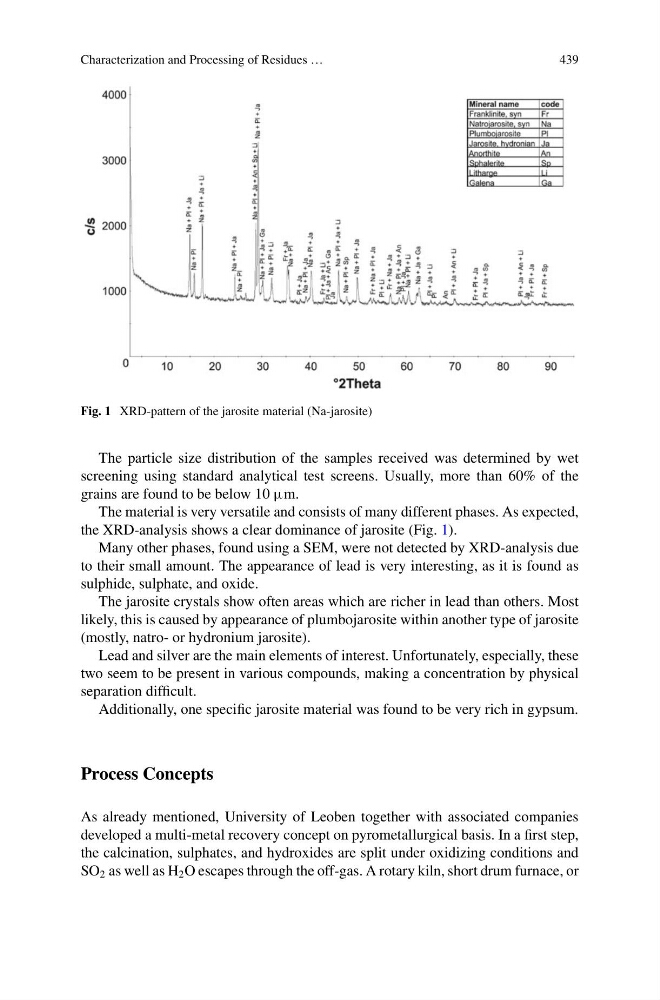
Fig. 1 XRD-pattern of the jarosite material (Na-jarosite)
The particle size distribution of the samples received was determined by wet
screening using standard analytical test screens. Usually, more than 60% of the
grains are found to be below 10 µm.
The material is very versatile and consists of many different phases. As expected,
the XRD-analysis shows a clear dominance of jarosite (Fig. 1).
Many other phases, found using a SEM, were not detected by XRD-analysis due
to their small amount. The appearance of lead is very interesting, as it is found as
sulphide, sulphate, and oxide.
The jarosite crystals show often areas which are richer in lead than others. Most
likely, this is caused by appearance of plumbojarosite within another type of jarosite
(mostly, natro- or hydronium jarosite).
Lead and silver are the main elements of interest. Unfortunately, especially, these
two seem to be present in various compounds, making a concentration by physical
separation difficult.
Additionally, one specific jarosite material was found to be very rich in gypsum.
Process Concepts
As already mentioned, University of Leoben together with associated companies
developed a multi-metal recovery concept on pyrometallurgical basis. In a first step,
the calcination, sulphates, and hydroxides are split under oxidizing conditions and
SO 2 as well as H 2 O escapes through the off-gas. A rotary kiln, short drum furnace, or
439
Fig. 1 XRD-pattern of the jarosite material (Na-jarosite)
The particle size distribution of the samples received was determined by wet
screening using standard analytical test screens. Usually, more than 60% of the
grains are found to be below 10 µm.
The material is very versatile and consists of many different phases. As expected,
the XRD-analysis shows a clear dominance of jarosite (Fig. 1).
Many other phases, found using a SEM, were not detected by XRD-analysis due
to their small amount. The appearance of lead is very interesting, as it is found as
sulphide, sulphate, and oxide.
The jarosite crystals show often areas which are richer in lead than others. Most
likely, this is caused by appearance of plumbojarosite within another type of jarosite
(mostly, natro- or hydronium jarosite).
Lead and silver are the main elements of interest. Unfortunately, especially, these
two seem to be present in various compounds, making a concentration by physical
separation difficult.
Additionally, one specific jarosite material was found to be very rich in gypsum.
Process Concepts
As already mentioned, University of Leoben together with associated companies
developed a multi-metal recovery concept on pyrometallurgical basis. In a first step,
the calcination, sulphates, and hydroxides are split under oxidizing conditions and
SO 2 as well as H 2 O escapes through the off-gas. A rotary kiln, short drum furnace, or