

Resource Efficiency Evaluation of Pyrometallurgical Solutions …
355
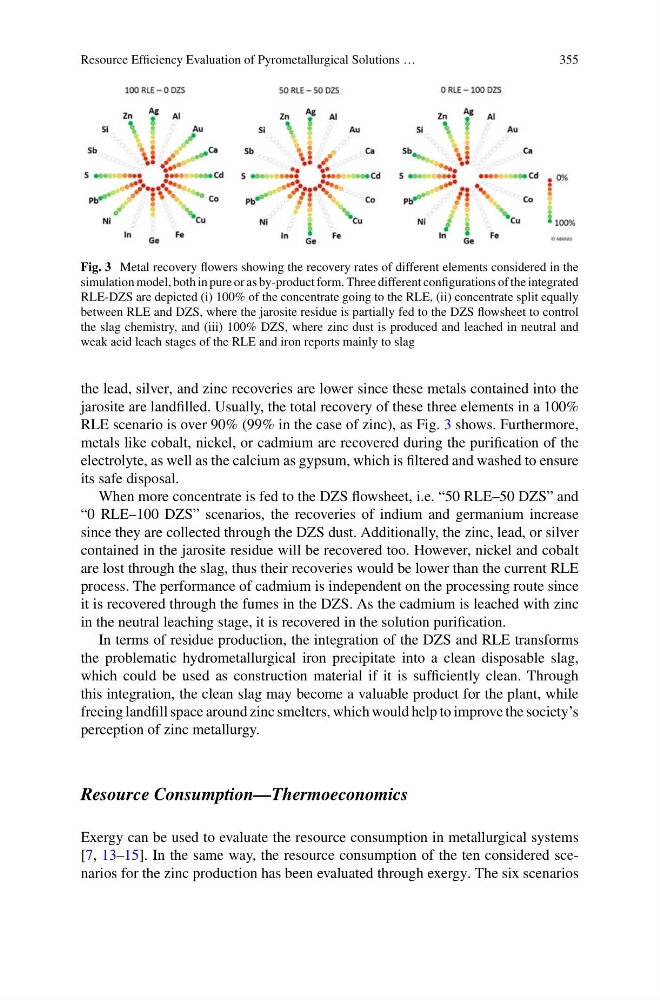
Fig. 3 Metal recovery flowers showing the recovery rates of different elements considered in the
simulation model, both in pure or as by-product form. Three different configurations of the integrated
RLE-DZS are depicted (i) 100% of the concentrate going to the RLE, (ii) concentrate split equally
between RLE and DZS, where the jarosite residue is partially fed to the DZS flowsheet to control
the slag chemistry, and (iii) 100% DZS, where zinc dust is produced and leached in neutral and
weak acid leach stages of the RLE and iron reports mainly to slag
the lead, silver, and zinc recoveries are lower since these metals contained into the
jarosite are landfilled. Usually, the total recovery of these three elements in a 100%
RLE scenario is over 90% (99% in the case of zinc), as Fig. 3 shows. Furthermore,
metals like cobalt, nickel, or cadmium are recovered during the purification of the
electrolyte, as well as the calcium as gypsum, which is filtered and washed to ensure
its safe disposal.
When more concentrate is fed to the DZS flowsheet, i.e. “50 RLE–50 DZS” and
“0 RLE–100 DZS” scenarios, the recoveries of indium and germanium increase
since they are collected through the DZS dust. Additionally, the zinc, lead, or silver
contained in the jarosite residue will be recovered too. However, nickel and cobalt
are lost through the slag, thus their recoveries would be lower than the current RLE
process. The performance of cadmium is independent on the processing route since
it is recovered through the fumes in the DZS. As the cadmium is leached with zinc
in the neutral leaching stage, it is recovered in the solution purification.
In terms of residue production, the integration of the DZS and RLE transforms
the problematic hydrometallurgical iron precipitate into a clean disposable slag,
which could be used as construction material if it is sufficiently clean. Through
this integration, the clean slag may become a valuable product for the plant, while
freeing landfill space around zinc smelters, which would help to improve the society’s
perception of zinc metallurgy.
Resource Consumption—Thermoeconomics
Exergy can be used to evaluate the resource consumption in metallurgical systems
[7, 13–15]. In the same way, the resource consumption of the ten considered scenarios for the zinc production has been evaluated through exergy. The six scenarios
355
Fig. 3 Metal recovery flowers showing the recovery rates of different elements considered in the
simulation model, both in pure or as by-product form. Three different configurations of the integrated
RLE-DZS are depicted (i) 100% of the concentrate going to the RLE, (ii) concentrate split equally
between RLE and DZS, where the jarosite residue is partially fed to the DZS flowsheet to control
the slag chemistry, and (iii) 100% DZS, where zinc dust is produced and leached in neutral and
weak acid leach stages of the RLE and iron reports mainly to slag
the lead, silver, and zinc recoveries are lower since these metals contained into the
jarosite are landfilled. Usually, the total recovery of these three elements in a 100%
RLE scenario is over 90% (99% in the case of zinc), as Fig. 3 shows. Furthermore,
metals like cobalt, nickel, or cadmium are recovered during the purification of the
electrolyte, as well as the calcium as gypsum, which is filtered and washed to ensure
its safe disposal.
When more concentrate is fed to the DZS flowsheet, i.e. “50 RLE–50 DZS” and
“0 RLE–100 DZS” scenarios, the recoveries of indium and germanium increase
since they are collected through the DZS dust. Additionally, the zinc, lead, or silver
contained in the jarosite residue will be recovered too. However, nickel and cobalt
are lost through the slag, thus their recoveries would be lower than the current RLE
process. The performance of cadmium is independent on the processing route since
it is recovered through the fumes in the DZS. As the cadmium is leached with zinc
in the neutral leaching stage, it is recovered in the solution purification.
In terms of residue production, the integration of the DZS and RLE transforms
the problematic hydrometallurgical iron precipitate into a clean disposable slag,
which could be used as construction material if it is sufficiently clean. Through
this integration, the clean slag may become a valuable product for the plant, while
freeing landfill space around zinc smelters, which would help to improve the society’s
perception of zinc metallurgy.
Resource Consumption—Thermoeconomics
Exergy can be used to evaluate the resource consumption in metallurgical systems
[7, 13–15]. In the same way, the resource consumption of the ten considered scenarios for the zinc production has been evaluated through exergy. The six scenarios