

178
R. Vanparys et al.
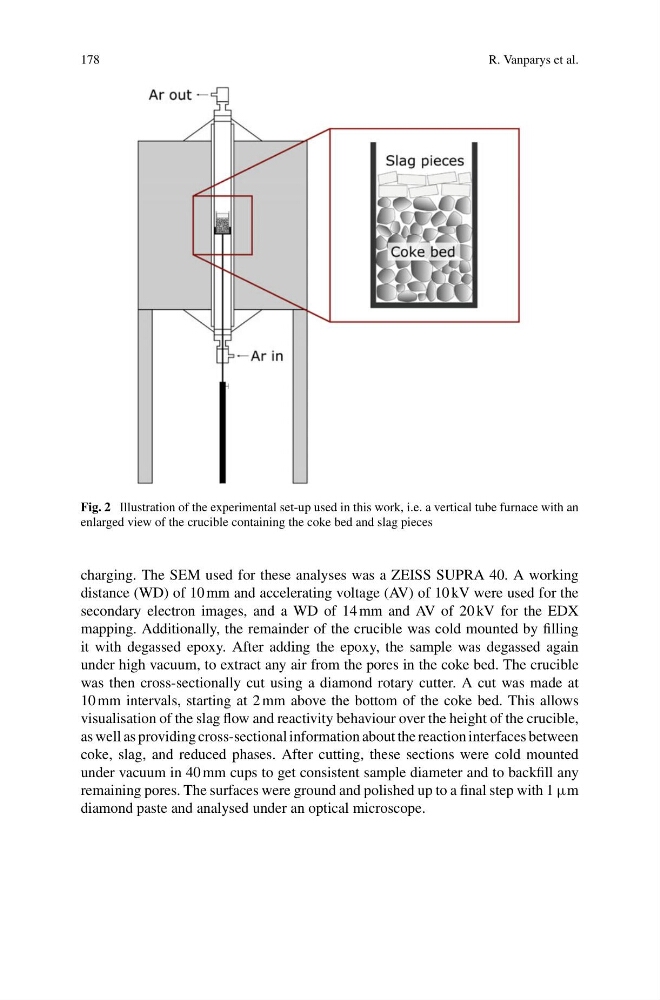
Fig. 2 Illustration of the experimental set-up used in this work, i.e. a vertical tube furnace with an
enlarged view of the crucible containing the coke bed and slag pieces
charging. The SEM used for these analyses was a ZEISS SUPRA 40. A working
distance (WD) of 10 mm and accelerating voltage (AV) of 10 kV were used for the
secondary electron images, and a WD of 14 mm and AV of 20 kV for the EDX
mapping. Additionally, the remainder of the crucible was cold mounted by filling
it with degassed epoxy. After adding the epoxy, the sample was degassed again
under high vacuum, to extract any air from the pores in the coke bed. The crucible
was then cross-sectionally cut using a diamond rotary cutter. A cut was made at
10 mm intervals, starting at 2 mm above the bottom of the coke bed. This allows
visualisation of the slag flow and reactivity behaviour over the height of the crucible,
as well as providing cross-sectional information about the reaction interfaces between
coke, slag, and reduced phases. After cutting, these sections were cold mounted
under vacuum in 40 mm cups to get consistent sample diameter and to backfill any
remaining pores. The surfaces were ground and polished up to a final step with 1 µm
diamond paste and analysed under an optical microscope.
R. Vanparys et al.
Fig. 2 Illustration of the experimental set-up used in this work, i.e. a vertical tube furnace with an
enlarged view of the crucible containing the coke bed and slag pieces
charging. The SEM used for these analyses was a ZEISS SUPRA 40. A working
distance (WD) of 10 mm and accelerating voltage (AV) of 10 kV were used for the
secondary electron images, and a WD of 14 mm and AV of 20 kV for the EDX
mapping. Additionally, the remainder of the crucible was cold mounted by filling
it with degassed epoxy. After adding the epoxy, the sample was degassed again
under high vacuum, to extract any air from the pores in the coke bed. The crucible
was then cross-sectionally cut using a diamond rotary cutter. A cut was made at
10 mm intervals, starting at 2 mm above the bottom of the coke bed. This allows
visualisation of the slag flow and reactivity behaviour over the height of the crucible,
as well as providing cross-sectional information about the reaction interfaces between
coke, slag, and reduced phases. After cutting, these sections were cold mounted
under vacuum in 40 mm cups to get consistent sample diameter and to backfill any
remaining pores. The surfaces were ground and polished up to a final step with 1 µm
diamond paste and analysed under an optical microscope.