

302
U. S. Behera and J. S. Sangwai
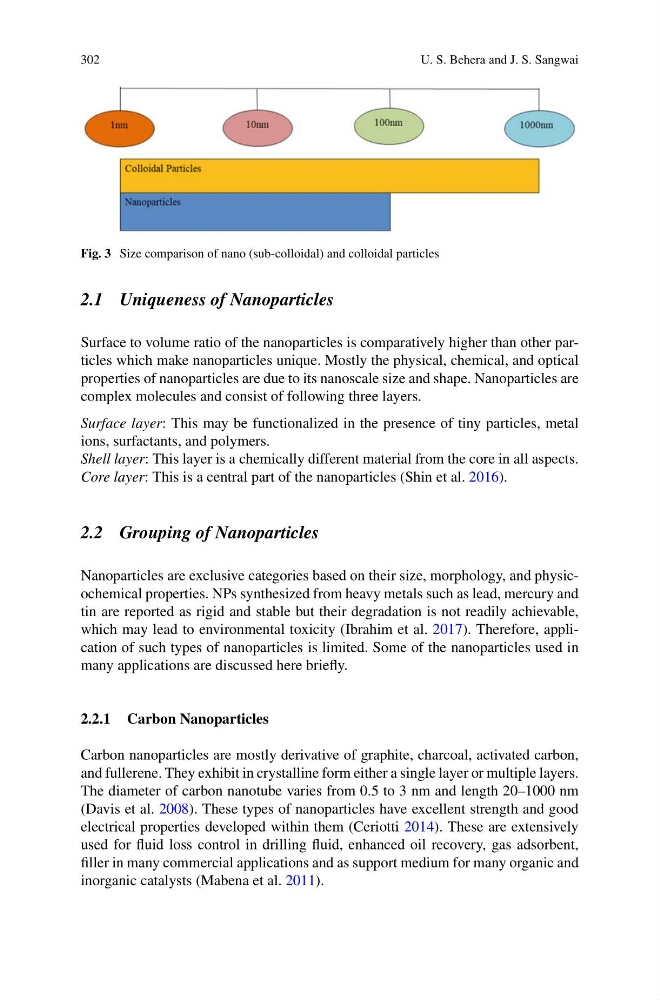
Fig. 3 Size comparison of nano (sub-colloidal) and colloidal particles
2.1 Uniqueness of Nanoparticles
Surface to volume ratio of the nanoparticles is comparatively higher than other particles which make nanoparticles unique. Mostly the physical, chemical, and optical
properties of nanoparticles are due to its nanoscale size and shape. Nanoparticles are
complex molecules and consist of following three layers.
Surface layer: This may be functionalized in the presence of tiny particles, metal
ions, surfactants, and polymers.
Shell layer: This layer is a chemically different material from the core in all aspects.
Core layer: This is a central part of the nanoparticles (Shin et al. 2016).
2.2 Grouping of Nanoparticles
Nanoparticles are exclusive categories based on their size, morphology, and physicochemical properties. NPs synthesized from heavy metals such as lead, mercury and
tin are reported as rigid and stable but their degradation is not readily achievable,
which may lead to environmental toxicity (Ibrahim et al. 2017). Therefore, application of such types of nanoparticles is limited. Some of the nanoparticles used in
many applications are discussed here briefly.
2.2.1 Carbon Nanoparticles
Carbon nanoparticles are mostly derivative of graphite, charcoal, activated carbon,
and fullerene. They exhibit in crystalline form either a single layer or multiple layers.
The diameter of carbon nanotube varies from 0.5 to 3 nm and length 20–1000 nm
(Davis et al. 2008). These types of nanoparticles have excellent strength and good
electrical properties developed within them (Ceriotti 2014). These are extensively
used for fluid loss control in drilling fluid, enhanced oil recovery, gas adsorbent,
filler in many commercial applications and as support medium for many organic and
inorganic catalysts (Mabena et al. 2011).
U. S. Behera and J. S. Sangwai
Fig. 3 Size comparison of nano (sub-colloidal) and colloidal particles
2.1 Uniqueness of Nanoparticles
Surface to volume ratio of the nanoparticles is comparatively higher than other particles which make nanoparticles unique. Mostly the physical, chemical, and optical
properties of nanoparticles are due to its nanoscale size and shape. Nanoparticles are
complex molecules and consist of following three layers.
Surface layer: This may be functionalized in the presence of tiny particles, metal
ions, surfactants, and polymers.
Shell layer: This layer is a chemically different material from the core in all aspects.
Core layer: This is a central part of the nanoparticles (Shin et al. 2016).
2.2 Grouping of Nanoparticles
Nanoparticles are exclusive categories based on their size, morphology, and physicochemical properties. NPs synthesized from heavy metals such as lead, mercury and
tin are reported as rigid and stable but their degradation is not readily achievable,
which may lead to environmental toxicity (Ibrahim et al. 2017). Therefore, application of such types of nanoparticles is limited. Some of the nanoparticles used in
many applications are discussed here briefly.
2.2.1 Carbon Nanoparticles
Carbon nanoparticles are mostly derivative of graphite, charcoal, activated carbon,
and fullerene. They exhibit in crystalline form either a single layer or multiple layers.
The diameter of carbon nanotube varies from 0.5 to 3 nm and length 20–1000 nm
(Davis et al. 2008). These types of nanoparticles have excellent strength and good
electrical properties developed within them (Ceriotti 2014). These are extensively
used for fluid loss control in drilling fluid, enhanced oil recovery, gas adsorbent,
filler in many commercial applications and as support medium for many organic and
inorganic catalysts (Mabena et al. 2011).