

Effect of Nanoparticles on the Performance of Drilling Fluids
291
produced a minimum mud cake thickness of 1 mm for a silica nanoparticle of 0.7
wt%. Even though increase in nanoparticle concentration reduced the filtration due
to agglomeration of particles, an increase in porosity and permeability was found
in the mud cake. The particle size distribution of nanoparticles in the drilling mud
is one of the decisive factors that decide the fate of filtration, because bentonite
nanoparticles of 4–9 nm in WBM increased the filtration loss due to poor distribution
or the fact that the nanoparticles are so small and they just pass through the filter cake
(Abdo and Haneef 2013). So in order to attain the larger particle size distribution, the
nanoparticles were mechanically prepared and the filter cake produced was also more
compact in nature such that sealing pressure is tolerable (Akhtarmanesh et al. 2013).
Nasser et al. (2013) observed the effect of pressure on fluid loss for nanographitebased mud and normal drilling mud. It is found that normal drilling fluid will lose
its fluidity with increase in pressure, whereas for nano-based mud the observed loss
is very minimum.
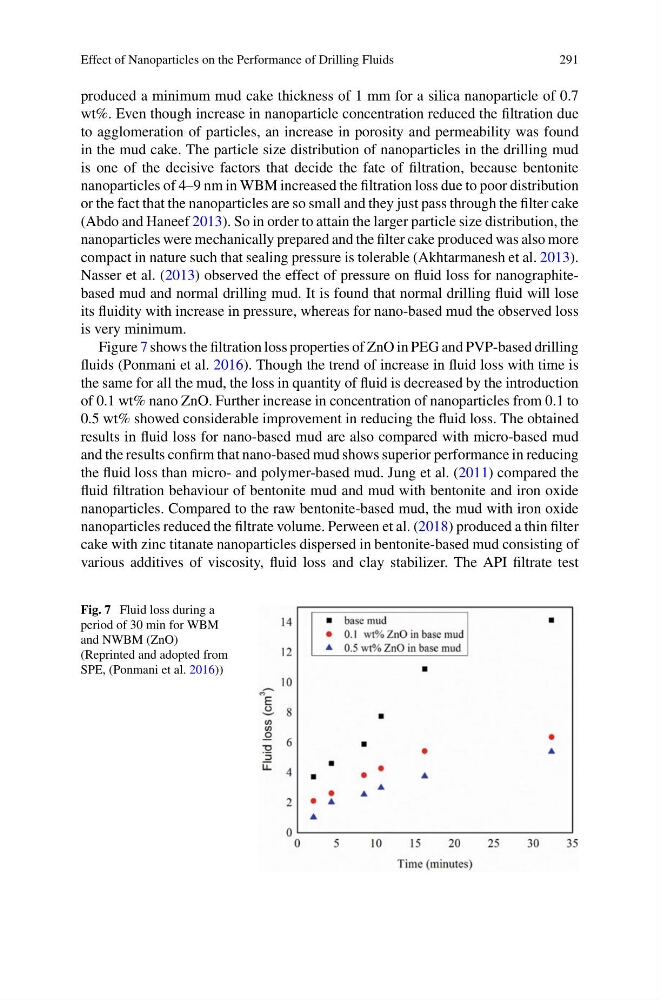
Figure 7 shows the filtration loss properties of ZnO in PEG and PVP-based drilling
fluids (Ponmani et al. 2016). Though the trend of increase in fluid loss with time is
the same for all the mud, the loss in quantity of fluid is decreased by the introduction
of 0.1 wt% nano ZnO. Further increase in concentration of nanoparticles from 0.1 to
0.5 wt% showed considerable improvement in reducing the fluid loss. The obtained
results in fluid loss for nano-based mud are also compared with micro-based mud
and the results confirm that nano-based mud shows superior performance in reducing
the fluid loss than micro- and polymer-based mud. Jung et al. (2011) compared the
fluid filtration behaviour of bentonite mud and mud with bentonite and iron oxide
nanoparticles. Compared to the raw bentonite-based mud, the mud with iron oxide
nanoparticles reduced the filtrate volume. Perween et al. (2018) produced a thin filter
cake with zinc titanate nanoparticles dispersed in bentonite-based mud consisting of
various additives of viscosity, fluid loss and clay stabilizer. The API filtrate test
Fig. 7 Fluid loss during a
period of 30 min for WBM
and NWBM (ZnO)
(Reprinted and adopted from
SPE, (Ponmani et al. 2016))
291
produced a minimum mud cake thickness of 1 mm for a silica nanoparticle of 0.7
wt%. Even though increase in nanoparticle concentration reduced the filtration due
to agglomeration of particles, an increase in porosity and permeability was found
in the mud cake. The particle size distribution of nanoparticles in the drilling mud
is one of the decisive factors that decide the fate of filtration, because bentonite
nanoparticles of 4–9 nm in WBM increased the filtration loss due to poor distribution
or the fact that the nanoparticles are so small and they just pass through the filter cake
(Abdo and Haneef 2013). So in order to attain the larger particle size distribution, the
nanoparticles were mechanically prepared and the filter cake produced was also more
compact in nature such that sealing pressure is tolerable (Akhtarmanesh et al. 2013).
Nasser et al. (2013) observed the effect of pressure on fluid loss for nanographitebased mud and normal drilling mud. It is found that normal drilling fluid will lose
its fluidity with increase in pressure, whereas for nano-based mud the observed loss
is very minimum.
Figure 7 shows the filtration loss properties of ZnO in PEG and PVP-based drilling
fluids (Ponmani et al. 2016). Though the trend of increase in fluid loss with time is
the same for all the mud, the loss in quantity of fluid is decreased by the introduction
of 0.1 wt% nano ZnO. Further increase in concentration of nanoparticles from 0.1 to
0.5 wt% showed considerable improvement in reducing the fluid loss. The obtained
results in fluid loss for nano-based mud are also compared with micro-based mud
and the results confirm that nano-based mud shows superior performance in reducing
the fluid loss than micro- and polymer-based mud. Jung et al. (2011) compared the
fluid filtration behaviour of bentonite mud and mud with bentonite and iron oxide
nanoparticles. Compared to the raw bentonite-based mud, the mud with iron oxide
nanoparticles reduced the filtrate volume. Perween et al. (2018) produced a thin filter
cake with zinc titanate nanoparticles dispersed in bentonite-based mud consisting of
various additives of viscosity, fluid loss and clay stabilizer. The API filtrate test
Fig. 7 Fluid loss during a
period of 30 min for WBM
and NWBM (ZnO)
(Reprinted and adopted from
SPE, (Ponmani et al. 2016))