

Effect of Nanoparticles on the Performance of Drilling Fluids
289
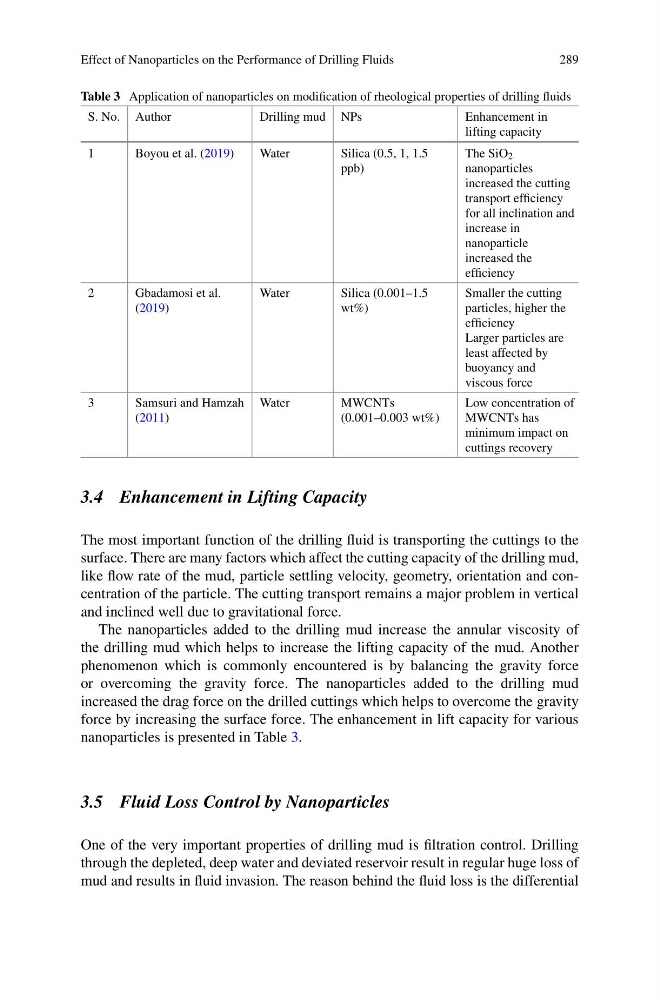
Table 3 Application of nanoparticles on modification of rheological properties of drilling fluids
S. No. Author
Drilling mud NPs
Enhancement in
lifting capacity
1
Boyou et al. (2019)
Water
Silica (0.5, 1, 1.5
ppb)
The SiO 2
nanoparticles
increased the cutting
transport efficiency
for all inclination and
increase in
nanoparticle
increased the
efficiency
2
Gbadamosi et al.
(2019)
Water
Silica (0.001–1.5
wt%)
Smaller the cutting
particles, higher the
efficiency
Larger particles are
least affected by
buoyancy and
viscous force
3
Samsuri and Hamzah
(2011)
Water
MWCNTs
(0.001–0.003 wt%)
Low concentration of
MWCNTs has
minimum impact on
cuttings recovery
3.4 Enhancement in Lifting Capacity
The most important function of the drilling fluid is transporting the cuttings to the
surface. There are many factors which affect the cutting capacity of the drilling mud,
like flow rate of the mud, particle settling velocity, geometry, orientation and concentration of the particle. The cutting transport remains a major problem in vertical
and inclined well due to gravitational force.
The nanoparticles added to the drilling mud increase the annular viscosity of
the drilling mud which helps to increase the lifting capacity of the mud. Another
phenomenon which is commonly encountered is by balancing the gravity force
or overcoming the gravity force. The nanoparticles added to the drilling mud
increased the drag force on the drilled cuttings which helps to overcome the gravity
force by increasing the surface force. The enhancement in lift capacity for various
nanoparticles is presented in Table 3.
3.5 Fluid Loss Control by Nanoparticles
One of the very important properties of drilling mud is filtration control. Drilling
through the depleted, deep water and deviated reservoir result in regular huge loss of
mud and results in fluid invasion. The reason behind the fluid loss is the differential
289
Table 3 Application of nanoparticles on modification of rheological properties of drilling fluids
S. No. Author
Drilling mud NPs
Enhancement in
lifting capacity
1
Boyou et al. (2019)
Water
Silica (0.5, 1, 1.5
ppb)
The SiO 2
nanoparticles
increased the cutting
transport efficiency
for all inclination and
increase in
nanoparticle
increased the
efficiency
2
Gbadamosi et al.
(2019)
Water
Silica (0.001–1.5
wt%)
Smaller the cutting
particles, higher the
efficiency
Larger particles are
least affected by
buoyancy and
viscous force
3
Samsuri and Hamzah
(2011)
Water
MWCNTs
(0.001–0.003 wt%)
Low concentration of
MWCNTs has
minimum impact on
cuttings recovery
3.4 Enhancement in Lifting Capacity
The most important function of the drilling fluid is transporting the cuttings to the
surface. There are many factors which affect the cutting capacity of the drilling mud,
like flow rate of the mud, particle settling velocity, geometry, orientation and concentration of the particle. The cutting transport remains a major problem in vertical
and inclined well due to gravitational force.
The nanoparticles added to the drilling mud increase the annular viscosity of
the drilling mud which helps to increase the lifting capacity of the mud. Another
phenomenon which is commonly encountered is by balancing the gravity force
or overcoming the gravity force. The nanoparticles added to the drilling mud
increased the drag force on the drilled cuttings which helps to overcome the gravity
force by increasing the surface force. The enhancement in lift capacity for various
nanoparticles is presented in Table 3.
3.5 Fluid Loss Control by Nanoparticles
One of the very important properties of drilling mud is filtration control. Drilling
through the depleted, deep water and deviated reservoir result in regular huge loss of
mud and results in fluid invasion. The reason behind the fluid loss is the differential