

Effect of Nanoparticles on the Performance of Drilling Fluids
285
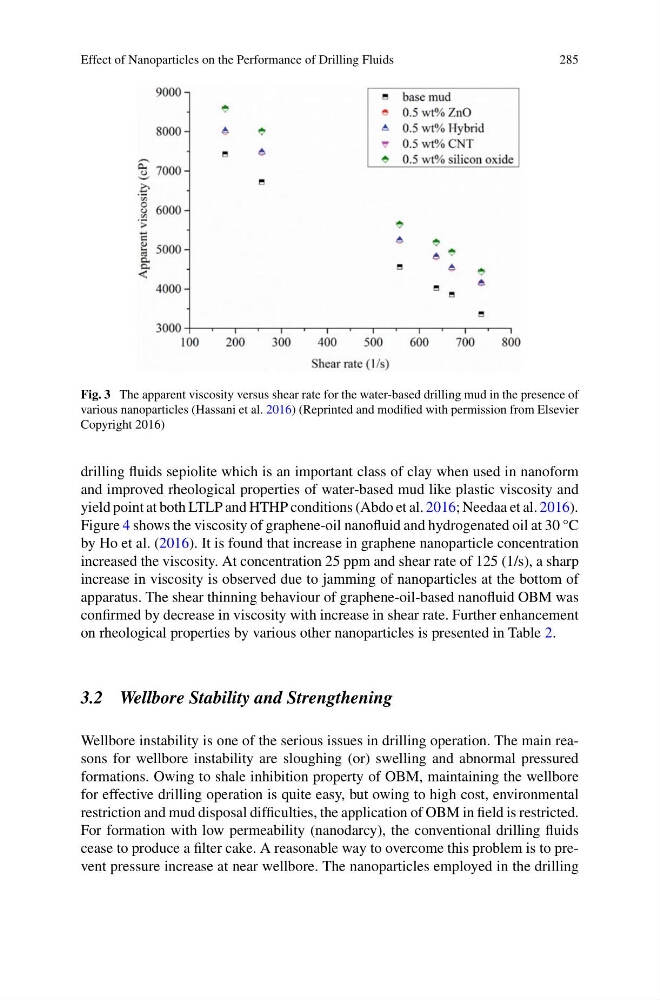
Fig. 3 The apparent viscosity versus shear rate for the water-based drilling mud in the presence of
various nanoparticles (Hassani et al. 2016) (Reprinted and modified with permission from Elsevier
Copyright 2016)
drilling fluids sepiolite which is an important class of clay when used in nanoform
and improved rheological properties of water-based mud like plastic viscosity and
yield point at both LTLP and HTHP conditions (Abdo et al. 2016; Needaa et al. 2016).
Figure 4 shows the viscosity of graphene-oil nanofluid and hydrogenated oil at 30 °C
by Ho et al. (2016). It is found that increase in graphene nanoparticle concentration
increased the viscosity. At concentration 25 ppm and shear rate of 125 (1/s), a sharp
increase in viscosity is observed due to jamming of nanoparticles at the bottom of
apparatus. The shear thinning behaviour of graphene-oil-based nanofluid OBM was
confirmed by decrease in viscosity with increase in shear rate. Further enhancement
on rheological properties by various other nanoparticles is presented in Table 2.
3.2 Wellbore Stability and Strengthening
Wellbore instability is one of the serious issues in drilling operation. The main reasons for wellbore instability are sloughing (or) swelling and abnormal pressured
formations. Owing to shale inhibition property of OBM, maintaining the wellbore
for effective drilling operation is quite easy, but owing to high cost, environmental
restriction and mud disposal difficulties, the application of OBM in field is restricted.
For formation with low permeability (nanodarcy), the conventional drilling fluids
cease to produce a filter cake. A reasonable way to overcome this problem is to prevent pressure increase at near wellbore. The nanoparticles employed in the drilling
285
Fig. 3 The apparent viscosity versus shear rate for the water-based drilling mud in the presence of
various nanoparticles (Hassani et al. 2016) (Reprinted and modified with permission from Elsevier
Copyright 2016)
drilling fluids sepiolite which is an important class of clay when used in nanoform
and improved rheological properties of water-based mud like plastic viscosity and
yield point at both LTLP and HTHP conditions (Abdo et al. 2016; Needaa et al. 2016).
Figure 4 shows the viscosity of graphene-oil nanofluid and hydrogenated oil at 30 °C
by Ho et al. (2016). It is found that increase in graphene nanoparticle concentration
increased the viscosity. At concentration 25 ppm and shear rate of 125 (1/s), a sharp
increase in viscosity is observed due to jamming of nanoparticles at the bottom of
apparatus. The shear thinning behaviour of graphene-oil-based nanofluid OBM was
confirmed by decrease in viscosity with increase in shear rate. Further enhancement
on rheological properties by various other nanoparticles is presented in Table 2.
3.2 Wellbore Stability and Strengthening
Wellbore instability is one of the serious issues in drilling operation. The main reasons for wellbore instability are sloughing (or) swelling and abnormal pressured
formations. Owing to shale inhibition property of OBM, maintaining the wellbore
for effective drilling operation is quite easy, but owing to high cost, environmental
restriction and mud disposal difficulties, the application of OBM in field is restricted.
For formation with low permeability (nanodarcy), the conventional drilling fluids
cease to produce a filter cake. A reasonable way to overcome this problem is to prevent pressure increase at near wellbore. The nanoparticles employed in the drilling