

Peptide Nanotubes: A Crystallographic Approach
115
Ala
Δ Phe
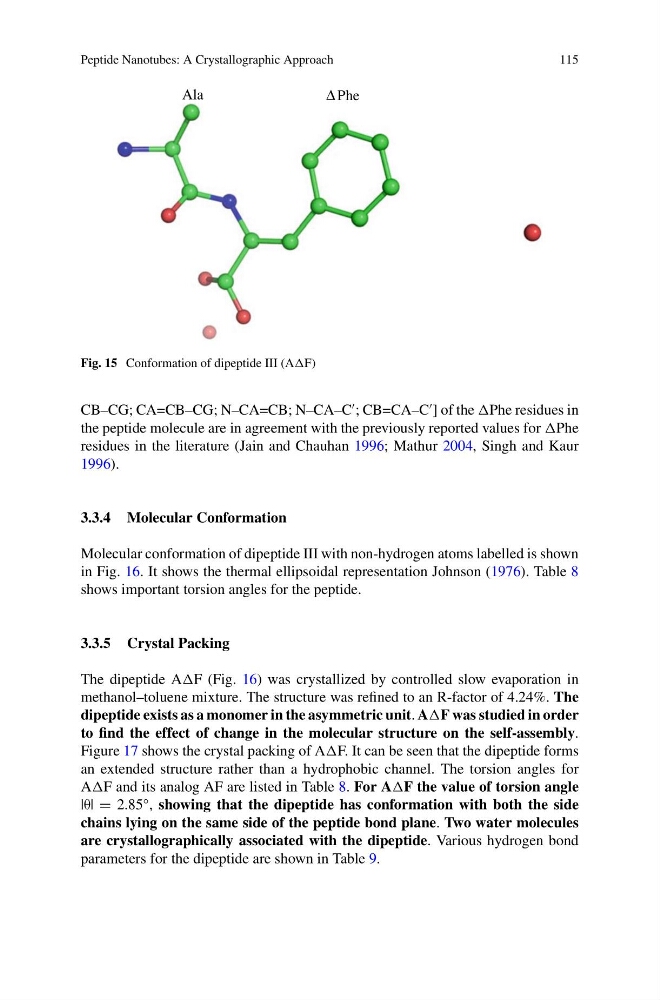
Fig. 15 Conformation of dipeptide III (AF)
CB–CG; CA=CB–CG; N–CA=CB; N–CA–C
; CB=CA–C
] of the Phe residues in
the peptide molecule are in agreement with the previously reported values for Phe
residues in the literature (Jain and Chauhan 1996; Mathur 2004, Singh and Kaur
1996).
3.3.4 Molecular Conformation
Molecular conformation of dipeptide III with non-hydrogen atoms labelled is shown
in Fig. 16. It shows the thermal ellipsoidal representation Johnson (1976). Table 8
shows important torsion angles for the peptide.
3.3.5 Crystal Packing
The dipeptide AF (Fig. 16) was crystallized by controlled slow evaporation in
methanol–toluene mixture. The structure was refined to an R-factor of 4.24%. The
dipeptide exists as a monomer in the asymmetric unit. AF was studied in order
to find the effect of change in the molecular structure on the self-assembly.
Figure 17 shows the crystal packing of AF. It can be seen that the dipeptide forms
an extended structure rather than a hydrophobic channel. The torsion angles for
AF and its analog AF are listed in Table 8. For AF the value of torsion angle
|θ| = 2.85°, showing that the dipeptide has conformation with both the side
chains lying on the same side of the peptide bond plane. Two water molecules
are crystallographically associated with the dipeptide. Various hydrogen bond
parameters for the dipeptide are shown in Table 9.
115
Ala
Δ Phe
Fig. 15 Conformation of dipeptide III (AF)
CB–CG; CA=CB–CG; N–CA=CB; N–CA–C
; CB=CA–C
] of the Phe residues in
the peptide molecule are in agreement with the previously reported values for Phe
residues in the literature (Jain and Chauhan 1996; Mathur 2004, Singh and Kaur
1996).
3.3.4 Molecular Conformation
Molecular conformation of dipeptide III with non-hydrogen atoms labelled is shown
in Fig. 16. It shows the thermal ellipsoidal representation Johnson (1976). Table 8
shows important torsion angles for the peptide.
3.3.5 Crystal Packing
The dipeptide AF (Fig. 16) was crystallized by controlled slow evaporation in
methanol–toluene mixture. The structure was refined to an R-factor of 4.24%. The
dipeptide exists as a monomer in the asymmetric unit. AF was studied in order
to find the effect of change in the molecular structure on the self-assembly.
Figure 17 shows the crystal packing of AF. It can be seen that the dipeptide forms
an extended structure rather than a hydrophobic channel. The torsion angles for
AF and its analog AF are listed in Table 8. For AF the value of torsion angle
|θ| = 2.85°, showing that the dipeptide has conformation with both the side
chains lying on the same side of the peptide bond plane. Two water molecules
are crystallographically associated with the dipeptide. Various hydrogen bond
parameters for the dipeptide are shown in Table 9.