

Agents in Economic Markets and Games
123
I n p u t s 1 o r m o r e
O u t p u t s 1 o r m o r e
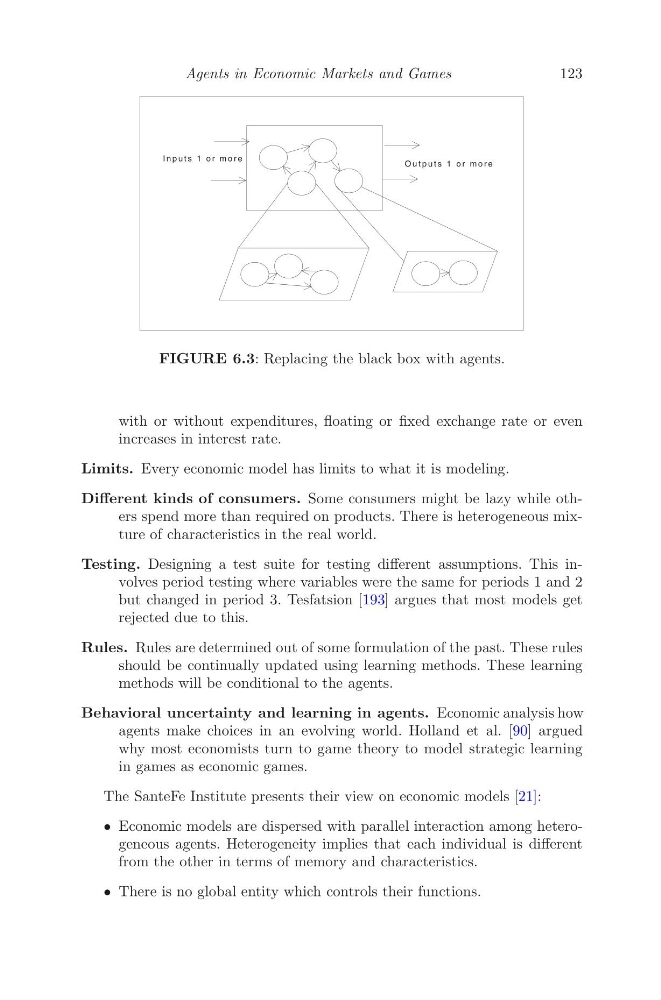
FIGURE 6.3: Replacing the black box with agents.
with or without expenditures, floating or fixed exchange rate or even
increases in interest rate.
Limits. Every economic model has limits to what it is modeling.
Different kinds of consumers. Some consumers might be lazy while others spend more than required on products. There is heterogeneous mixture of characteristics in the real world.
Testing. Designing a test suite for testing different assumptions. This involves period testing where variables were the same for periods 1 and 2
but changed in period 3. Tesfatsion [193] argues that most models get
rejected due to this.
Rules. Rules are determined out of some formulation of the past. These rules
should be continually updated using learning methods. These learning
methods will be conditional to the agents.
Behavioral uncertainty and learning in agents. Economic analysis how
agents make choices in an evolving world. Holland et al. [90] argued
why most economists turn to game theory to model strategic learning
in games as economic games.
The SanteFe Institute presents their view on economic models [21]:
• Economic models are dispersed with parallel interaction among heterogeneous agents. Heterogeneity implies that each individual is different
from the other in terms of memory and characteristics.
• There is no global entity which controls their functions.
123
I n p u t s 1 o r m o r e
O u t p u t s 1 o r m o r e
FIGURE 6.3: Replacing the black box with agents.
with or without expenditures, floating or fixed exchange rate or even
increases in interest rate.
Limits. Every economic model has limits to what it is modeling.
Different kinds of consumers. Some consumers might be lazy while others spend more than required on products. There is heterogeneous mixture of characteristics in the real world.
Testing. Designing a test suite for testing different assumptions. This involves period testing where variables were the same for periods 1 and 2
but changed in period 3. Tesfatsion [193] argues that most models get
rejected due to this.
Rules. Rules are determined out of some formulation of the past. These rules
should be continually updated using learning methods. These learning
methods will be conditional to the agents.
Behavioral uncertainty and learning in agents. Economic analysis how
agents make choices in an evolving world. Holland et al. [90] argued
why most economists turn to game theory to model strategic learning
in games as economic games.
The SanteFe Institute presents their view on economic models [21]:
• Economic models are dispersed with parallel interaction among heterogeneous agents. Heterogeneity implies that each individual is different
from the other in terms of memory and characteristics.
• There is no global entity which controls their functions.