

244
N. Wade et al.
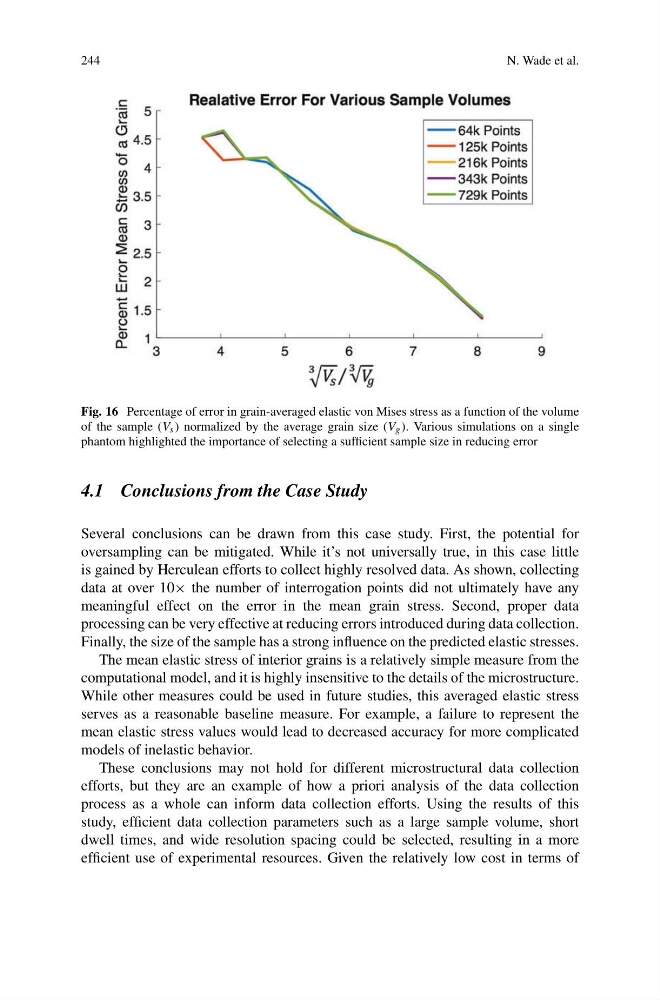
Fig. 16 Percentage of error in grain-averaged elastic von Mises stress as a function of the volume
of the sample (V s ) normalized by the average grain size (V g ). Various simulations on a single
phantom highlighted the importance of selecting a sufficient sample size in reducing error
4.1 Conclusions from the Case Study
Several conclusions can be drawn from this case study. First, the potential for
oversampling can be mitigated. While it’s not universally true, in this case little
is gained by Herculean efforts to collect highly resolved data. As shown, collecting
data at over 10× the number of interrogation points did not ultimately have any
meaningful effect on the error in the mean grain stress. Second, proper data
processing can be very effective at reducing errors introduced during data collection.
Finally, the size of the sample has a strong influence on the predicted elastic stresses.
The mean elastic stress of interior grains is a relatively simple measure from the
computational model, and it is highly insensitive to the details of the microstructure.
While other measures could be used in future studies, this averaged elastic stress
serves as a reasonable baseline measure. For example, a failure to represent the
mean elastic stress values would lead to decreased accuracy for more complicated
models of inelastic behavior.
These conclusions may not hold for different microstructural data collection
efforts, but they are an example of how a priori analysis of the data collection
process as a whole can inform data collection efforts. Using the results of this
study, efficient data collection parameters such as a large sample volume, short
dwell times, and wide resolution spacing could be selected, resulting in a more
efficient use of experimental resources. Given the relatively low cost in terms of
N. Wade et al.
Fig. 16 Percentage of error in grain-averaged elastic von Mises stress as a function of the volume
of the sample (V s ) normalized by the average grain size (V g ). Various simulations on a single
phantom highlighted the importance of selecting a sufficient sample size in reducing error
4.1 Conclusions from the Case Study
Several conclusions can be drawn from this case study. First, the potential for
oversampling can be mitigated. While it’s not universally true, in this case little
is gained by Herculean efforts to collect highly resolved data. As shown, collecting
data at over 10× the number of interrogation points did not ultimately have any
meaningful effect on the error in the mean grain stress. Second, proper data
processing can be very effective at reducing errors introduced during data collection.
Finally, the size of the sample has a strong influence on the predicted elastic stresses.
The mean elastic stress of interior grains is a relatively simple measure from the
computational model, and it is highly insensitive to the details of the microstructure.
While other measures could be used in future studies, this averaged elastic stress
serves as a reasonable baseline measure. For example, a failure to represent the
mean elastic stress values would lead to decreased accuracy for more complicated
models of inelastic behavior.
These conclusions may not hold for different microstructural data collection
efforts, but they are an example of how a priori analysis of the data collection
process as a whole can inform data collection efforts. Using the results of this
study, efficient data collection parameters such as a large sample volume, short
dwell times, and wide resolution spacing could be selected, resulting in a more
efficient use of experimental resources. Given the relatively low cost in terms of