

Non-deterministic Calibration
181
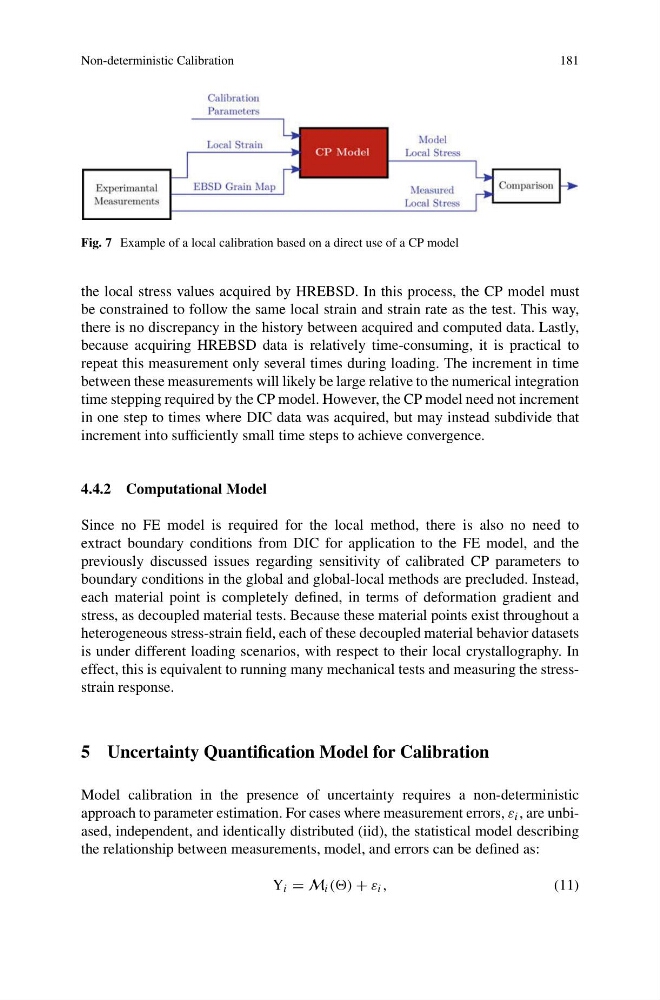
Fig. 7 Example of a local calibration based on a direct use of a CP model
the local stress values acquired by HREBSD. In this process, the CP model must
be constrained to follow the same local strain and strain rate as the test. This way,
there is no discrepancy in the history between acquired and computed data. Lastly,
because acquiring HREBSD data is relatively time-consuming, it is practical to
repeat this measurement only several times during loading. The increment in time
between these measurements will likely be large relative to the numerical integration
time stepping required by the CP model. However, the CP model need not increment
in one step to times where DIC data was acquired, but may instead subdivide that
increment into sufficiently small time steps to achieve convergence.
4.4.2 Computational Model
Since no FE model is required for the local method, there is also no need to
extract boundary conditions from DIC for application to the FE model, and the
previously discussed issues regarding sensitivity of calibrated CP parameters to
boundary conditions in the global and global-local methods are precluded. Instead,
each material point is completely defined, in terms of deformation gradient and
stress, as decoupled material tests. Because these material points exist throughout a
heterogeneous stress-strain field, each of these decoupled material behavior datasets
is under different loading scenarios, with respect to their local crystallography. In
effect, this is equivalent to running many mechanical tests and measuring the stressstrain response.
5 Uncertainty Quantification Model for Calibration
Model calibration in the presence of uncertainty requires a non-deterministic
approach to parameter estimation. For cases where measurement errors, ε i , are unbiased, independent, and identically distributed (iid), the statistical model describing
the relationship between measurements, model, and errors can be defined as:
Y i = M i (() + ε i ,
(11)
181
Fig. 7 Example of a local calibration based on a direct use of a CP model
the local stress values acquired by HREBSD. In this process, the CP model must
be constrained to follow the same local strain and strain rate as the test. This way,
there is no discrepancy in the history between acquired and computed data. Lastly,
because acquiring HREBSD data is relatively time-consuming, it is practical to
repeat this measurement only several times during loading. The increment in time
between these measurements will likely be large relative to the numerical integration
time stepping required by the CP model. However, the CP model need not increment
in one step to times where DIC data was acquired, but may instead subdivide that
increment into sufficiently small time steps to achieve convergence.
4.4.2 Computational Model
Since no FE model is required for the local method, there is also no need to
extract boundary conditions from DIC for application to the FE model, and the
previously discussed issues regarding sensitivity of calibrated CP parameters to
boundary conditions in the global and global-local methods are precluded. Instead,
each material point is completely defined, in terms of deformation gradient and
stress, as decoupled material tests. Because these material points exist throughout a
heterogeneous stress-strain field, each of these decoupled material behavior datasets
is under different loading scenarios, with respect to their local crystallography. In
effect, this is equivalent to running many mechanical tests and measuring the stressstrain response.
5 Uncertainty Quantification Model for Calibration
Model calibration in the presence of uncertainty requires a non-deterministic
approach to parameter estimation. For cases where measurement errors, ε i , are unbiased, independent, and identically distributed (iid), the statistical model describing
the relationship between measurements, model, and errors can be defined as:
Y i = M i (() + ε i ,
(11)