

180
J. Hochhalter et al.
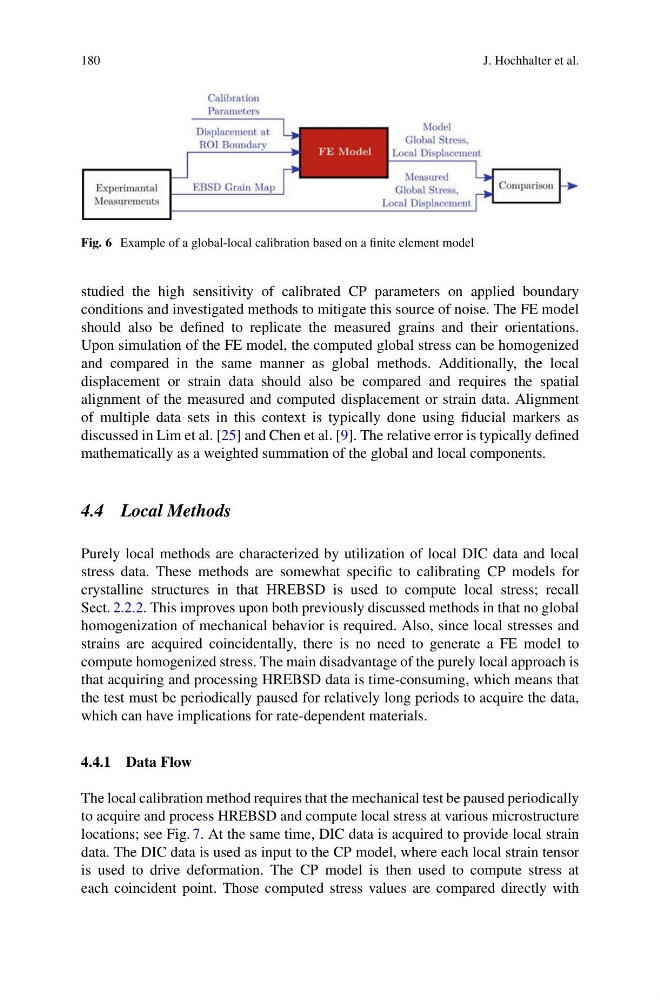
Fig. 6 Example of a global-local calibration based on a finite element model
studied the high sensitivity of calibrated CP parameters on applied boundary
conditions and investigated methods to mitigate this source of noise. The FE model
should also be defined to replicate the measured grains and their orientations.
Upon simulation of the FE model, the computed global stress can be homogenized
and compared in the same manner as global methods. Additionally, the local
displacement or strain data should also be compared and requires the spatial
alignment of the measured and computed displacement or strain data. Alignment
of multiple data sets in this context is typically done using fiducial markers as
discussed in Lim et al. [25] and Chen et al. [9]. The relative error is typically defined
mathematically as a weighted summation of the global and local components.
4.4 Local Methods
Purely local methods are characterized by utilization of local DIC data and local
stress data. These methods are somewhat specific to calibrating CP models for
crystalline structures in that HREBSD is used to compute local stress; recall
Sect. 2.2.2. This improves upon both previously discussed methods in that no global
homogenization of mechanical behavior is required. Also, since local stresses and
strains are acquired coincidentally, there is no need to generate a FE model to
compute homogenized stress. The main disadvantage of the purely local approach is
that acquiring and processing HREBSD data is time-consuming, which means that
the test must be periodically paused for relatively long periods to acquire the data,
which can have implications for rate-dependent materials.
4.4.1 Data Flow
The local calibration method requires that the mechanical test be paused periodically
to acquire and process HREBSD and compute local stress at various microstructure
locations; see Fig. 7. At the same time, DIC data is acquired to provide local strain
data. The DIC data is used as input to the CP model, where each local strain tensor
is used to drive deformation. The CP model is then used to compute stress at
each coincident point. Those computed stress values are compared directly with
J. Hochhalter et al.
Fig. 6 Example of a global-local calibration based on a finite element model
studied the high sensitivity of calibrated CP parameters on applied boundary
conditions and investigated methods to mitigate this source of noise. The FE model
should also be defined to replicate the measured grains and their orientations.
Upon simulation of the FE model, the computed global stress can be homogenized
and compared in the same manner as global methods. Additionally, the local
displacement or strain data should also be compared and requires the spatial
alignment of the measured and computed displacement or strain data. Alignment
of multiple data sets in this context is typically done using fiducial markers as
discussed in Lim et al. [25] and Chen et al. [9]. The relative error is typically defined
mathematically as a weighted summation of the global and local components.
4.4 Local Methods
Purely local methods are characterized by utilization of local DIC data and local
stress data. These methods are somewhat specific to calibrating CP models for
crystalline structures in that HREBSD is used to compute local stress; recall
Sect. 2.2.2. This improves upon both previously discussed methods in that no global
homogenization of mechanical behavior is required. Also, since local stresses and
strains are acquired coincidentally, there is no need to generate a FE model to
compute homogenized stress. The main disadvantage of the purely local approach is
that acquiring and processing HREBSD data is time-consuming, which means that
the test must be periodically paused for relatively long periods to acquire the data,
which can have implications for rate-dependent materials.
4.4.1 Data Flow
The local calibration method requires that the mechanical test be paused periodically
to acquire and process HREBSD and compute local stress at various microstructure
locations; see Fig. 7. At the same time, DIC data is acquired to provide local strain
data. The DIC data is used as input to the CP model, where each local strain tensor
is used to drive deformation. The CP model is then used to compute stress at
each coincident point. Those computed stress values are compared directly with