

10.2. Application to signed directed networks
145
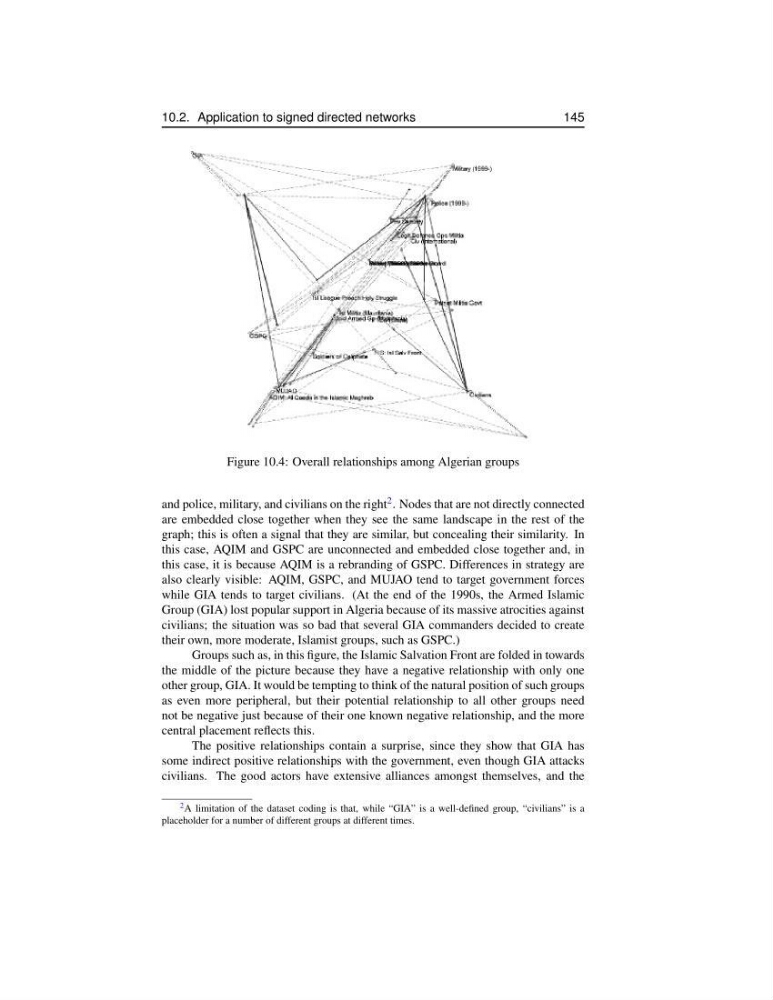
Figure 10.4: Overall relationships among Algerian groups
and police, military, and civilians on the right 2 . Nodes that are not directly connected
are embedded close together when they see the same landscape in the rest of the
graph; this is often a signal that they are similar, but concealing their similarity. In
this case, AQIM and GSPC are unconnected and embedded close together and, in
this case, it is because AQIM is a rebranding of GSPC. Differences in strategy are
also clearly visible: AQIM, GSPC, and MUJAO tend to target government forces
while GIA tends to target civilians. (At the end of the 1990s, the Armed Islamic
Group (GIA) lost popular support in Algeria because of its massive atrocities against
civilians; the situation was so bad that several GIA commanders decided to create
their own, more moderate, Islamist groups, such as GSPC.)
Groups such as, in this figure, the Islamic Salvation Front are folded in towards
the middle of the picture because they have a negative relationship with only one
other group, GIA. It would be tempting to think of the natural position of such groups
as even more peripheral, but their potential relationship to all other groups need
not be negative just because of their one known negative relationship, and the more
central placement reflects this.
The positive relationships contain a surprise, since they show that GIA has
some indirect positive relationships with the government, even though GIA attacks
civilians. The good actors have extensive alliances amongst themselves, and the
2 A limitation of the dataset coding is that, while “GIA” is a well-defined group, “civilians” is a
placeholder for a number of different groups at different times.
145
Figure 10.4: Overall relationships among Algerian groups
and police, military, and civilians on the right 2 . Nodes that are not directly connected
are embedded close together when they see the same landscape in the rest of the
graph; this is often a signal that they are similar, but concealing their similarity. In
this case, AQIM and GSPC are unconnected and embedded close together and, in
this case, it is because AQIM is a rebranding of GSPC. Differences in strategy are
also clearly visible: AQIM, GSPC, and MUJAO tend to target government forces
while GIA tends to target civilians. (At the end of the 1990s, the Armed Islamic
Group (GIA) lost popular support in Algeria because of its massive atrocities against
civilians; the situation was so bad that several GIA commanders decided to create
their own, more moderate, Islamist groups, such as GSPC.)
Groups such as, in this figure, the Islamic Salvation Front are folded in towards
the middle of the picture because they have a negative relationship with only one
other group, GIA. It would be tempting to think of the natural position of such groups
as even more peripheral, but their potential relationship to all other groups need
not be negative just because of their one known negative relationship, and the more
central placement reflects this.
The positive relationships contain a surprise, since they show that GIA has
some indirect positive relationships with the government, even though GIA attacks
civilians. The good actors have extensive alliances amongst themselves, and the
2 A limitation of the dataset coding is that, while “GIA” is a well-defined group, “civilians” is a
placeholder for a number of different groups at different times.