

142
Chapter 10. Combining directed and signed embeddings
• Long negative-negative edges, indicating focused negativity from a single subset of nodes.
Computing the effective lengths of the edges inside the clique that joins the
four versions of each node can therefore provide information about how that node
fits into the wider structure of positive and negative connections in the entire network.
10.2 Application to signed directed networks
To illustrate the embedding, we apply it to the Sampson Monastery data (which was
used before as an undirected signed network), and another dataset derived from the
Armed Conflict Location & Event Data (ACLED) Project (also used earlier).
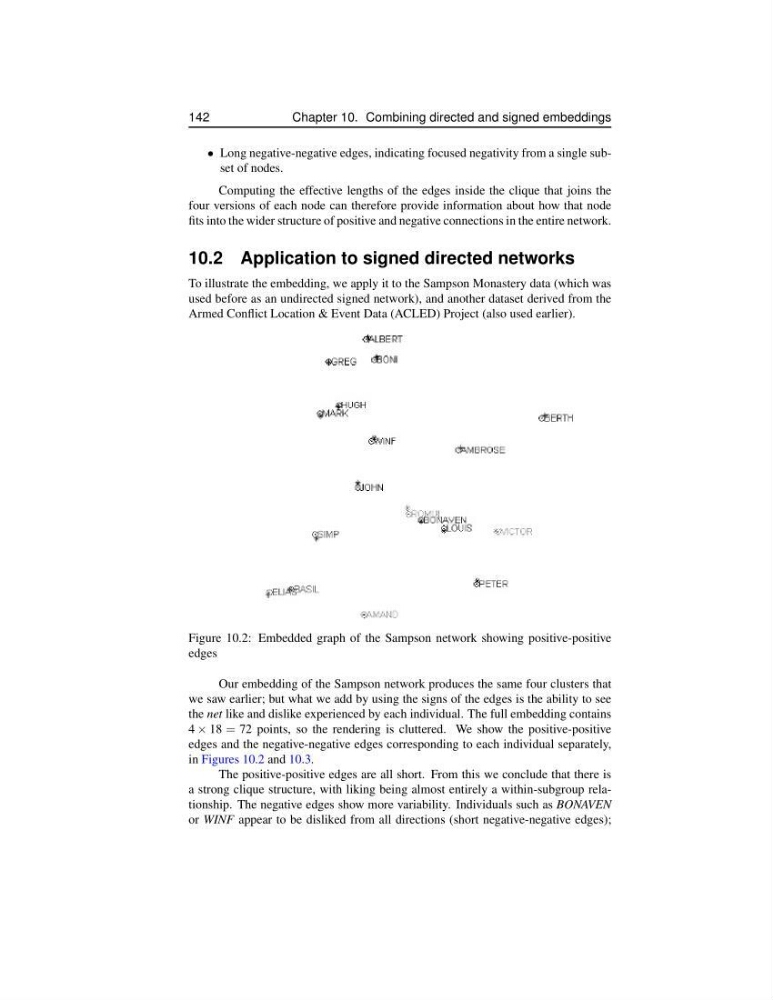
Figure 10.2: Embedded graph of the Sampson network showing positive-positive
edges
Our embedding of the Sampson network produces the same four clusters that
we saw earlier; but what we add by using the signs of the edges is the ability to see
the net like and dislike experienced by each individual. The full embedding contains
4 × 18 = 72 points, so the rendering is cluttered. We show the positive-positive
edges and the negative-negative edges corresponding to each individual separately,
in Figures 10.2 and 10.3.
The positive-positive edges are all short. From this we conclude that there is
a strong clique structure, with liking being almost entirely a within-subgroup relationship. The negative edges show more variability. Individuals such as BONAVEN
or WINF appear to be disliked from all directions (short negative-negative edges);
Chapter 10. Combining directed and signed embeddings
• Long negative-negative edges, indicating focused negativity from a single subset of nodes.
Computing the effective lengths of the edges inside the clique that joins the
four versions of each node can therefore provide information about how that node
fits into the wider structure of positive and negative connections in the entire network.
10.2 Application to signed directed networks
To illustrate the embedding, we apply it to the Sampson Monastery data (which was
used before as an undirected signed network), and another dataset derived from the
Armed Conflict Location & Event Data (ACLED) Project (also used earlier).
Figure 10.2: Embedded graph of the Sampson network showing positive-positive
edges
Our embedding of the Sampson network produces the same four clusters that
we saw earlier; but what we add by using the signs of the edges is the ability to see
the net like and dislike experienced by each individual. The full embedding contains
4 × 18 = 72 points, so the rendering is cluttered. We show the positive-positive
edges and the negative-negative edges corresponding to each individual separately,
in Figures 10.2 and 10.3.
The positive-positive edges are all short. From this we conclude that there is
a strong clique structure, with liking being almost entirely a within-subgroup relationship. The negative edges show more variability. Individuals such as BONAVEN
or WINF appear to be disliked from all directions (short negative-negative edges);