

Data Conversion Circuits – D/A and A/D Converters
479
D/A
Converter
Counter
Digital I/P
{
Analog
O/P
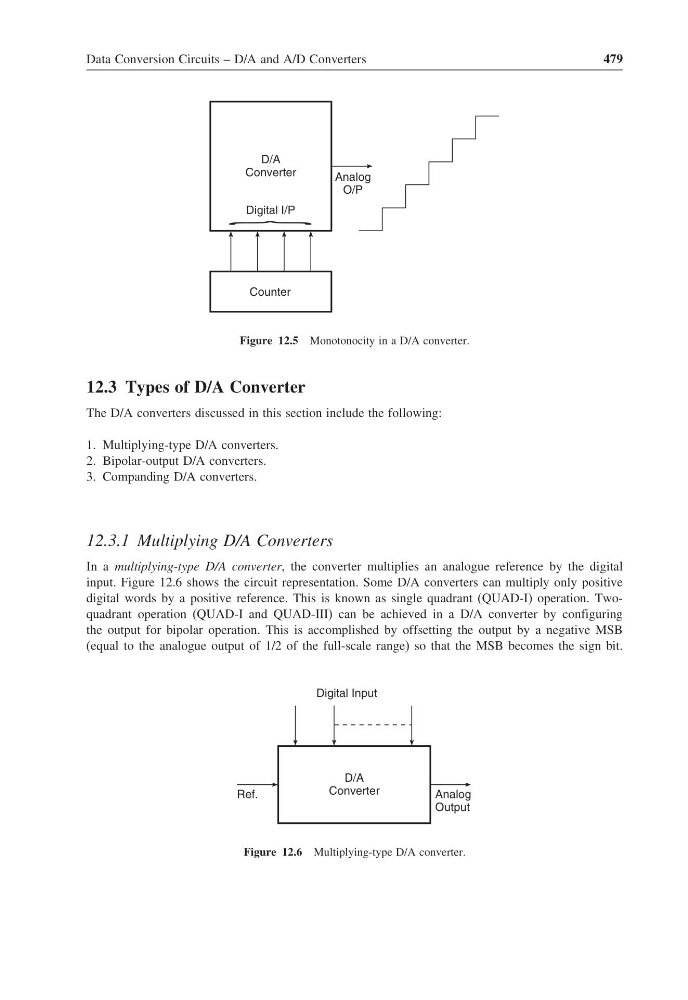
Figure 12.5 Monotonocity in a D/A converter.
12.3 Types of D/A Converter
The D/A converters discussed in this section include the following:
1. Multiplying-type D/A converters.
2. Bipolar-output D/A converters.
3. Companding D/A converters.
12.3.1 Multiplying D/A Converters
In a multiplying-type D/A converter, the converter multiplies an analogue reference by the digital
input. Figure 12.6 shows the circuit representation. Some D/A converters can multiply only positive
digital words by a positive reference. This is known as single quadrant (QUAD-I) operation. Twoquadrant operation (QUAD-I and QUAD-III) can be achieved in a D/A converter by configuring
the output for bipolar operation. This is accomplished by offsetting the output by a negative MSB
(equal to the analogue output of 1/2 of the full-scale range) so that the MSB becomes the sign bit.
Analog
Output
D/A
Converter
Ref.
Digital Input
Figure 12.6 Multiplying-type D/A converter.
479
D/A
Converter
Counter
Digital I/P
{
Analog
O/P
Figure 12.5 Monotonocity in a D/A converter.
12.3 Types of D/A Converter
The D/A converters discussed in this section include the following:
1. Multiplying-type D/A converters.
2. Bipolar-output D/A converters.
3. Companding D/A converters.
12.3.1 Multiplying D/A Converters
In a multiplying-type D/A converter, the converter multiplies an analogue reference by the digital
input. Figure 12.6 shows the circuit representation. Some D/A converters can multiply only positive
digital words by a positive reference. This is known as single quadrant (QUAD-I) operation. Twoquadrant operation (QUAD-I and QUAD-III) can be achieved in a D/A converter by configuring
the output for bipolar operation. This is accomplished by offsetting the output by a negative MSB
(equal to the analogue output of 1/2 of the full-scale range) so that the MSB becomes the sign bit.
Analog
Output
D/A
Converter
Ref.
Digital Input
Figure 12.6 Multiplying-type D/A converter.