

352
Digital Electronics
A1
A2
A3
A4
A5
A6
S
Q
D
R
FF
0
1
0
1
0
1
F
F
F
F
F
1
2
3
4
5
F6
AZ
QZ
NZ
FZ
QS
QC
QR
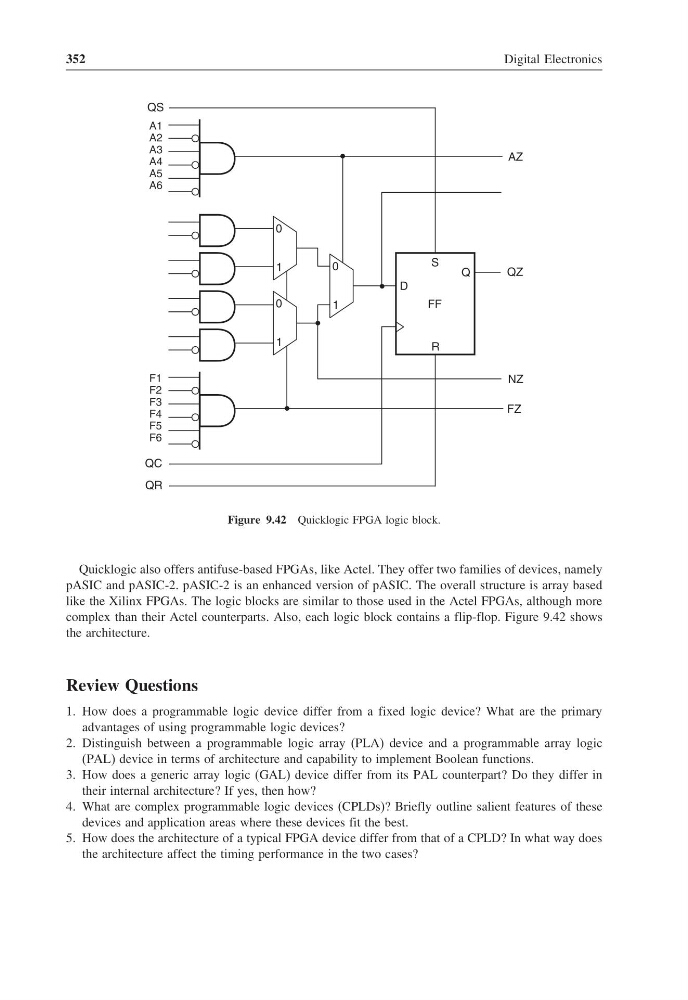
Figure 9.42 Quicklogic FPGA logic block.
Quicklogic also offers antifuse-based FPGAs, like Actel. They offer two families of devices, namely
pASIC and pASIC-2. pASIC-2 is an enhanced version of pASIC. The overall structure is array based
like the Xilinx FPGAs. The logic blocks are similar to those used in the Actel FPGAs, although more
complex than their Actel counterparts. Also, each logic block contains a flip-flop. Figure 9.42 shows
the architecture.
Review Questions
1. How does a programmable logic device differ from a fixed logic device? What are the primary
advantages of using programmable logic devices?
2. Distinguish between a programmable logic array (PLA) device and a programmable array logic
(PAL) device in terms of architecture and capability to implement Boolean functions.
3. How does a generic array logic (GAL) device differ from its PAL counterpart? Do they differ in
their internal architecture? If yes, then how?
4. What are complex programmable logic devices (CPLDs)? Briefly outline salient features of these
devices and application areas where these devices fit the best.
5. How does the architecture of a typical FPGA device differ from that of a CPLD? In what way does
the architecture affect the timing performance in the two cases?
Digital Electronics
A1
A2
A3
A4
A5
A6
S
Q
D
R
FF
0
1
0
1
0
1
F
F
F
F
F
1
2
3
4
5
F6
AZ
QZ
NZ
FZ
QS
QC
QR
Figure 9.42 Quicklogic FPGA logic block.
Quicklogic also offers antifuse-based FPGAs, like Actel. They offer two families of devices, namely
pASIC and pASIC-2. pASIC-2 is an enhanced version of pASIC. The overall structure is array based
like the Xilinx FPGAs. The logic blocks are similar to those used in the Actel FPGAs, although more
complex than their Actel counterparts. Also, each logic block contains a flip-flop. Figure 9.42 shows
the architecture.
Review Questions
1. How does a programmable logic device differ from a fixed logic device? What are the primary
advantages of using programmable logic devices?
2. Distinguish between a programmable logic array (PLA) device and a programmable array logic
(PAL) device in terms of architecture and capability to implement Boolean functions.
3. How does a generic array logic (GAL) device differ from its PAL counterpart? Do they differ in
their internal architecture? If yes, then how?
4. What are complex programmable logic devices (CPLDs)? Briefly outline salient features of these
devices and application areas where these devices fit the best.
5. How does the architecture of a typical FPGA device differ from that of a CPLD? In what way does
the architecture affect the timing performance in the two cases?