

6.3 Political Implications of the Global Water Crisis
59
Israel and the United Arab Emirates, accounting for less 2% of the world’s population
(HE3). Finally, most countries of the global North, such the United States, Japan,
Germany, France, Canada display relatively low exposure to water-related risks in
view of their modest hydrological complexities and high coping capacities (HE2)
(Fischer et al. 2015).
Other dedicated assessments on water security arrive at similar conclusions. The
GWP/OECD Task Force on Water Security and Sustainable Growth—measuring
water insecurity with reference to droughts and scarcity, floods, inadequate water
supply and sanitation, ecosystem degradation and pollution—concluded in 2015 that
aggregate water security risks (including access to water and sanitation) were highest
in China, India and Pakistan. In terms of economic impact the African continent
is likely to be hit hardest, with central and eastern Africa displaying the highest
degree of water insecurity. The risks of real water scarcity are the most severe in
south Asia and northern China. India and Pakistan are particularly exposed in view
of their ever-growing demand for irrigation water. Hydro-climatic variability will
have a particularly high impact on the stability of crop production in Africa, South
America, central Asia and some parts of Europe will also be severely affected (Sadoff
et al. 2015).
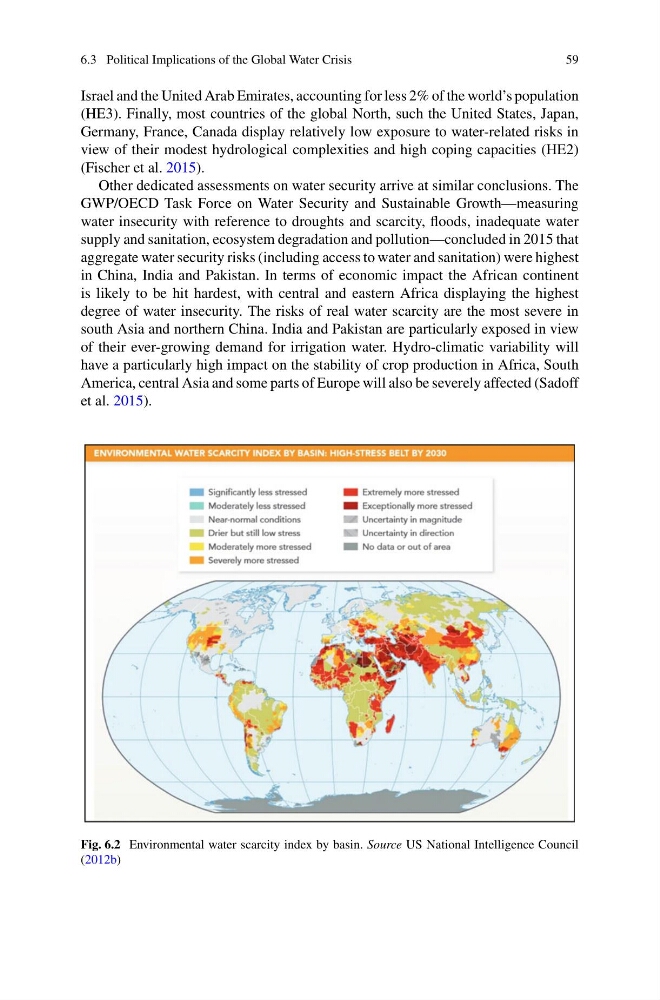
Fig. 6.2 Environmental water scarcity index by basin. Source US National Intelligence Council
(2012b)
59
Israel and the United Arab Emirates, accounting for less 2% of the world’s population
(HE3). Finally, most countries of the global North, such the United States, Japan,
Germany, France, Canada display relatively low exposure to water-related risks in
view of their modest hydrological complexities and high coping capacities (HE2)
(Fischer et al. 2015).
Other dedicated assessments on water security arrive at similar conclusions. The
GWP/OECD Task Force on Water Security and Sustainable Growth—measuring
water insecurity with reference to droughts and scarcity, floods, inadequate water
supply and sanitation, ecosystem degradation and pollution—concluded in 2015 that
aggregate water security risks (including access to water and sanitation) were highest
in China, India and Pakistan. In terms of economic impact the African continent
is likely to be hit hardest, with central and eastern Africa displaying the highest
degree of water insecurity. The risks of real water scarcity are the most severe in
south Asia and northern China. India and Pakistan are particularly exposed in view
of their ever-growing demand for irrigation water. Hydro-climatic variability will
have a particularly high impact on the stability of crop production in Africa, South
America, central Asia and some parts of Europe will also be severely affected (Sadoff
et al. 2015).
Fig. 6.2 Environmental water scarcity index by basin. Source US National Intelligence Council
(2012b)