

80 Basic Seismological Theory
SV
P
P
c o s j d x
c o s i d x
i
j
j
i
dx
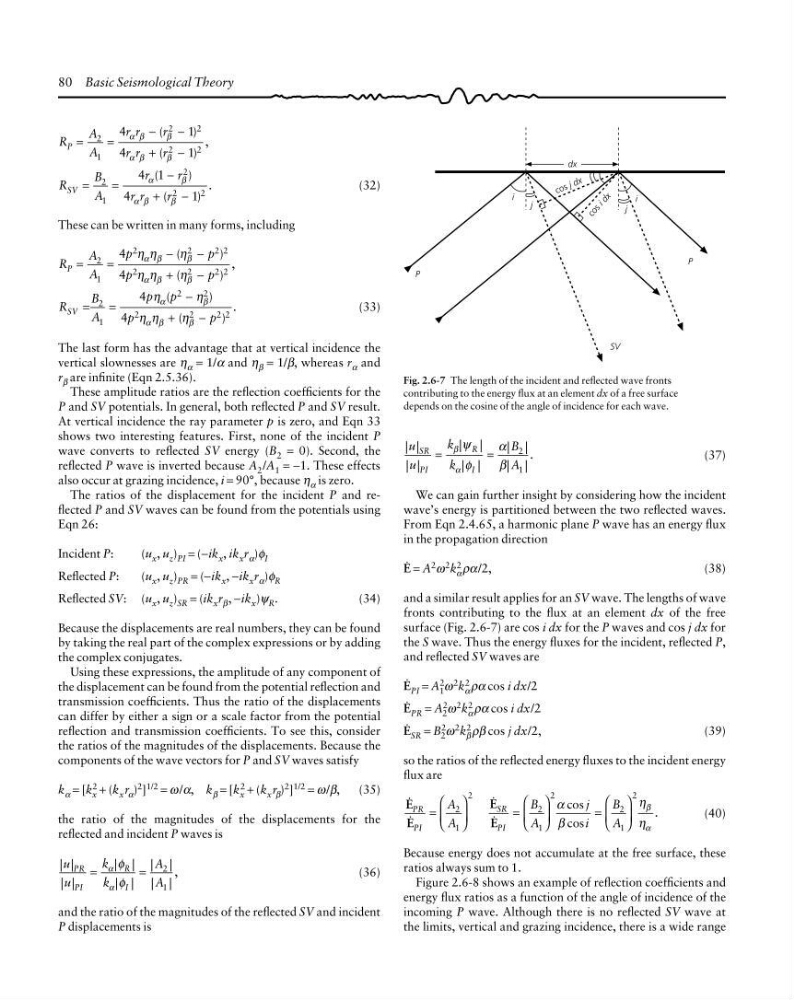
Fig. 2.6-7 The length of the incident and reflected wave fronts
contributing to the energy flux at an element dx of a free surface
depends on the cosine of the angle of incidence for each wave.
R
A
A
r r
r
r r
r
P =
=
−
−
+
−
(
)
(
)
,
2
1
2
2
2
2
4
1
4
1
α β
β
α β
β
R
B
A
r
r
r r
r
SV =
=
−
+
−
(
)
(
)
.
2
1
2
2
2
4 1
4
1
α
β
α β
β
(32)
These can be written in many forms, including
R
A
A
p
p
p
p
P =
=
−
−
+
−
(
)
(
)
,
2
1
2
2
2 2
2
2
2 2
4
4
η η
η
η η
η
α β
β
α β
β
R
B
A
p p
p
p
SV
(
)
(
)
=
=
−
+
−
2
1
2
2
2
2
2 2
4
4
η
η
η η
η
α
β
α β
β
.
(33)
The last form has the advantage that at vertical incidence the
vertical slownesses are η α = 1/α and η β = 1/β, whereas r α and
r β are infinite (Eqn 2.5.36).
These amplitude ratios are the reflection coefficients for the
P and SV potentials. In general, both reflected P and SV result.
At vertical incidence the ray parameter p is zero, and Eqn 33
shows two interesting features. First, none of the incident P
wave converts to reflected SV energy (B 2 = 0). Second, the
reflected P wave is inverted because A 2 /A 1 = −1. These effects
also occur at grazing incidence, i = 90°, because η α is zero.
The ratios of the displacement for the incident P and reflected P and SV waves can be found from the potentials using
Eqn 26:
Incident P:
(u x , u z ) PI = (−ik x , ik x r α )φ I
Reflected P:
(u x , u z ) PR = (−ik x , −ik x r α )φ R
Reflected SV: (u x , u z ) SR = (ik x r β , −ik x )ψ R .
(34)
Because the displacements are real numbers, they can be found
by taking the real part of the complex expressions or by adding
the complex conjugates.
Using these expressions, the amplitude of any component of
the displacement can be found from the potential reflection and
transmission coefficients. Thus the ratio of the displacements
can differ by either a sign or a scale factor from the potential
reflection and transmission coefficients. To see this, consider
the ratios of the magnitudes of the displacements. Because the
components of the wave vectors for P and SV waves satisfy
k α = [k 2
x + (k x r α ) 2 ] 1/2 = ω /α, k β = [k 2
x + (k x r β ) 2 ] 1/2 = ω /β,
(35)
the ratio of the magnitudes of the displacements for the
reflected and incident P waves is
| |
| |
| |
| |
| |
| |
u
u
k
k
A
A
PR
PI
R
I
,
=
=
α
α
φ
φ
2
1
(36)
and the ratio of the magnitudes of the reflected SV and incident
P displacements is
| |
| |
| |
| |
| |
| |
u
u
k
k
B
A
SR
PI
R
I
.
=
=
β
α
ψ
φ
α
β
2
1
(37)
We can gain further insight by considering how the incident
wave’s energy is partitioned between the two reflected waves.
From Eqn 2.4.65, a harmonic plane P wave has an energy flux
in the propagation direction
0 = A 2 ω 2 k 2
α ρα/2,
(38)
and a similar result applies for an SV wave. The lengths of wave
fronts contributing to the flux at an element dx of the free
surface (Fig. 2.6-7) are cos i dx for the P waves and cos j dx for
the S wave. Thus the energy fluxes for the incident, reflected P,
and reflected SV waves are
0 PI = A 2
1 ω 2 k 2
α ρα cos i dx/2
0 PR = A 2
2 ω 2 k 2
α ρα cos i dx/2
0 SR = B
2
2 ω
2 k
2
β ρβ cos j dx/2,
(39)
so the ratios of the reflected energy fluxes to the incident energy
flux are
0
0
0
0
PR
PI
SR
PI
A
A
B
A
j
i
B
A
cos
cos
.
=
⎛
⎝
⎜
⎞
⎠
⎟
=
⎛
⎝
⎜
⎞
⎠
⎟
=
⎛
⎝
⎜
⎞
⎠
⎟
2
1
2
2
1
2
2
1
2
α
β
η
η
β
α
(40)
Because energy does not accumulate at the free surface, these
ratios always sum to 1.
Figure 2.6-8 shows an example of reflection coefficients and
energy flux ratios as a function of the angle of incidence of the
incoming P wave. Although there is no reflected SV wave at
the limits, vertical and grazing incidence, there is a wide range
SV
P
P
c o s j d x
c o s i d x
i
j
j
i
dx
Fig. 2.6-7 The length of the incident and reflected wave fronts
contributing to the energy flux at an element dx of a free surface
depends on the cosine of the angle of incidence for each wave.
R
A
A
r r
r
r r
r
P =
=
−
−
+
−
(
)
(
)
,
2
1
2
2
2
2
4
1
4
1
α β
β
α β
β
R
B
A
r
r
r r
r
SV =
=
−
+
−
(
)
(
)
.
2
1
2
2
2
4 1
4
1
α
β
α β
β
(32)
These can be written in many forms, including
R
A
A
p
p
p
p
P =
=
−
−
+
−
(
)
(
)
,
2
1
2
2
2 2
2
2
2 2
4
4
η η
η
η η
η
α β
β
α β
β
R
B
A
p p
p
p
SV
(
)
(
)
=
=
−
+
−
2
1
2
2
2
2
2 2
4
4
η
η
η η
η
α
β
α β
β
.
(33)
The last form has the advantage that at vertical incidence the
vertical slownesses are η α = 1/α and η β = 1/β, whereas r α and
r β are infinite (Eqn 2.5.36).
These amplitude ratios are the reflection coefficients for the
P and SV potentials. In general, both reflected P and SV result.
At vertical incidence the ray parameter p is zero, and Eqn 33
shows two interesting features. First, none of the incident P
wave converts to reflected SV energy (B 2 = 0). Second, the
reflected P wave is inverted because A 2 /A 1 = −1. These effects
also occur at grazing incidence, i = 90°, because η α is zero.
The ratios of the displacement for the incident P and reflected P and SV waves can be found from the potentials using
Eqn 26:
Incident P:
(u x , u z ) PI = (−ik x , ik x r α )φ I
Reflected P:
(u x , u z ) PR = (−ik x , −ik x r α )φ R
Reflected SV: (u x , u z ) SR = (ik x r β , −ik x )ψ R .
(34)
Because the displacements are real numbers, they can be found
by taking the real part of the complex expressions or by adding
the complex conjugates.
Using these expressions, the amplitude of any component of
the displacement can be found from the potential reflection and
transmission coefficients. Thus the ratio of the displacements
can differ by either a sign or a scale factor from the potential
reflection and transmission coefficients. To see this, consider
the ratios of the magnitudes of the displacements. Because the
components of the wave vectors for P and SV waves satisfy
k α = [k 2
x + (k x r α ) 2 ] 1/2 = ω /α, k β = [k 2
x + (k x r β ) 2 ] 1/2 = ω /β,
(35)
the ratio of the magnitudes of the displacements for the
reflected and incident P waves is
| |
| |
| |
| |
| |
| |
u
u
k
k
A
A
PR
PI
R
I
,
=
=
α
α
φ
φ
2
1
(36)
and the ratio of the magnitudes of the reflected SV and incident
P displacements is
| |
| |
| |
| |
| |
| |
u
u
k
k
B
A
SR
PI
R
I
.
=
=
β
α
ψ
φ
α
β
2
1
(37)
We can gain further insight by considering how the incident
wave’s energy is partitioned between the two reflected waves.
From Eqn 2.4.65, a harmonic plane P wave has an energy flux
in the propagation direction
0 = A 2 ω 2 k 2
α ρα/2,
(38)
and a similar result applies for an SV wave. The lengths of wave
fronts contributing to the flux at an element dx of the free
surface (Fig. 2.6-7) are cos i dx for the P waves and cos j dx for
the S wave. Thus the energy fluxes for the incident, reflected P,
and reflected SV waves are
0 PI = A 2
1 ω 2 k 2
α ρα cos i dx/2
0 PR = A 2
2 ω 2 k 2
α ρα cos i dx/2
0 SR = B
2
2 ω
2 k
2
β ρβ cos j dx/2,
(39)
so the ratios of the reflected energy fluxes to the incident energy
flux are
0
0
0
0
PR
PI
SR
PI
A
A
B
A
j
i
B
A
cos
cos
.
=
⎛
⎝
⎜
⎞
⎠
⎟
=
⎛
⎝
⎜
⎞
⎠
⎟
=
⎛
⎝
⎜
⎞
⎠
⎟
2
1
2
2
1
2
2
1
2
α
β
η
η
β
α
(40)
Because energy does not accumulate at the free surface, these
ratios always sum to 1.
Figure 2.6-8 shows an example of reflection coefficients and
energy flux ratios as a function of the angle of incidence of the
incoming P wave. Although there is no reflected SV wave at
the limits, vertical and grazing incidence, there is a wide range