

358 Seismology and Plate Tectonics
Quartz /diabase
flow law
Crust
Strength
Brittle
Olivine
flow law
Mantle
Depth
z
1500
1000
500
0
Strength (MPa)
3 0 M y r c o m p r e s s io n
Hydrostatic
pore pressure
9 0
M
y r c o m
p r e s s i o n
9 0 M y r te n si o n
30 M yr te ns io n
Strain rate
(s
−1 )
10
−15
10
−18
(a)
0
200
400
800
600
Events
5
4
3
2
1
0
0
100 200 300 400 500 600 700 800
Temperature (°C)
(b)
0
20
40
60
Depth (km)
0.7 × Lithostatic
Hydrostatic
1000
0
−1000
−2000
Strength (MPa)
0
800 1200
°C
400
90 Myr
0
20
40
60
Depth (km)
60 Myr
0
20
40
60
Depth (km)
30 Myr
Dry
Pore pressure
Strain rate (1/s)
750° isotherm
10
−15
10
−18
Extension
Compression
Lithospheric strength
horizontal–vertical stress
Temperature
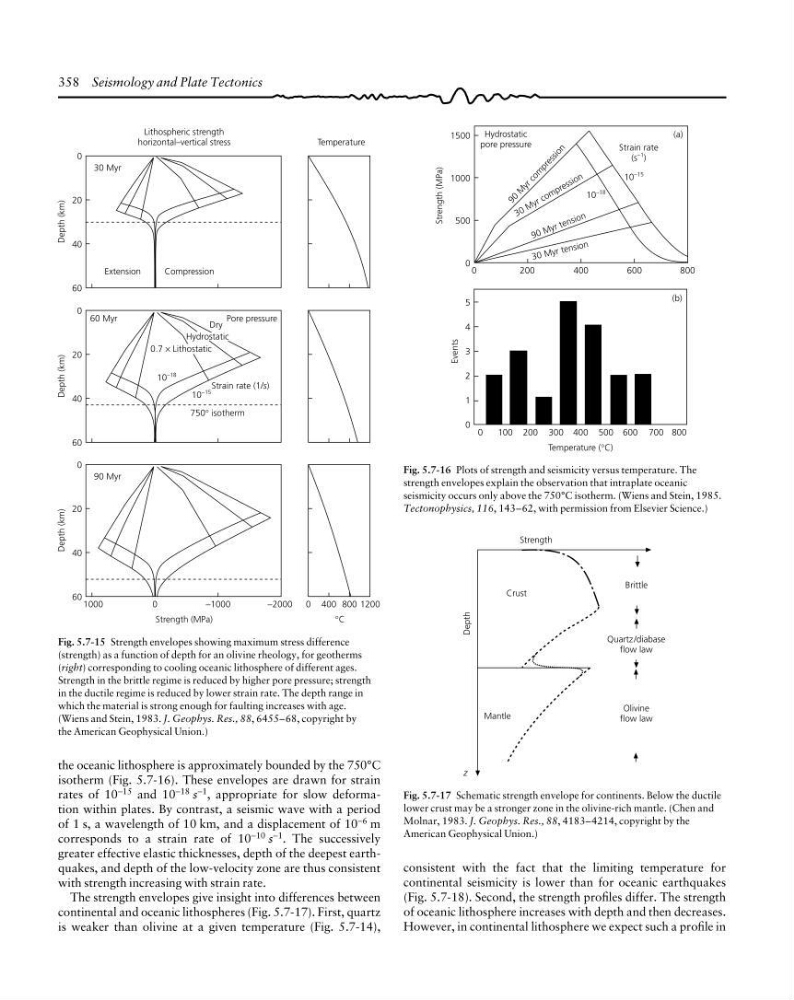
Fig. 5.7-15 Strength envelopes showing maximum stress difference
(strength) as a function of depth for an olivine rheology, for geotherms
(right) corresponding to cooling oceanic lithosphere of different ages.
Strength in the brittle regime is reduced by higher pore pressure; strength
in the ductile regime is reduced by lower strain rate. The depth range in
which the material is strong enough for faulting increases with age.
(Wiens and Stein, 1983. J. Geophys. Res., 88, 6455–68, copyright by
the American Geophysical Union.)
the oceanic lithosphere is approximately bounded by the 750°C
isotherm (Fig. 5.7-16). These envelopes are drawn for strain
rates of 10 −15 and 10 −18 s −1 , appropriate for slow deformation within plates. By contrast, a seismic wave with a period
of 1 s, a wavelength of 10 km, and a displacement of 10 −6 m
corresponds to a strain rate of 10
−10 s
−1
. The successively
greater effective elastic thicknesses, depth of the deepest earthquakes, and depth of the low-velocity zone are thus consistent
with strength increasing with strain rate.
The strength envelopes give insight into differences between
continental and oceanic lithospheres (Fig. 5.7-17). First, quartz
is weaker than olivine at a given temperature (Fig. 5.7-14),
Fig. 5.7-16 Plots of strength and seismicity versus temperature. The
strength envelopes explain the observation that intraplate oceanic
seismicity occurs only above the 750°C isotherm. (Wiens and Stein, 1985.
Tectonophysics, 116, 143–62, with permission from Elsevier Science.)
consistent with the fact that the limiting temperature for
continental seismicity is lower than for oceanic earthquakes
(Fig. 5.7-18). Second, the strength profiles differ. The strength
of oceanic lithosphere increases with depth and then decreases.
However, in continental lithosphere we expect such a profile in
Fig. 5.7-17 Schematic strength envelope for continents. Below the ductile
lower crust may be a stronger zone in the olivine-rich mantle. (Chen and
Molnar, 1983. J. Geophys. Res., 88, 4183–4214, copyright by the
American Geophysical Union.)
Quartz /diabase
flow law
Crust
Strength
Brittle
Olivine
flow law
Mantle
Depth
z
1500
1000
500
0
Strength (MPa)
3 0 M y r c o m p r e s s io n
Hydrostatic
pore pressure
9 0
M
y r c o m
p r e s s i o n
9 0 M y r te n si o n
30 M yr te ns io n
Strain rate
(s
−1 )
10
−15
10
−18
(a)
0
200
400
800
600
Events
5
4
3
2
1
0
0
100 200 300 400 500 600 700 800
Temperature (°C)
(b)
0
20
40
60
Depth (km)
0.7 × Lithostatic
Hydrostatic
1000
0
−1000
−2000
Strength (MPa)
0
800 1200
°C
400
90 Myr
0
20
40
60
Depth (km)
60 Myr
0
20
40
60
Depth (km)
30 Myr
Dry
Pore pressure
Strain rate (1/s)
750° isotherm
10
−15
10
−18
Extension
Compression
Lithospheric strength
horizontal–vertical stress
Temperature
Fig. 5.7-15 Strength envelopes showing maximum stress difference
(strength) as a function of depth for an olivine rheology, for geotherms
(right) corresponding to cooling oceanic lithosphere of different ages.
Strength in the brittle regime is reduced by higher pore pressure; strength
in the ductile regime is reduced by lower strain rate. The depth range in
which the material is strong enough for faulting increases with age.
(Wiens and Stein, 1983. J. Geophys. Res., 88, 6455–68, copyright by
the American Geophysical Union.)
the oceanic lithosphere is approximately bounded by the 750°C
isotherm (Fig. 5.7-16). These envelopes are drawn for strain
rates of 10 −15 and 10 −18 s −1 , appropriate for slow deformation within plates. By contrast, a seismic wave with a period
of 1 s, a wavelength of 10 km, and a displacement of 10 −6 m
corresponds to a strain rate of 10
−10 s
−1
. The successively
greater effective elastic thicknesses, depth of the deepest earthquakes, and depth of the low-velocity zone are thus consistent
with strength increasing with strain rate.
The strength envelopes give insight into differences between
continental and oceanic lithospheres (Fig. 5.7-17). First, quartz
is weaker than olivine at a given temperature (Fig. 5.7-14),
Fig. 5.7-16 Plots of strength and seismicity versus temperature. The
strength envelopes explain the observation that intraplate oceanic
seismicity occurs only above the 750°C isotherm. (Wiens and Stein, 1985.
Tectonophysics, 116, 143–62, with permission from Elsevier Science.)
consistent with the fact that the limiting temperature for
continental seismicity is lower than for oceanic earthquakes
(Fig. 5.7-18). Second, the strength profiles differ. The strength
of oceanic lithosphere increases with depth and then decreases.
However, in continental lithosphere we expect such a profile in
Fig. 5.7-17 Schematic strength envelope for continents. Below the ductile
lower crust may be a stronger zone in the olivine-rich mantle. (Chen and
Molnar, 1983. J. Geophys. Res., 88, 4183–4214, copyright by the
American Geophysical Union.)