

352 Seismology and Plate Tectonics
σ
τ
σ
τ
σ
σ 1
1
σ 2
Internal friction (example: n = 1)
n = 0
n = 1
θ
θ = 67.5°
22.5°
No internal friction
σ 2
σ 2
σ 2
σ 1
σ 1
ê′ 2
ê 2
ê′ 1
ê 1
θ
σ
τ
σ 2
σ 1
−( 2 − 1 )/2
σ
σ
0°
45°
90°
135°
180°
( 2 − 1 )/2
σ
σ
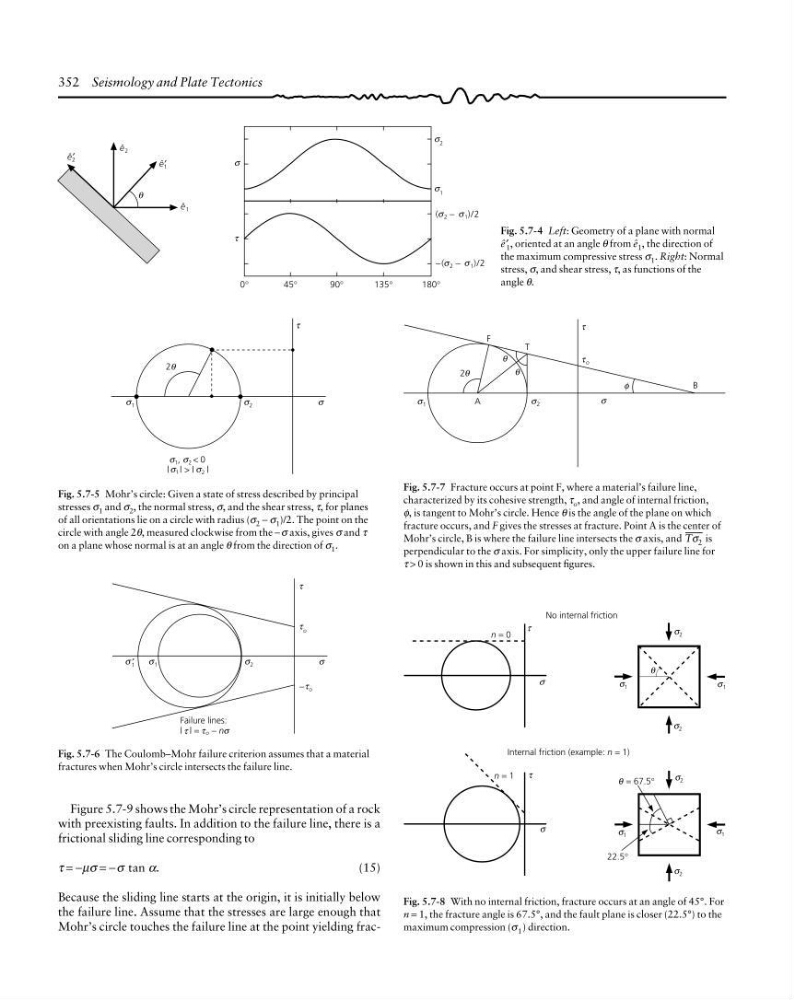
Fig. 5.7-4 Left: Geometry of a plane with normal
ê′ 1 , oriented at an angle θ from ê 1 , the direction of
the maximum compressive stress σ 1 . Right: Normal
stress, σ, and shear stress, τ, as functions of the
angle θ.
Fig. 5.7-5 Mohr’s circle: Given a state of stress described by principal
stresses σ 1 and σ 2 , the normal stress, σ, and the shear stress, τ, for planes
of all orientations lie on a circle with radius (σ 2 − σ 1 )/2. The point on the
circle with angle 2θ, measured clockwise from the −σ axis, gives σ and τ
on a plane whose normal is at an angle θ from the direction of σ 1 .
σ
2θ
τ
σ 2
σ 1
σ 2 < 0
σ 1 ,
| | > | |
σ 1
σ 2
− o
σ
τ
σ 2
σ 1
′
1
σ
τ
τ o
Failure lines:
| | = o − n
τ
σ
τ
Fig. 5.7-6 The Coulomb–Mohr failure criterion assumes that a material
fractures when Mohr’s circle intersects the failure line.
Figure 5.7-9 shows the Mohr’s circle representation of a rock
with preexisting faults. In addition to the failure line, there is a
frictional sliding line corresponding to
τ = −µσ = −σ tan α.
(15)
Because the sliding line starts at the origin, it is initially below
the failure line. Assume that the stresses are large enough that
Mohr’s circle touches the failure line at the point yielding fracB
σ
A
σ 2
σ 1
τ
τ o
θ
2θ
θ
T
F
φ
Fig. 5.7-7 Fracture occurs at point F, where a material’s failure line,
characterized by its cohesive strength, τ o , and angle of internal friction,
φ, is tangent to Mohr’s circle. Hence θ is the angle of the plane on which
fracture occurs, and F gives the stresses at fracture. Point A is the center of
Mohr’s circle, B is where the failure line intersects the σ axis, and Tσ 2 is
perpendicular to the σ axis. For simplicity, only the upper failure line for
τ > 0 is shown in this and subsequent figures.
Fig. 5.7-8 With no internal friction, fracture occurs at an angle of 45°. For
n = 1, the fracture angle is 67.5°, and the fault plane is closer (22.5°) to the
maximum compression (σ 1 ) direction.
σ
τ
σ
τ
σ
σ 1
1
σ 2
Internal friction (example: n = 1)
n = 0
n = 1
θ
θ = 67.5°
22.5°
No internal friction
σ 2
σ 2
σ 2
σ 1
σ 1
ê′ 2
ê 2
ê′ 1
ê 1
θ
σ
τ
σ 2
σ 1
−( 2 − 1 )/2
σ
σ
0°
45°
90°
135°
180°
( 2 − 1 )/2
σ
σ
Fig. 5.7-4 Left: Geometry of a plane with normal
ê′ 1 , oriented at an angle θ from ê 1 , the direction of
the maximum compressive stress σ 1 . Right: Normal
stress, σ, and shear stress, τ, as functions of the
angle θ.
Fig. 5.7-5 Mohr’s circle: Given a state of stress described by principal
stresses σ 1 and σ 2 , the normal stress, σ, and the shear stress, τ, for planes
of all orientations lie on a circle with radius (σ 2 − σ 1 )/2. The point on the
circle with angle 2θ, measured clockwise from the −σ axis, gives σ and τ
on a plane whose normal is at an angle θ from the direction of σ 1 .
σ
2θ
τ
σ 2
σ 1
σ 2 < 0
σ 1 ,
| | > | |
σ 1
σ 2
− o
σ
τ
σ 2
σ 1
′
1
σ
τ
τ o
Failure lines:
| | = o − n
τ
σ
τ
Fig. 5.7-6 The Coulomb–Mohr failure criterion assumes that a material
fractures when Mohr’s circle intersects the failure line.
Figure 5.7-9 shows the Mohr’s circle representation of a rock
with preexisting faults. In addition to the failure line, there is a
frictional sliding line corresponding to
τ = −µσ = −σ tan α.
(15)
Because the sliding line starts at the origin, it is initially below
the failure line. Assume that the stresses are large enough that
Mohr’s circle touches the failure line at the point yielding fracB
σ
A
σ 2
σ 1
τ
τ o
θ
2θ
θ
T
F
φ
Fig. 5.7-7 Fracture occurs at point F, where a material’s failure line,
characterized by its cohesive strength, τ o , and angle of internal friction,
φ, is tangent to Mohr’s circle. Hence θ is the angle of the plane on which
fracture occurs, and F gives the stresses at fracture. Point A is the center of
Mohr’s circle, B is where the failure line intersects the σ axis, and Tσ 2 is
perpendicular to the σ axis. For simplicity, only the upper failure line for
τ > 0 is shown in this and subsequent figures.
Fig. 5.7-8 With no internal friction, fracture occurs at an angle of 45°. For
n = 1, the fracture angle is 67.5°, and the fault plane is closer (22.5°) to the
maximum compression (σ 1 ) direction.