

328 Seismology and Plate Tectonics
more prone to future earthquakes than other areas, and
what the recurrence time of such earthquakes might be. Similar issues arise in considering the intraplate seismicity and
associated seismic hazard in the more structurally complex
continents.
Oceanic intraplate seismicity often occurs in swarms.
Regions without previously known seismicity sometimes become active for several years, with hundreds of teleseismically
located earthquakes. 3 The seismicity then dies out, and seems
not to recur. For example, during 1981–3, an intraplate earthquake swarm occurred near the Gilbert Islands in Micronesia.
A total of 225 earthquakes were detected, mostly over a 15
month period, with 87 above m b 5. No major tectonic features
are known in this area, and a ship survey found no bathymetric
anomalies. Before and after the swarm, no other earthquakes
have been recorded in this region. The swarms thus differ from
plate boundary seismicity, which occurs on features that remain active for long periods even if there are intervening quiet
intervals. Moreover, the intraplate swarms often appear not
to have a single well-developed fault, and no event is significantly bigger than the others. By contrast, plate boundary
earthquakes usually have one or two main ruptures and many
aftershocks, perhaps reflecting local adjustments to the stress
field after the mainshock has ruptured the entire fault.
These swarms raise an interesting issue. We can assume that
these areas are analogous to plate boundaries in having special,
if not yet understood, tectonic significance. If so, they are likely
to be the sites of future swarms. Alternatively, perhaps all areas
of oceanic lithosphere are equally susceptible to such swarms.
In this case, over time, swarms will occur in many places, and
future swarms are no more likely in one place than another. We
will see that similar issues surface in trying to estimate seismic
hazards due to intraplate earthquakes within continents.
5.5.2 Forces and stresses in the oceanic lithosphere
In addition to using oceanic intraplate seismicity to investigate
the specific processes acting at individual sites, we study the
seismicity to learn about plate-wide processes. For example,
Fig. 5.5-4 shows the variation of mechanism type with
lithospheric age. Most of the oceanic lithosphere seems to be in
horizontal deviatoric compression, as shown by thrust and
strike-slip mechanisms. This compression is in approximately
the spreading direction, and is thought to be related to “ridge
push”: the plate driving force due to lithospheric cooling and
subsidence. The major exceptions are the extensional events
occurring in the central Indian Ocean. Although originally regarded as intraplate, these earthquakes now appear to be in
a diffuse plate boundary zone (Section 5.2.2). In the model
shown, the focal mechanisms (Fig. 5.5-5) reflect counterclockwise rotation of Australia with respect to India, causing normal
fault earthquakes in the young lithosphere near the Euler pole
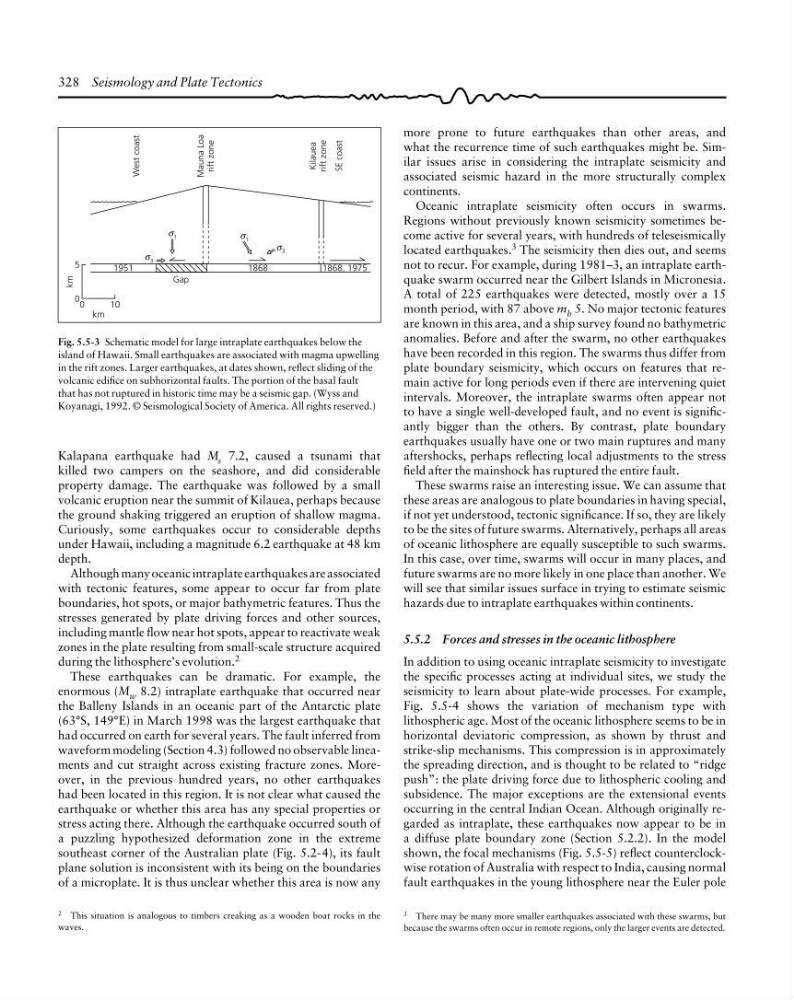
Fig. 5.5-3 Schematic model for large intraplate earthquakes below the
island of Hawaii. Small earthquakes are associated with magma upwelling
in the rift zones. Larger earthquakes, at dates shown, reflect sliding of the
volcanic edifice on subhorizontal faults. The portion of the basal fault
that has not ruptured in historic time may be a seismic gap. (Wyss and
Koyanagi, 1992. © Seismological Society of America. All rights reserved.)
km
5
0
0
1 0
km
West coast
Mauna Loa
rift zone
Kilauea
rift zone
SE coast
3
σ
1
σ
3
σ
1
σ
1951
Gap
1868
1868, 1975
2 This situation is analogous to timbers creaking as a wooden boat rocks in the
waves.
3 There may be many more smaller earthquakes associated with these swarms, but
because the swarms often occur in remote regions, only the larger events are detected.
Kalapana earthquake had M s 7.2, caused a tsunami that
killed two campers on the seashore, and did considerable
property damage. The earthquake was followed by a small
volcanic eruption near the summit of Kilauea, perhaps because
the ground shaking triggered an eruption of shallow magma.
Curiously, some earthquakes occur to considerable depths
under Hawaii, including a magnitude 6.2 earthquake at 48 km
depth.
Although many oceanic intraplate earthquakes are associated
with tectonic features, some appear to occur far from plate
boundaries, hot spots, or major bathymetric features. Thus the
stresses generated by plate driving forces and other sources,
including mantle flow near hot spots, appear to reactivate weak
zones in the plate resulting from small-scale structure acquired
during the lithosphere’s evolution. 2
These earthquakes can be dramatic. For example, the
enormous (M w 8.2) intraplate earthquake that occurred near
the Balleny Islands in an oceanic part of the Antarctic plate
(63°S, 149°E) in March 1998 was the largest earthquake that
had occurred on earth for several years. The fault inferred from
waveform modeling (Section 4.3) followed no observable lineaments and cut straight across existing fracture zones. Moreover, in the previous hundred years, no other earthquakes
had been located in this region. It is not clear what caused the
earthquake or whether this area has any special properties or
stress acting there. Although the earthquake occurred south of
a puzzling hypothesized deformation zone in the extreme
southeast corner of the Australian plate (Fig. 5.2-4), its fault
plane solution is inconsistent with its being on the boundaries
of a microplate. It is thus unclear whether this area is now any
more prone to future earthquakes than other areas, and
what the recurrence time of such earthquakes might be. Similar issues arise in considering the intraplate seismicity and
associated seismic hazard in the more structurally complex
continents.
Oceanic intraplate seismicity often occurs in swarms.
Regions without previously known seismicity sometimes become active for several years, with hundreds of teleseismically
located earthquakes. 3 The seismicity then dies out, and seems
not to recur. For example, during 1981–3, an intraplate earthquake swarm occurred near the Gilbert Islands in Micronesia.
A total of 225 earthquakes were detected, mostly over a 15
month period, with 87 above m b 5. No major tectonic features
are known in this area, and a ship survey found no bathymetric
anomalies. Before and after the swarm, no other earthquakes
have been recorded in this region. The swarms thus differ from
plate boundary seismicity, which occurs on features that remain active for long periods even if there are intervening quiet
intervals. Moreover, the intraplate swarms often appear not
to have a single well-developed fault, and no event is significantly bigger than the others. By contrast, plate boundary
earthquakes usually have one or two main ruptures and many
aftershocks, perhaps reflecting local adjustments to the stress
field after the mainshock has ruptured the entire fault.
These swarms raise an interesting issue. We can assume that
these areas are analogous to plate boundaries in having special,
if not yet understood, tectonic significance. If so, they are likely
to be the sites of future swarms. Alternatively, perhaps all areas
of oceanic lithosphere are equally susceptible to such swarms.
In this case, over time, swarms will occur in many places, and
future swarms are no more likely in one place than another. We
will see that similar issues surface in trying to estimate seismic
hazards due to intraplate earthquakes within continents.
5.5.2 Forces and stresses in the oceanic lithosphere
In addition to using oceanic intraplate seismicity to investigate
the specific processes acting at individual sites, we study the
seismicity to learn about plate-wide processes. For example,
Fig. 5.5-4 shows the variation of mechanism type with
lithospheric age. Most of the oceanic lithosphere seems to be in
horizontal deviatoric compression, as shown by thrust and
strike-slip mechanisms. This compression is in approximately
the spreading direction, and is thought to be related to “ridge
push”: the plate driving force due to lithospheric cooling and
subsidence. The major exceptions are the extensional events
occurring in the central Indian Ocean. Although originally regarded as intraplate, these earthquakes now appear to be in
a diffuse plate boundary zone (Section 5.2.2). In the model
shown, the focal mechanisms (Fig. 5.5-5) reflect counterclockwise rotation of Australia with respect to India, causing normal
fault earthquakes in the young lithosphere near the Euler pole
Fig. 5.5-3 Schematic model for large intraplate earthquakes below the
island of Hawaii. Small earthquakes are associated with magma upwelling
in the rift zones. Larger earthquakes, at dates shown, reflect sliding of the
volcanic edifice on subhorizontal faults. The portion of the basal fault
that has not ruptured in historic time may be a seismic gap. (Wyss and
Koyanagi, 1992. © Seismological Society of America. All rights reserved.)
km
5
0
0
1 0
km
West coast
Mauna Loa
rift zone
Kilauea
rift zone
SE coast
3
σ
1
σ
3
σ
1
σ
1951
Gap
1868
1868, 1975
2 This situation is analogous to timbers creaking as a wooden boat rocks in the
waves.
3 There may be many more smaller earthquakes associated with these swarms, but
because the swarms often occur in remote regions, only the larger events are detected.
Kalapana earthquake had M s 7.2, caused a tsunami that
killed two campers on the seashore, and did considerable
property damage. The earthquake was followed by a small
volcanic eruption near the summit of Kilauea, perhaps because
the ground shaking triggered an eruption of shallow magma.
Curiously, some earthquakes occur to considerable depths
under Hawaii, including a magnitude 6.2 earthquake at 48 km
depth.
Although many oceanic intraplate earthquakes are associated
with tectonic features, some appear to occur far from plate
boundaries, hot spots, or major bathymetric features. Thus the
stresses generated by plate driving forces and other sources,
including mantle flow near hot spots, appear to reactivate weak
zones in the plate resulting from small-scale structure acquired
during the lithosphere’s evolution. 2
These earthquakes can be dramatic. For example, the
enormous (M w 8.2) intraplate earthquake that occurred near
the Balleny Islands in an oceanic part of the Antarctic plate
(63°S, 149°E) in March 1998 was the largest earthquake that
had occurred on earth for several years. The fault inferred from
waveform modeling (Section 4.3) followed no observable lineaments and cut straight across existing fracture zones. Moreover, in the previous hundred years, no other earthquakes
had been located in this region. It is not clear what caused the
earthquake or whether this area has any special properties or
stress acting there. Although the earthquake occurred south of
a puzzling hypothesized deformation zone in the extreme
southeast corner of the Australian plate (Fig. 5.2-4), its fault
plane solution is inconsistent with its being on the boundaries
of a microplate. It is thus unclear whether this area is now any