

Normal to
margin
Relative
plate
motion
Oceanic plate
C o n t in e n t a l p la t e
F o r e a r c
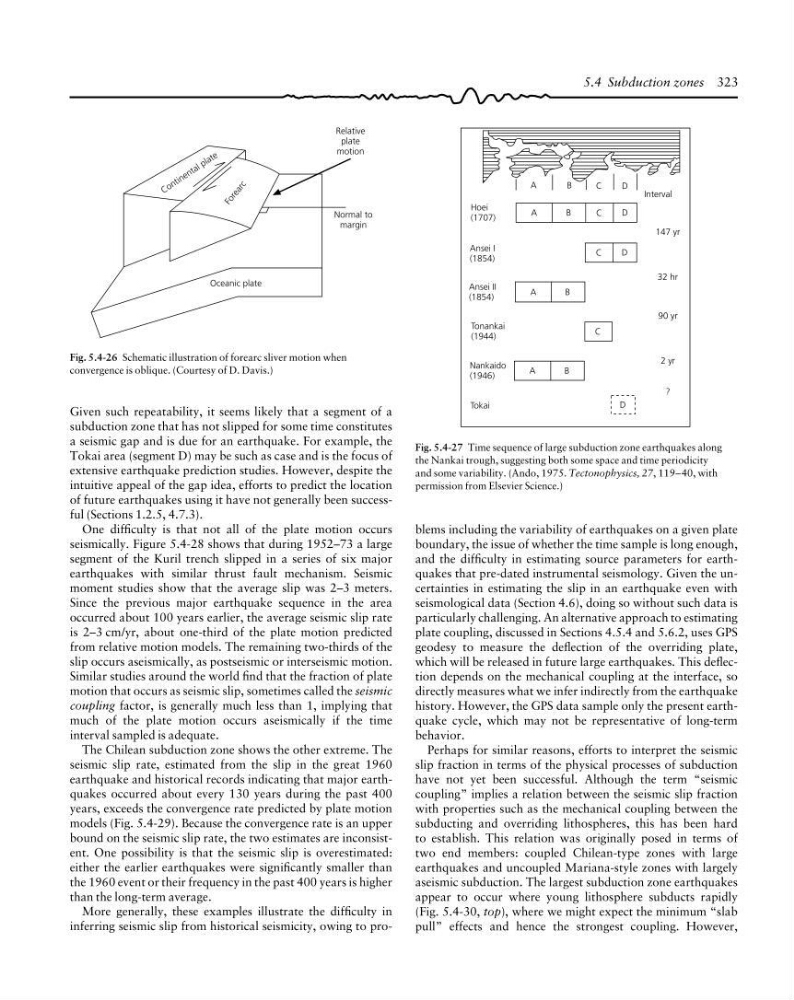
Fig. 5.4-26 Schematic illustration of forearc sliver motion when
convergence is oblique. (Courtesy of D. Davis.)
5.4 Subduction zones 323
Fig. 5.4-27 Time sequence of large subduction zone earthquakes along
the Nankai trough, suggesting both some space and time periodicity
and some variability. (Ando, 1975. Tectonophysics, 27, 119–40, with
permission from Elsevier Science.)
Hoei
(1707)
A
B
C
D
A
B
C
D
C
D
A
B
C
A
B
D
Ansei I
(1854)
Ansei II
(1854)
Tonankai
(1944)
Nankaido
(1946)
Tokai
147 yr
32 hr
90 yr
2 yr
?
Interval
blems including the variability of earthquakes on a given plate
boundary, the issue of whether the time sample is long enough,
and the difficulty in estimating source parameters for earthquakes that pre-dated instrumental seismology. Given the uncertainties in estimating the slip in an earthquake even with
seismological data (Section 4.6), doing so without such data is
particularly challenging. An alternative approach to estimating
plate coupling, discussed in Sections 4.5.4 and 5.6.2, uses GPS
geodesy to measure the deflection of the overriding plate,
which will be released in future large earthquakes. This deflection depends on the mechanical coupling at the interface, so
directly measures what we infer indirectly from the earthquake
history. However, the GPS data sample only the present earthquake cycle, which may not be representative of long-term
behavior.
Perhaps for similar reasons, efforts to interpret the seismic
slip fraction in terms of the physical processes of subduction
have not yet been successful. Although the term “seismic
coupling” implies a relation between the seismic slip fraction
with properties such as the mechanical coupling between the
subducting and overriding lithospheres, this has been hard
to establish. This relation was originally posed in terms of
two end members: coupled Chilean-type zones with large
earthquakes and uncoupled Mariana-style zones with largely
aseismic subduction. The largest subduction zone earthquakes
appear to occur where young lithosphere subducts rapidly
(Fig. 5.4-30, top), where we might expect the minimum “slab
pull” effects and hence the strongest coupling. However,
Given such repeatability, it seems likely that a segment of a
subduction zone that has not slipped for some time constitutes
a seismic gap and is due for an earthquake. For example, the
Tokai area (segment D) may be such as case and is the focus of
extensive earthquake prediction studies. However, despite the
intuitive appeal of the gap idea, efforts to predict the location
of future earthquakes using it have not generally been successful (Sections 1.2.5, 4.7.3).
One difficulty is that not all of the plate motion occurs
seismically. Figure 5.4-28 shows that during 1952–73 a large
segment of the Kuril trench slipped in a series of six major
earthquakes with similar thrust fault mechanism. Seismic
moment studies show that the average slip was 2–3 meters.
Since the previous major earthquake sequence in the area
occurred about 100 years earlier, the average seismic slip rate
is 2–3 cm/yr, about one-third of the plate motion predicted
from relative motion models. The remaining two-thirds of the
slip occurs aseismically, as postseismic or interseismic motion.
Similar studies around the world find that the fraction of plate
motion that occurs as seismic slip, sometimes called the seismic
coupling factor, is generally much less than 1, implying that
much of the plate motion occurs aseismically if the time
interval sampled is adequate.
The Chilean subduction zone shows the other extreme. The
seismic slip rate, estimated from the slip in the great 1960
earthquake and historical records indicating that major earthquakes occurred about every 130 years during the past 400
years, exceeds the convergence rate predicted by plate motion
models (Fig. 5.4-29). Because the convergence rate is an upper
bound on the seismic slip rate, the two estimates are inconsistent. One possibility is that the seismic slip is overestimated:
either the earlier earthquakes were significantly smaller than
the 1960 event or their frequency in the past 400 years is higher
than the long-term average.
More generally, these examples illustrate the difficulty in
inferring seismic slip from historical seismicity, owing to pro-
margin
Relative
plate
motion
Oceanic plate
C o n t in e n t a l p la t e
F o r e a r c
Fig. 5.4-26 Schematic illustration of forearc sliver motion when
convergence is oblique. (Courtesy of D. Davis.)
5.4 Subduction zones 323
Fig. 5.4-27 Time sequence of large subduction zone earthquakes along
the Nankai trough, suggesting both some space and time periodicity
and some variability. (Ando, 1975. Tectonophysics, 27, 119–40, with
permission from Elsevier Science.)
Hoei
(1707)
A
B
C
D
A
B
C
D
C
D
A
B
C
A
B
D
Ansei I
(1854)
Ansei II
(1854)
Tonankai
(1944)
Nankaido
(1946)
Tokai
147 yr
32 hr
90 yr
2 yr
?
Interval
blems including the variability of earthquakes on a given plate
boundary, the issue of whether the time sample is long enough,
and the difficulty in estimating source parameters for earthquakes that pre-dated instrumental seismology. Given the uncertainties in estimating the slip in an earthquake even with
seismological data (Section 4.6), doing so without such data is
particularly challenging. An alternative approach to estimating
plate coupling, discussed in Sections 4.5.4 and 5.6.2, uses GPS
geodesy to measure the deflection of the overriding plate,
which will be released in future large earthquakes. This deflection depends on the mechanical coupling at the interface, so
directly measures what we infer indirectly from the earthquake
history. However, the GPS data sample only the present earthquake cycle, which may not be representative of long-term
behavior.
Perhaps for similar reasons, efforts to interpret the seismic
slip fraction in terms of the physical processes of subduction
have not yet been successful. Although the term “seismic
coupling” implies a relation between the seismic slip fraction
with properties such as the mechanical coupling between the
subducting and overriding lithospheres, this has been hard
to establish. This relation was originally posed in terms of
two end members: coupled Chilean-type zones with large
earthquakes and uncoupled Mariana-style zones with largely
aseismic subduction. The largest subduction zone earthquakes
appear to occur where young lithosphere subducts rapidly
(Fig. 5.4-30, top), where we might expect the minimum “slab
pull” effects and hence the strongest coupling. However,
Given such repeatability, it seems likely that a segment of a
subduction zone that has not slipped for some time constitutes
a seismic gap and is due for an earthquake. For example, the
Tokai area (segment D) may be such as case and is the focus of
extensive earthquake prediction studies. However, despite the
intuitive appeal of the gap idea, efforts to predict the location
of future earthquakes using it have not generally been successful (Sections 1.2.5, 4.7.3).
One difficulty is that not all of the plate motion occurs
seismically. Figure 5.4-28 shows that during 1952–73 a large
segment of the Kuril trench slipped in a series of six major
earthquakes with similar thrust fault mechanism. Seismic
moment studies show that the average slip was 2–3 meters.
Since the previous major earthquake sequence in the area
occurred about 100 years earlier, the average seismic slip rate
is 2–3 cm/yr, about one-third of the plate motion predicted
from relative motion models. The remaining two-thirds of the
slip occurs aseismically, as postseismic or interseismic motion.
Similar studies around the world find that the fraction of plate
motion that occurs as seismic slip, sometimes called the seismic
coupling factor, is generally much less than 1, implying that
much of the plate motion occurs aseismically if the time
interval sampled is adequate.
The Chilean subduction zone shows the other extreme. The
seismic slip rate, estimated from the slip in the great 1960
earthquake and historical records indicating that major earthquakes occurred about every 130 years during the past 400
years, exceeds the convergence rate predicted by plate motion
models (Fig. 5.4-29). Because the convergence rate is an upper
bound on the seismic slip rate, the two estimates are inconsistent. One possibility is that the seismic slip is overestimated:
either the earlier earthquakes were significantly smaller than
the 1960 event or their frequency in the past 400 years is higher
than the long-term average.
More generally, these examples illustrate the difficulty in
inferring seismic slip from historical seismicity, owing to pro-