

318 Seismology and Plate Tectonics
Depth (km)
0
200
400
600
800
100
50
0
−50
max (MPa)
σ
0
300
600
900
1964−94
PDE events
100
50
0
−50
max (MPa)
σ
0
100
200
300
400
500
600
700
800
Depth (km)
Equilibrium
Metastable
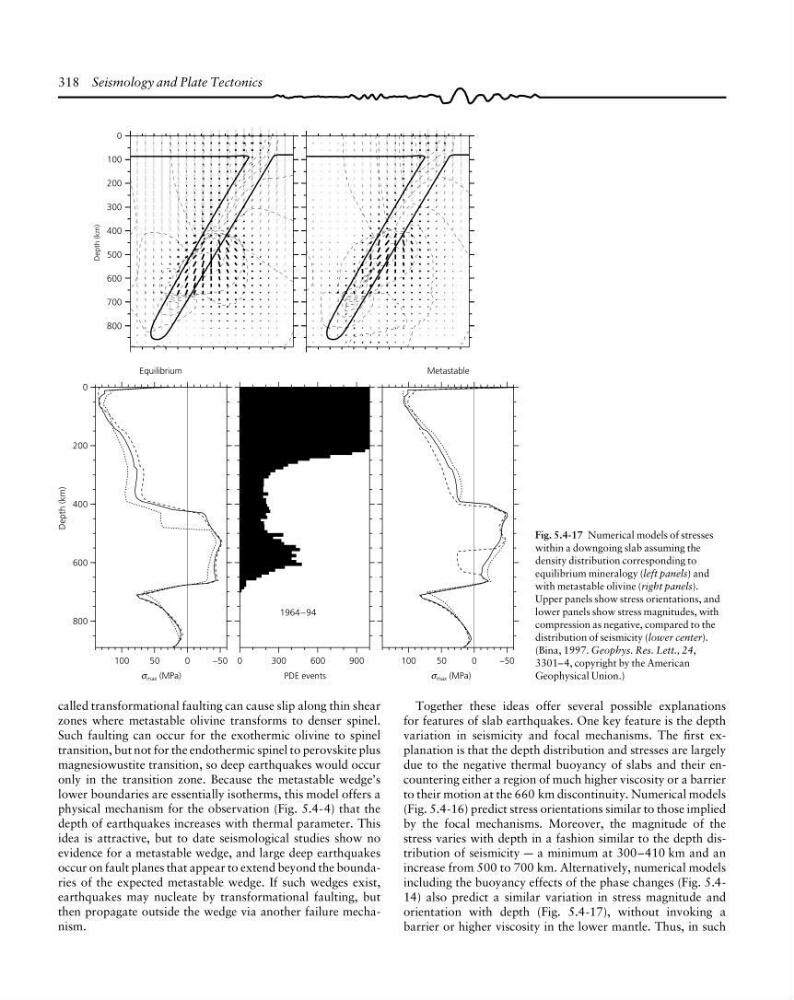
Fig. 5.4-17 Numerical models of stresses
within a downgoing slab assuming the
density distribution corresponding to
equilibrium mineralogy (left panels) and
with metastable olivine (right panels).
Upper panels show stress orientations, and
lower panels show stress magnitudes, with
compression as negative, compared to the
distribution of seismicity (lower center).
(Bina, 1997. Geophys. Res. Lett., 24,
3301–4, copyright by the American
Geophysical Union.)
Together these ideas offer several possible explanations
for features of slab earthquakes. One key feature is the depth
variation in seismicity and focal mechanisms. The first explanation is that the depth distribution and stresses are largely
due to the negative thermal buoyancy of slabs and their encountering either a region of much higher viscosity or a barrier
to their motion at the 660 km discontinuity. Numerical models
(Fig. 5.4-16) predict stress orientations similar to those implied
by the focal mechanisms. Moreover, the magnitude of the
stress varies with depth in a fashion similar to the depth distribution of seismicity a a minimum at 300–410 km and an
increase from 500 to 700 km. Alternatively, numerical models
including the buoyancy effects of the phase changes (Fig. 5.414) also predict a similar variation in stress magnitude and
orientation with depth (Fig. 5.4-17), without invoking a
barrier or higher viscosity in the lower mantle. Thus, in such
called transformational faulting can cause slip along thin shear
zones where metastable olivine transforms to denser spinel.
Such faulting can occur for the exothermic olivine to spinel
transition, but not for the endothermic spinel to perovskite plus
magnesiowustite transition, so deep earthquakes would occur
only in the transition zone. Because the metastable wedge’s
lower boundaries are essentially isotherms, this model offers a
physical mechanism for the observation (Fig. 5.4-4) that the
depth of earthquakes increases with thermal parameter. This
idea is attractive, but to date seismological studies show no
evidence for a metastable wedge, and large deep earthquakes
occur on fault planes that appear to extend beyond the boundaries of the expected metastable wedge. If such wedges exist,
earthquakes may nucleate by transformational faulting, but
then propagate outside the wedge via another failure mechanism.
Depth (km)
0
200
400
600
800
100
50
0
−50
max (MPa)
σ
0
300
600
900
1964−94
PDE events
100
50
0
−50
max (MPa)
σ
0
100
200
300
400
500
600
700
800
Depth (km)
Equilibrium
Metastable
Fig. 5.4-17 Numerical models of stresses
within a downgoing slab assuming the
density distribution corresponding to
equilibrium mineralogy (left panels) and
with metastable olivine (right panels).
Upper panels show stress orientations, and
lower panels show stress magnitudes, with
compression as negative, compared to the
distribution of seismicity (lower center).
(Bina, 1997. Geophys. Res. Lett., 24,
3301–4, copyright by the American
Geophysical Union.)
Together these ideas offer several possible explanations
for features of slab earthquakes. One key feature is the depth
variation in seismicity and focal mechanisms. The first explanation is that the depth distribution and stresses are largely
due to the negative thermal buoyancy of slabs and their encountering either a region of much higher viscosity or a barrier
to their motion at the 660 km discontinuity. Numerical models
(Fig. 5.4-16) predict stress orientations similar to those implied
by the focal mechanisms. Moreover, the magnitude of the
stress varies with depth in a fashion similar to the depth distribution of seismicity a a minimum at 300–410 km and an
increase from 500 to 700 km. Alternatively, numerical models
including the buoyancy effects of the phase changes (Fig. 5.414) also predict a similar variation in stress magnitude and
orientation with depth (Fig. 5.4-17), without invoking a
barrier or higher viscosity in the lower mantle. Thus, in such
called transformational faulting can cause slip along thin shear
zones where metastable olivine transforms to denser spinel.
Such faulting can occur for the exothermic olivine to spinel
transition, but not for the endothermic spinel to perovskite plus
magnesiowustite transition, so deep earthquakes would occur
only in the transition zone. Because the metastable wedge’s
lower boundaries are essentially isotherms, this model offers a
physical mechanism for the observation (Fig. 5.4-4) that the
depth of earthquakes increases with thermal parameter. This
idea is attractive, but to date seismological studies show no
evidence for a metastable wedge, and large deep earthquakes
occur on fault planes that appear to extend beyond the boundaries of the expected metastable wedge. If such wedges exist,
earthquakes may nucleate by transformational faulting, but
then propagate outside the wedge via another failure mechanism.