

316 Seismology and Plate Tectonics
0
200
400
0
200
400
600
600
Distance (km)
Distance (km)
Buoyancy
negative
neutral
positive
0
200
400
600
Depth (km)
0
200
400
600
Depth (km)
Equilibrium
Lithosphere
Upper
mantle
Transition
zone
Lower mantle
With metastability
Metastable
wedge
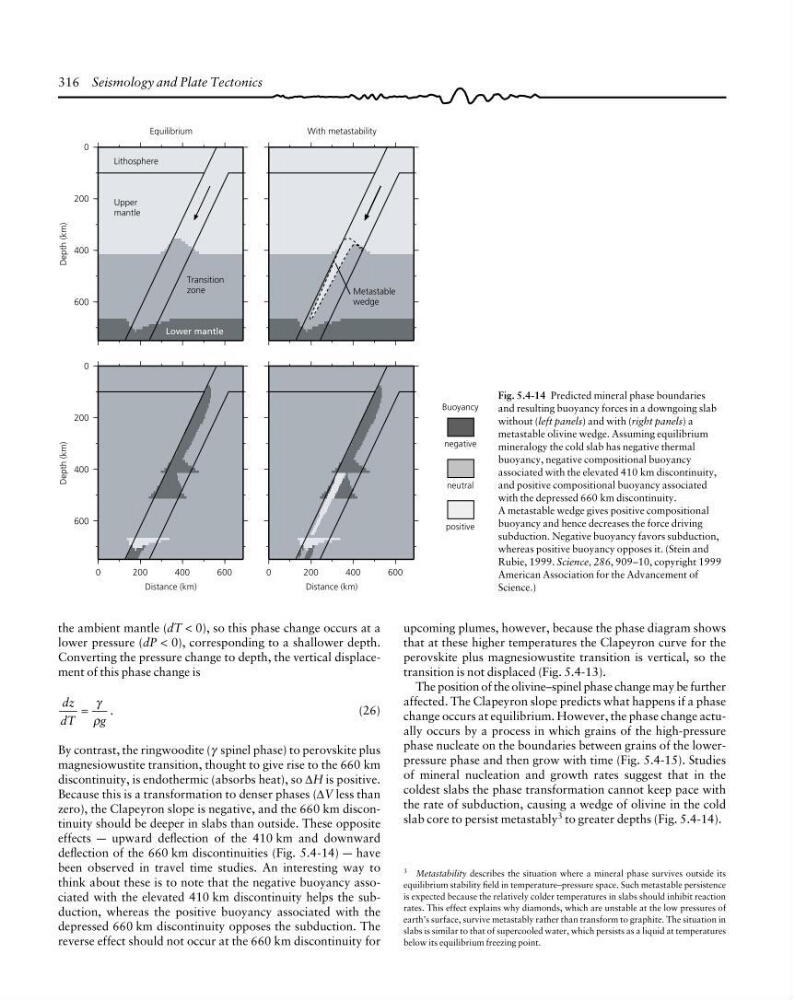
Fig. 5.4-14 Predicted mineral phase boundaries
and resulting buoyancy forces in a downgoing slab
without (left panels) and with (right panels) a
metastable olivine wedge. Assuming equilibrium
mineralogy the cold slab has negative thermal
buoyancy, negative compositional buoyancy
associated with the elevated 410 km discontinuity,
and positive compositional buoyancy associated
with the depressed 660 km discontinuity.
A metastable wedge gives positive compositional
buoyancy and hence decreases the force driving
subduction. Negative buoyancy favors subduction,
whereas positive buoyancy opposes it. (Stein and
Rubie, 1999. Science, 286, 909–10, copyright 1999
American Association for the Advancement of
Science.)
upcoming plumes, however, because the phase diagram shows
that at these higher temperatures the Clapeyron curve for the
perovskite plus magnesiowustite transition is vertical, so the
transition is not displaced (Fig. 5.4-13).
The position of the olivine–spinel phase change may be further
affected. The Clapeyron slope predicts what happens if a phase
change occurs at equilibrium. However, the phase change actually occurs by a process in which grains of the high-pressure
phase nucleate on the boundaries between grains of the lowerpressure phase and then grow with time (Fig. 5.4-15). Studies
of mineral nucleation and growth rates suggest that in the
coldest slabs the phase transformation cannot keep pace with
the rate of subduction, causing a wedge of olivine in the cold
slab core to persist metastably 3 to greater depths (Fig. 5.4-14).
the ambient mantle (dT < 0), so this phase change occurs at a
lower pressure (dP < 0), corresponding to a shallower depth.
Converting the pressure change to depth, the vertical displacement of this phase change is
dz
dT
g
.
=
γ
ρ
(26)
By contrast, the ringwoodite (γ spinel phase) to perovskite plus
magnesiowustite transition, thought to give rise to the 660 km
discontinuity, is endothermic (absorbs heat), so ∆H is positive.
Because this is a transformation to denser phases (∆V less than
zero), the Clapeyron slope is negative, and the 660 km discontinuity should be deeper in slabs than outside. These opposite
effects a upward deflection of the 410 km and downward
deflection of the 660 km discontinuities (Fig. 5.4-14) a have
been observed in travel time studies. An interesting way to
think about these is to note that the negative buoyancy associated with the elevated 410 km discontinuity helps the subduction, whereas the positive buoyancy associated with the
depressed 660 km discontinuity opposes the subduction. The
reverse effect should not occur at the 660 km discontinuity for
3 Metastability describes the situation where a mineral phase survives outside its
equilibrium stability field in temperature–pressure space. Such metastable persistence
is expected because the relatively colder temperatures in slabs should inhibit reaction
rates. This effect explains why diamonds, which are unstable at the low pressures of
earth’s surface, survive metastably rather than transform to graphite. The situation in
slabs is similar to that of supercooled water, which persists as a liquid at temperatures
below its equilibrium freezing point.
0
200
400
0
200
400
600
600
Distance (km)
Distance (km)
Buoyancy
negative
neutral
positive
0
200
400
600
Depth (km)
0
200
400
600
Depth (km)
Equilibrium
Lithosphere
Upper
mantle
Transition
zone
Lower mantle
With metastability
Metastable
wedge
Fig. 5.4-14 Predicted mineral phase boundaries
and resulting buoyancy forces in a downgoing slab
without (left panels) and with (right panels) a
metastable olivine wedge. Assuming equilibrium
mineralogy the cold slab has negative thermal
buoyancy, negative compositional buoyancy
associated with the elevated 410 km discontinuity,
and positive compositional buoyancy associated
with the depressed 660 km discontinuity.
A metastable wedge gives positive compositional
buoyancy and hence decreases the force driving
subduction. Negative buoyancy favors subduction,
whereas positive buoyancy opposes it. (Stein and
Rubie, 1999. Science, 286, 909–10, copyright 1999
American Association for the Advancement of
Science.)
upcoming plumes, however, because the phase diagram shows
that at these higher temperatures the Clapeyron curve for the
perovskite plus magnesiowustite transition is vertical, so the
transition is not displaced (Fig. 5.4-13).
The position of the olivine–spinel phase change may be further
affected. The Clapeyron slope predicts what happens if a phase
change occurs at equilibrium. However, the phase change actually occurs by a process in which grains of the high-pressure
phase nucleate on the boundaries between grains of the lowerpressure phase and then grow with time (Fig. 5.4-15). Studies
of mineral nucleation and growth rates suggest that in the
coldest slabs the phase transformation cannot keep pace with
the rate of subduction, causing a wedge of olivine in the cold
slab core to persist metastably 3 to greater depths (Fig. 5.4-14).
the ambient mantle (dT < 0), so this phase change occurs at a
lower pressure (dP < 0), corresponding to a shallower depth.
Converting the pressure change to depth, the vertical displacement of this phase change is
dz
dT
g
.
=
γ
ρ
(26)
By contrast, the ringwoodite (γ spinel phase) to perovskite plus
magnesiowustite transition, thought to give rise to the 660 km
discontinuity, is endothermic (absorbs heat), so ∆H is positive.
Because this is a transformation to denser phases (∆V less than
zero), the Clapeyron slope is negative, and the 660 km discontinuity should be deeper in slabs than outside. These opposite
effects a upward deflection of the 410 km and downward
deflection of the 660 km discontinuities (Fig. 5.4-14) a have
been observed in travel time studies. An interesting way to
think about these is to note that the negative buoyancy associated with the elevated 410 km discontinuity helps the subduction, whereas the positive buoyancy associated with the
depressed 660 km discontinuity opposes the subduction. The
reverse effect should not occur at the 660 km discontinuity for
3 Metastability describes the situation where a mineral phase survives outside its
equilibrium stability field in temperature–pressure space. Such metastable persistence
is expected because the relatively colder temperatures in slabs should inhibit reaction
rates. This effect explains why diamonds, which are unstable at the low pressures of
earth’s surface, survive metastably rather than transform to graphite. The situation in
slabs is similar to that of supercooled water, which persists as a liquid at temperatures
below its equilibrium freezing point.